Quick Enquiry
whatapp icon
phone call

Fab Bath Interiors

Looking For Bulk Orders @ Competitive Prices? Enquiry Now

Download Our Latest Products Catalogue Click Here

info@fabbathinteriors.com

Fabbint

bathroom colour trends

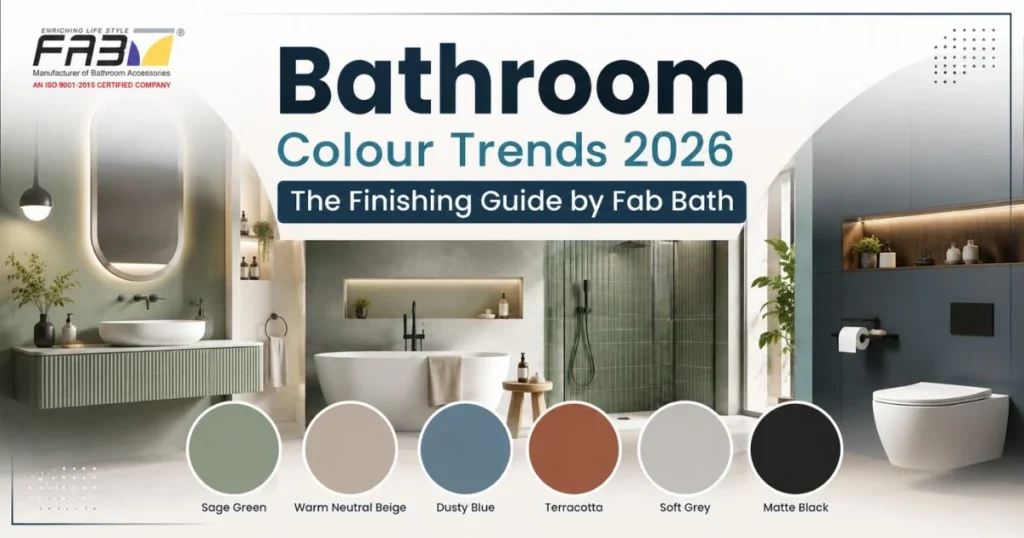
Bathroom Colour Trends 2026: The Finishing Guide by Fab Bath

Most homeowners choose a wall colour first and treat their tap and handle finish as an afterthought. That order is backwards. A freshly painted bathroom in the “right” 2026 shade can still look unfinished if the hardware fights the wall instead of working with it — and almost none of the trend round-ups online actually explain which finish belongs with which colour, or why. We manufacture brass bathroom accessories out of Jamnagar, so we see this mismatch daily: the same sage-green vanity paired with a finish that clashes, simply because nobody told the buyer that hardware and colour are one decision, not two. This guide by Fab Bath Interiors fixes that gap. Bathroom colour trends for 2026 describe the seasonal shift in wall, tile, and fixture colour palettes that designers and manufacturers expect homeowners to favour this year — currently moving away from stark whites and cool greys toward warmer neutrals, muted greens, and deeper accent tones paired with textured, patina-friendly hardware finishes. What’s Actually Changing in Bathroom Colour Trends for 2026 For the past several years, bathroom design leaned cool: icy blues, stark whites, charcoal greys. That’s reversing. Warmer, nature-inspired palettes are now taking centre stage, with cozy neutrals like creamy ivory and soft beige, plus earthier tones like terracotta and clay, ranking among the most sought-after choices. Sherwin-Williams’ own 2026 Colour of the Year — Universal Khaki — captures this exact shift toward grounded, mid-tone warmth. Interior designers are also seeing 2026 palettes prioritise texture over polish: zellige tiles, limewash plaster, travertine, and tadelakt are replacing the flat, glossy surfaces that dominated the last decade. In practice, what we find is that clients now ask for a finish recommendation before they finalise a colour — the two decisions have merged into one conversation, and that’s the real story behind this year’s bathroom colour trends. Key Insight: The single biggest bathroom colour trends shift for 2026 isn’t a new shade — it’s those shades no longer being chosen independently of hardware finish, tile texture, or lighting temperature. The 6 Bathroom Colour Trends to Know Here’s what’s actually appearing on moodboards and spec sheets for bathroom colour trends in 2026: None of these are complete strategies on their own. A trending colour without the right finish, lighting, and texture pairing is just a paint chip — not a finished bathroom. Bathroom Colors for Small Bathrooms Small bathrooms behave differently from full-size ones, and most colour-trend content ignores this entirely. The most common mistake we see is homeowners chasing a deep, saturated 2026 trend colour in a windowless powder room and ending up with a space that feels smaller, not richer. For compact bathrooms: This is where the small-bathroom version of bathroom colour trends diverges most from the full-bathroom version: restraint matters more than the shade itself. The Hardware Finish Pairing Table Nobody Publishes This is the gap. Every article on bathroom colour trends stops at paint and tile. As a brass manufacturer, we build the fittings that sit against those colours every day — and the pairing logic below is what we actually specify to clients, not generic styling advice. 2026 Colour Trend Recommended Hardware Finish Why It Works Warm white / cream Unlacquered brass Unlacquered brass develops a natural patina over time, giving the hardware a living finish that deepens the character of the metal — it warms a cream palette rather than competing with it. Greige Brushed brass or brushed nickel Brushed brass photographs well and ages gracefully, pairing easily with both light and dark cabinetry, making it the safest match for a balanced grey-beige base. Sage / muted green Antique bronze or matte black Bronze brings warmth and depth and pairs beautifully with deep green, complementing the growing preference for natural, layered materials. Deep charcoal / midnight blue Polished brass or matte black Deep, saturated shades pair well with polished brass or chrome, with the contrast helping the hardware stand out against a rich cabinet colour. Terracotta / clay Antique or hammered brass The warm, textured surface of hammered brass echoes the handmade, earthy quality of terracotta instead of looking mass-produced against it. Dusty pink / blush Warm gold or champagne brass Soft metallics keep the palette elevated rather than tipping it toward a “nursery” look. Key Insight: Working with brass daily, we’ve noticed unlacquered brass patinas noticeably faster in humid coastal cities like Mumbai or Kochi than in drier climates like Delhi or Jaipur — a detail that changes which finish we recommend depending on region, and one that generic colour-trend guides never mention. Bathroom Colour Schemes 2026, by Style Rather than picking a single trending colour, most designers are now building full bathroom colour schemes for 2026 around one of three directions: Each of these bathroom colour schemes solves a different brief — calm and resale-safe, elevated and layered, or deliberately dramatic. Choosing between them is really a question of how long you plan to live with the result. The 3-Layer Colour Test — Our Framework for Choosing a Scheme That Won’t Date After specifying fittings for hundreds of bathroom projects, we use a simple three-question filter before recommending any colour, and it applies to any home, not just ours: A colour scheme that passes all three rarely needs replacing before the next full renovation — which is the actual goal, not just matching this year’s moodboard. Get a Free Bathroom Fittings Spec Sheet See exactly which brass finish suits your chosen 2026 colour palette, replied within 24 hours. Request your spec sheet. FAQs What colour is trending for bathrooms in 2026?  Warm whites, greige, muted sage green, and earthy terracotta are the dominant bathroom colour trends for 2026, replacing the stark whites and cool greys that were common in previous years. What is the best colour scheme for a small bathroom?  Warm-neutral bases like cream or light greige work best in small bathrooms because they reflect available light. Deep, saturated trend colours should be reserved for a single accent wall or vanity rather

Bathroom Colour Trends 2026: The Finishing Guide by Fab Bath Read More »
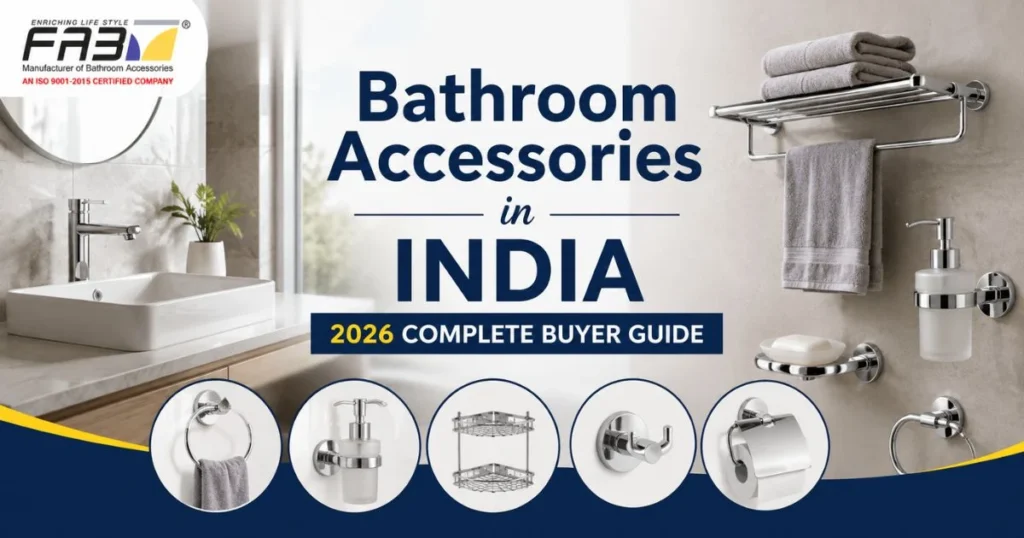
Bathroom Accessories in India

Bathroom Accessories in India: 2026 Complete Buyer Guide

Sourcing brass bathroom hardware from India isn’t as simple as picking a name off Google. Between GST slabs, HSN codes, export documentation, and a manufacturing landscape spread across dozens of clusters, most buyers and distributors waste weeks figuring out who actually ships quality product on time. This guide by Fab Bath Interiors cuts through that — covering the real market data, the manufacturing hub that supplies most of the world, and exactly what to check before you place your first order. What Are Bathroom Accessories, and Why Does India’s Market Matter for Buyers? Bathroom accessories cover the fittings that finish a bathroom beyond the core sanitaryware — towel rails, soap dishes, robe hooks, tumbler holders, toilet paper holders, and similar hardware, typically in brass, stainless steel, or zinc alloy. Bathroom accessories in India are produced at a scale most overseas buyers underestimate. Analysts project the broader Indian sanitary ware and bathroom accessories market to reach roughly $5 billion by 2031, growing at an 8.1% compound annual rate from 2025. That growth isn’t theoretical. The India bath fittings segment specifically was valued at $3.8 billion in 2026 and is expected to expand to $8.53 billion by 2035, at a 9.40% CAGR. For buyers, this means one thing: India isn’t a fallback sourcing option anymore. It’s a primary manufacturing base with real capacity, real infrastructure, and real export volume behind it. Who Manufactures and Supplies Bathroom Accessories in India? Most bathroom accessory production in India traces back to one city: Jamnagar, Gujarat. Known as the Brass Capital of India, Jamnagar hosts over 5,000 production units and accounts for roughly 80% of India’s total brass exports. A supplier of bathroom accessories in India operating out of Jamnagar isn’t working from a single small workshop. Annual exports from the cluster exceed ₹3,500 crore, or around $500 million, shipped to more than 80 countries, including several Fortune 500 buyers and OEMs. That scale exists because the cluster runs a complete supply chain in one place — melting, casting, machining, plating, and export documentation, all within a few kilometers. Fab Bath Interiors operates directly inside this ecosystem, which is why sourcing brass bathroom hardware from us means working with a manufacturer embedded in the actual production base, not a trading intermediary reselling someone else’s output. Why Does Location Matter for a Manufacturer of Bathroom Accessories in India? Proximity to ports changes lead times directly. Jamnagar sits close to both Mundra and Kandla ports, which keeps international shipping fast and cost-efficient. For a distributor placing repeat container orders, that geography translates into fewer inland logistics delays compared to inland manufacturing clusters. What Makes Brass the Preferred Material for Bathroom Accessories in India? Brass resists corrosion in wet environments, holds a chrome or nickel finish well, and machines cleanly into precise fittings — three properties that matter directly for bathroom hardware exposed to daily moisture. Unlike zinc alloy, brass doesn’t pit or discolor after a few years of humid use, which is why premium fittings across hospitality and residential projects default to it. Jamnagar’s brass industry combines casting, extrusion, and CNC machining under integrated facilities, which lets a single manufacturer control tolerance and finish quality from raw billet to the finished accessory — instead of outsourcing steps across multiple vendors and losing consistency along the way. How Is the Bathroom Accessories Market in India Growing? Growth isn’t limited to volume; it’s shifting toward premium, design-led hardware. Below is a snapshot of the key figures buyers should know before negotiating pricing or minimum order quantities. Market Segment 2025/2026 Value Projected Value CAGR Source India Sanitary Ware Market $68.4 billion (2025) $122.5 billion (2034) 6.70% IMARC Group India Bath Fittings Market $3.8 billion (2026) $8.53 billion (2035) 9.40% MarkWide Research Sanitary Ware & Bathroom Accessories — $5 billion (2031) 8.1% 6Wresearch India Brass Exports (Apr–Jul, YoY) $1,122.53 million +30.99% growth — SEAIR Table 1: India’s bathroom hardware and brass export market at a glance. Three forces are driving this: rising urban disposable income, hospitality sector expansion, and a consumer shift toward wall-mounted, design-forward fixtures over standard fittings. Consumers are moving from traditional pedestal basins to over-the-counter designs, largely because they’re easier to clean and read as more contemporary. That same shift is happening in accessories — buyers now ask for matte black, brushed gold, and rose-gold finishes as often as standard chrome. What Should You Look for in a Manufacturer of Bathroom Accessories in India? Not every Jamnagar workshop is built for export. Before signing a purchase order, check where the manufacturer actually sits on the production chain. Criteria Trading House Integrated Manufacturer Quality Control Limited, depends on sub-vendor Direct, in-house Pricing Transparency Lower visibility into cost breakup Clear cost structure Customization Slower turnaround Faster, in-house tooling Export Documentation Often outsourced Handled internally Lead Time Reliability Variable Consistent Table 2: Trading house vs. integrated manufacturer — what actually changes for the buyer. Ask for factory videos, not just product catalogs. Request a sample batch before a container order. Verify GST registration and IEC (Import Export Code) directly rather than taking a company’s word for it — both are public records you can check in minutes. Why Does This Matter for a Manufacturer of Bathroom Accessories in India Specifically? Because brass casting quality is invisible on a spec sheet. Tensile strength, plating thickness, and corrosion resistance only show up after months of bathroom use — by which point a bulk order has already shipped. Working with a manufacturer that controls casting, machining, and plating in-house removes the guesswork. How Does GST and HSN Classification Apply to Bathroom Accessories in India? Tax classification affects landed cost directly, and copper-brass fittings sit under a specific HSN chapter that buyers frequently misclassify. Product Category HSN Code GST Rate Brass/Copper Sanitary Ware 7418 18% Ceramic Sanitary Fixtures 6910 18% Iron/Steel Sanitary Ware 7324 18% Plastic Sanitary Ware 3922 18% Taps, Valves & Cocks 8481 18% Table 3: Current HSN and GST classification for bathroom hardware categories (2026). Copper sanitary ware under HSN 7418 attracts

Bathroom Accessories in India: 2026 Complete Buyer Guide Read More »

Bathroom Accessories Manufacturer

Bathroom Accessories Manufacturer in India: 2026 Updated Guide

Sourcing a bathroom accessories manufacturer sounds simple until your shipment gets stuck at customs over a missing certification, or your “solid brass” order turns out to be a zinc-alloy substitute. If you’ve been burned by inconsistent quality or vague MOQs before, you already know why the right manufacturing partner matters more than the lowest quote. This guide by Fab Bath Interiors breaks down what separates a dependable bathroom accessories manufacturer from a risky one, why India — and Jamnagar specifically — has become the default sourcing destination, and what to check before you sign a purchase order. What Makes a Bathroom Accessories Manufacturer Reliable in 2026? A reliable bathroom accessories manufacturer controls its own casting, machining, and finishing in-house rather than outsourcing to unverified job workers. This matters because quality consistency drops sharply the moment production gets split across subcontractors with no shared quality standard. Look for three things first: vertical integration, documented certifications, and a traceable production history. A manufacturer that owns its extrusion and CNC machining can hold tighter tolerances and catch defects earlier. In contrast, a trading company that simply resells factory output usually cannot tell you which unit made your specific batch. Reputation also comes from longevity. Manufacturers with multiple decades in operation have typically weathered raw material price swings, changing import regulations, and shifting buyer expectations — and adjusted their processes accordingly. That track record is worth more than a polished catalog. Why Is India Becoming the World’s Preferred Bathroom Accessories Manufacturer Hub? India dominates this space primarily because of Jamnagar, Gujarat, where a single industrial cluster produces the overwhelming majority of the country’s brass output. According to Anand Brass’s industry guide, Jamnagar is home to more than 5,000 brass manufacturing units and produces an estimated 60 to 65 percent of India’s total brass output. Some industry sources place that figure even higher, citing roughly 80% of India’s brass exports coming from the city. This concentration didn’t happen overnight. Jamnagar’s brass industry traces back to the early 20th century, when local artisans produced brass utensils and decorative items, before the sector shifted toward industrial components in the 1960s and 1970s as India’s electrical, plumbing, and automotive sectors grew. Consequently, the region built a complete supply chain — foundries, extrusion mills, CNC shops, and plating units — all within a small radius. Geography reinforces this advantage. Jamnagar sits within 200–300 km of Mundra Port, India’s largest private port, and Kandla Port, enabling cost-effective shipping to the US, Europe, the Middle East, and Asia. As a result, lead times for international buyers stay competitive even against manufacturers based closer to major consumption markets. The global demand story supports this positioning too. Grand View Research reports the global bathroom accessories market was valued at roughly USD 24.6 billion in 2024 and is projected to reach approximately USD 46.2 billion by 2030, growing at a CAGR of 11.2%. Notably, India is expected to register the highest CAGR of any country in this market between 2025 and 2030, which signals both rising domestic demand and expanding export capacity. What Should You Look for in a Bathroom Accessories Supplier in India? A trustworthy bathroom accessories supplier in India will show you certifications before you ask. Request ISO 9001:2015 as a baseline, then check for product-specific compliance depending on your target market — CE for Europe, WRAS for UK water fittings, or BIS/ISI marks for domestic Indian sales. Beyond paperwork, ask about defect rates and rework policy. Established Jamnagar exporters commonly report rejection rates under 1%, verified through periodic industry audits, alongside typical turnaround times of 2–4 weeks for custom orders. If a supplier can’t quote you a defect rate, that itself is a red flag. Finally, verify export experience against your specific destination market. A manufacturer well-versed in shipping to the Gulf may not have the same familiarity with EU REACH documentation or US customs bonds. Ask for references from buyers in your region specifically, not just a generic client list. Data Table 1: Global Bathroom Accessories Market Size Comparison (2024–2032) Source Base Year Value Forecast Value CAGR Forecast Period Grand View Research USD 24.6B (2024) USD 46.2B (2030) 11.2% 2025–2030 Fortune Business Insights USD 27.75B (2025) USD 73.1B (2034) 11.37% 2026–2034 Stratistics MRC USD 22.0B (2026) USD 38.0B (2034) 7.1% 2026–2034 This table answers: How large is the global bathroom accessories market, and how fast is it growing? Figures vary by methodology, but every major research house agrees on double-digit or near-double-digit expansion through the early 2030s. How Does a Bathroom Accessories Exporter Handle International Certification and Compliance? A serious bathroom accessories exporter builds compliance into production, not as an afterthought before shipping. Lead-free brass compositions, for instance, need to be verified at the alloy stage — not tested only on the finished product, since retesting after the fact can delay entire shipments. Gujarat’s state government has also invested directly in this capability. The Gujarat Brass Policy 2025 channeled ₹500 crore into R&D clusters focused on innovations like lead-free brass for water safety. This kind of institutional backing gives Jamnagar-based exporters an edge in meeting drinking-water and plumbing safety standards required by markets like the US and EU. Sustainability compliance is increasingly part of the conversation too. Many Jamnagar exporters recycle over 70% of their raw material inputs, supporting client ESG requirements, while several units have adopted solar-powered melting furnaces that cut carbon footprints by roughly 40%. If your buyer scorecard includes environmental criteria, ask suppliers directly about their energy mix and recycled content percentage. Data Table 2: Certification Checklist for Bathroom Accessories Sourcing Certification What It Verifies Relevant Market ISO 9001:2015 Quality management system Global baseline RoHS Restriction of hazardous substances EU, UK WRAS Water fitting safety UK BIS/ISI Product safety standard India domestic PPAP Level 3 Production part approval, traceability Automotive-adjacent OEM buyers This table answers: Which certifications should I request from a bathroom accessories manufacturer before placing an order? What Materials Do Leading Bathroom Accessories Manufacturers Use? Brass remains the material of choice for premium bathroom

Bathroom Accessories Manufacturer in India: 2026 Updated Guide Read More »

Best bathroom accessories for modern bathrooms

Best Bathroom Accessories for Modern Bathrooms in India | 2026

Walk into most Indian bathrooms built before 2018, and you’ll find the same tired lineup: a plastic soap dish, a rusting towel rod, and a mirror with a fogged-up edge. Now compare that to a 2026 renovation — sensor taps, matte-black grab bars, backlit mirrors, and a towel warmer that doubles as a heater. The gap isn’t cosmetic. It’s functional, and it’s why bathroom accessories for modern bathrooms have become one of the fastest-growing line items in Indian home renovation budgets. This guide breaks down exactly which accessories qualify as “modern,” what they cost in India, which materials actually survive humid Indian bathrooms, and how to prioritize spending whether you’re renovating one washroom or fitting out an entire villa. What Are the Best Bathroom Accessories for a Modern Bathroom? The best bathroom accessories for modern bathrooms combine three things: corrosion-resistant materials, minimal or sensor-based operation, and a finish that matches the rest of the fixture set. In practice, this means seven categories dominate every 2026 renovation shortlist. Each of these categories solves a specific problem: hygiene, storage, safety, or ambience. A genuinely modern bathroom rarely needs all seven at once. Instead, it needs the right two or three chosen for how the space is actually used. Contact us for Full Bathroom Accessories Catalogue Which Materials Work Best for Bathroom Accessories in India’s Climate? Stainless steel 304 and solid brass with PVD coating perform best in Indian bathrooms because they resist humidity, hard water, and coastal corrosion. Cheaper zinc-alloy or chrome-plated mild steel accessories look identical on day one but start pitting within 12 to 18 months in humid coastal cities like Mumbai and Chennai. This matters more in India than in drier markets. Bathrooms here run at higher ambient humidity for longer stretches of the year, and many cities also deal with hard, mineral-heavy municipal water. Together, these conditions accelerate corrosion on anything less than grade-304 stainless steel or properly plated brass. Material Corrosion Resistance Typical Lifespan Best Use Relative Cost SS 304 (stainless steel) Excellent 12–15 years Grab bars, towel rails, hooks Mid Solid brass with PVD coating Very good 10–12 years Faucets, showers, mixers High Chrome-plated mild steel Poor 2–4 years Budget fittings only Low Acrylic / ABS plastic Good (no rust risk) 5–7 years Soap dispensers, shelving Low Zinc alloy Fair 3–5 years Decorative hooks, knobs Low Table 1: Bathroom Accessory Materials Compared for Indian Conditions For coastal installations specifically, insist on SS 304 over the cheaper SS 202 grade — the nickel content in 304 is what actually stops pitting corrosion near salt air. What Are the Latest Trends in Modern Bathroom Accessories in India? Sensor-based, touchless accessories are the single biggest trend shaping Indian bathroom renovations in 2026. Touchless faucets, automatic soap dispensers, and sensor-based towel racks have moved from five-star hotels into mid-to-premium residential projects, driven largely by post-pandemic hygiene awareness. Industry data backs this up: the India bathroom accessories market is seeing rising demand for smart and sensor-based accessories, driven by a growing consumer preference for hygienic, hands-free solutions. A second trend runs alongside it: the bathroom as a wellness space rather than a purely functional room. Homeowners now request heated towel rails, ambient LED lighting, and rainfall shower panels — features once reserved for luxury hotel bathrooms. Manufacturers are already introducing IoT-enabled bathroom components, smartphone-controlled systems, and voice-activated faucets integrated into washbasins — a clear signal of where premium fittings are headed over the next few years. Consequently, e-commerce has become the primary discovery channel for these products. Shoppers now compare finishes, warranties, and reviews online before visiting a physical store, which has pushed brands to invest heavily in digital catalogues and 3D visualization tools. Online platforms now offer extensive product ranges, competitive pricing, and convenient comparison tools. Features like 3D product previews and virtual consultations make it far easier for customers to visualize and select accessories before buying. How Do You Choose Bathroom Accessories for a Small vs Large Bathroom? Small bathrooms need wall-mounted, space-saving accessories, while large bathrooms can support freestanding and multi-function pieces. This single distinction should drive almost every purchase decision. In a compact Indian apartment bathroom — commonly 4×6 feet or smaller — floating shelves, recessed niches, and folding grab bars free up floor space that a freestanding caddy or bulky towel stand would eat into. A slim, vertical towel warmer works far better here than a horizontal rail, since it uses wall height rather than wall width. Larger bathrooms, on the other hand, have room for double-basin vanities, freestanding tubs, and layered lighting. Here, the priority shifts from space-saving to zoning: separating the wet shower area from the dry vanity area with distinct accessory sets for each. A rain shower panel with body jets, for instance, only makes sense once there’s enough enclosed shower space to justify the water pressure and plumbing behind it. What Is the Price Range for Modern Bathroom Accessories in India? Modern bathroom accessories in India range from around ₹300 for a basic towel hook to over ₹25,000 for a premium sensor-based faucet or rainfall shower panel. Pricing tracks closely with material grade and whether the accessory includes electronics or sensors. Accessory Budget Tier Mid Tier Premium Tier Towel rail / ring ₹300–₹800 ₹900–₹2,500 ₹3,000–₹8,000 Single-lever basin faucet ₹800–₹2,000 ₹2,500–₹6,000 ₹7,000–₹20,000 Handheld shower set ₹600–₹1,500 ₹2,000–₹5,000 ₹6,000–₹15,000 Sensor soap dispenser ₹500–₹1,200 ₹1,500–₹3,000 ₹3,500–₹6,000 LED backlit mirror ₹2,500–₹6,000 ₹7,000–₹15,000 ₹16,000–₹35,000 Stainless steel grab bar ₹500–₹1,200 ₹1,500–₹3,000 ₹3,500–₹6,000 Table 2: Indicative Price Ranges by Accessory Category (India, 2026) Installation adds a further cost layer that’s easy to underestimate. Grab bar installation, for example, typically runs an additional ₹500–₹1,000 in labour per bar for professional mounting, on top of the hardware itself. Skipping professional installation on load-bearing accessories like grab bars is a false economy — an improperly anchored bar can fail exactly when it’s needed most. Which Bathroom Accessories Add the Most Value in India’s Growing Market? Faucets, towel accessories, and grab bars currently generate the largest share of bathroom accessory spending in

Best Bathroom Accessories for Modern Bathrooms in India | 2026 Read More »

brass vs stainless steel door handles

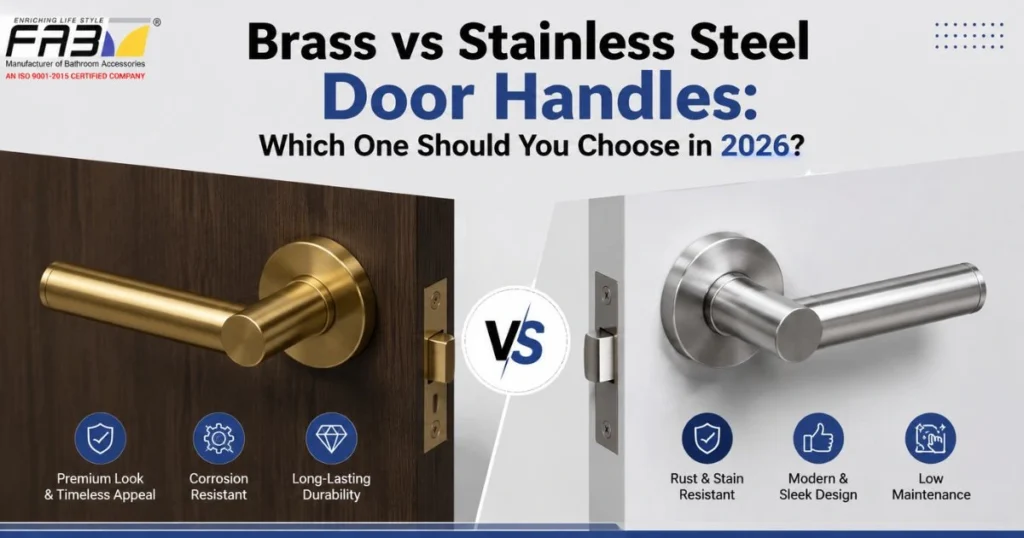
Brass vs Stainless Steel Door Handles: Which One Should You Choose in 2026?

Picture this. You’re standing in a hardware store, staring at two rows of handles. One set gleams warm gold. The other looks cool and clinical. The price tags don’t match either. Meanwhile, your contractor is waiting for an answer. This is exactly where most homeowners get the brass vs stainless steel door handles decision wrong. Not because they lack taste. Rather, because nobody explained what actually separates the two beyond looks. Below, we break down the real differences: durability, hygiene, cost, climate performance, and maintenance. No guesswork. No sales pitch. What Is the Real Difference Between Brass and Stainless Steel Door Handles? Brass is a copper-zinc alloy. It typically contains 60-70% copper. Stainless steel, on the other hand, is an iron alloy. It gets its corrosion resistance from added chromium, and often nickel and molybdenum (source). Similarly, silicon bronze — a related alloy often confused with brass — runs much higher in copper content, between 92% and 96% (source). That copper content is the single biggest factor separating the two materials. It gives brass its warm color. It also gives brass natural resistance to certain types of corrosion. Most importantly, it gives brass a hygiene property stainless steel simply doesn’t have. Stainless steel, by contrast, relies on chromium. Once exposed to oxygen, chromium forms a thin, self-healing oxide layer on the surface. This layer stops rust from forming. As a result, stainless steel has become the default choice for commercial and high-traffic installations. Overall, neither material is objectively “better.” Instead, each one solves a different problem. Which Material Lasts Longer: Brass or Stainless Steel? For most residential and light-commercial use, both materials easily outlast the door they’re fitted to. However, the real question is what kind of wear each one resists. Indoors, and away from salt air, brass wears well against everyday touch and grip pressure. It also resists corrosion for decades. Even so, unlacquered brass will tarnish over time. This happens as the copper reacts with air and moisture. 304 stainless steel contains roughly 18% chromium and 8% nickel. As a result, it offers good corrosion resistance and strong formability for indoor use and mild outdoor conditions. In contrast, 316 stainless steel adds 2-3% molybdenum. This addition sharply improves resistance to chloride-driven pitting and crevice corrosion (source) — the exact failure mode that ruins handles near coastlines or humid coastal cities. In terms of raw surface hardness, 304 stainless steel typically measures 70-90 on the Rockwell B scale. 316, meanwhile, measures slightly higher at 79-95 HRB due to its molybdenum content (source). Brass, comparatively, is softer. This is actually why it machines and casts so cleanly into detailed, ornate designs. Practical takeaway: for a high-traffic commercial door or a coastal exterior, stainless steel — specifically 316 grade — usually wins on raw longevity. For interior doors handled gently and polished regularly, however, brass holds up just as well over a normal building lifecycle. Do Brass Door Handles Really Kill Bacteria? Yes. And this is not a marketing claim. In fact, the U.S. Environmental Protection Agency registered copper alloys, including brass, as the first solid antimicrobial materials in 2008 (source). Specifically, the mechanism is called the oligodynamic effect. Copper ions disrupt bacterial cell walls. They also interfere with DNA and RNA replication, which speeds up microbial death on contact (source). Research shows bacteria can die within minutes to hours on brass surfaces. On stainless steel, however, the same bacteria can survive for days or weeks (source). This is exactly why older hospitals and public buildings historically specified brass door furniture. Not for the aesthetic — for infection control, long before anyone understood germ theory in modern terms. Modern research backs this further. For instance, a 2022 study in the Annals of Clinical Microbiology tested antibacterial effects of copper, brass, and stainless steel against multidrug-resistant bacteria. Likewise, a 2018 paper in the Journal of Applied Microbiology examined the contact-killing properties of copper directly (source list). If you’re specifying hardware for a clinic, a care facility, or a kitchen, this single property is worth factoring into your decision. Stainless steel, in contrast, offers zero antimicrobial benefit on its own. It’s simply a passive, non-reactive surface — clean-looking, but not self-sanitizing. How Do Brass and Stainless Steel Door Handles Compare on Price? Upfront, solid brass hardware usually costs more per unit than standard stainless steel, especially for cast or detailed pieces. Stainless steel typically costs more upfront than budget materials like zinc alloy. Even so, it delivers the lowest long-term replacement cost for large-scale or bulk projects, since it needs almost no ongoing maintenance (source). Brass, by contrast, needs periodic polishing to keep its shine if it’s lacquered. Alternatively, it’s left to patina naturally if unlacquered. Either way, factor that labor cost into any total-cost-of-ownership comparison, particularly for hospitality or commercial properties with dozens of doors. Factor Brass Stainless Steel Typical upfront unit cost Higher for solid/cast pieces Moderate to high depending on grade Long-term maintenance cost Higher (polishing, lacquer reapplication) Low (wipe-clean) Best value at scale Small-to-mid residential projects Large commercial/bulk installations Lifespan with proper care 20+ years indoors 20+ years, longer in humid/coastal zones (316 grade) Table: Cost and lifespan comparison for brass vs stainless steel door handles. Which Material Suits Coastal or Humid Climates? Here, the decision becomes environment-specific. Salt spray can travel 5 km inland or more, depending on wind direction. Furthermore, salt is hygroscopic. It absorbs moisture, and as a result, it accelerates metal corrosion wherever it settles (source). Unlacquered brass reacts quickly to salty, humid air. The copper in the alloy oxidizes with chlorides, and the patina effect sets in fast near the sea. Standard 304 stainless steel isn’t immune either. Notably, 304 grade can develop “tea staining” on a beachfront door — superficial brown rust spots — even though the metal is broadly marketed as rust-resistant (source). 316-grade “marine” stainless steel, with its added molybdenum, is built specifically to resist chloride attack. For this reason, it’s the recommended choice for coastal installations (source). If brass

Brass vs Stainless Steel Door Handles: Which One Should You Choose in 2026? Read More »

toilet paper holder types

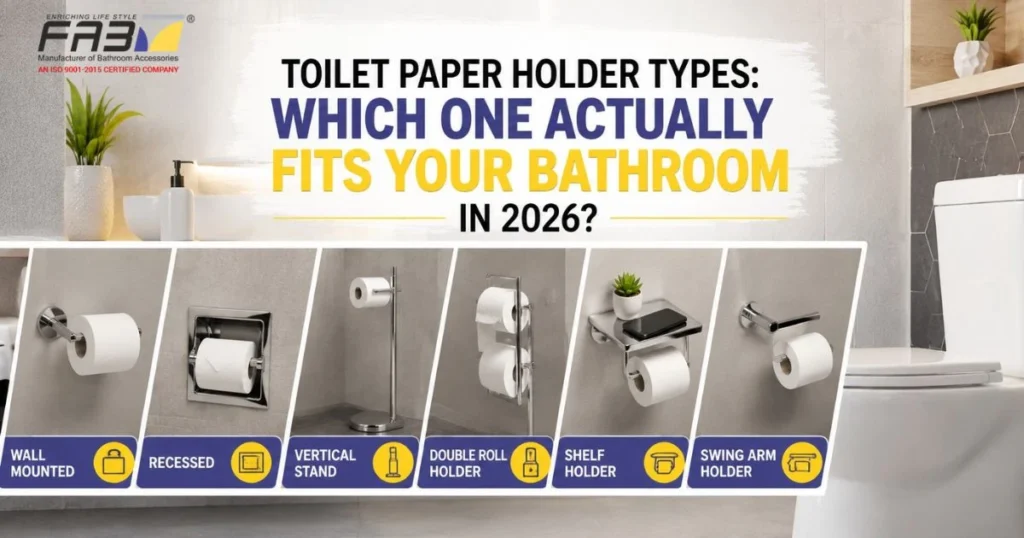
Toilet Paper Holder Types: Which One Actually Fits Your Bathroom in 2026?

Standing in a hardware store aisle staring at a wall of toilet paper holder types is more confusing than it should be. Wall-mounted, freestanding, recessed, spring-loaded, brass, chrome — the options pile up fast, and picking the wrong one means a wobbly fixture or a holder that clashes with your fittings within a year. This guide breaks down every major toilet paper holder type, what each one costs, and how to match one to your bathroom’s layout and finish. What Are the Main Toilet Paper Holder Types? The main toilet paper holder types are wall-mounted, freestanding, recessed, spring-loaded, and shelf-combination holders. Each type solves a different installation or space problem. Wall-mounted holders attach directly to a bathroom wall using screws or adhesive and remain the most common choice worldwide. Freestanding holders sit on the floor beside the toilet, which works well in rented spaces where drilling isn’t allowed. Recessed holders sit flush inside a cavity built into the wall, giving a clean, built-in look favored in modern renovations. Spring-loaded holders use a tensioned rod that makes roll changes faster and prevents the roll from slipping off. Finally, shelf-combination holders add a small ledge above the roll for a phone or air freshener, which suits compact bathrooms that need extra function from one fixture. Each of these types of toilet paper holder comes in multiple finishes and price points, which we’ll cover in the sections below. How Do Wall-Mounted and Freestanding Holders Differ? Wall-mounted holders bolt into the wall for a permanent fit, while freestanding holders stand on their own base and need no drilling at all. That single difference drives almost every other decision — cost, stability, and how much floor space you free up. Wall-mounted units cost less on average and take up zero floor space, which matters in a small en-suite. Freestanding units, on the other hand, install in minutes and travel with you if you move house or renovate later. However, freestanding holders can tip if bumped, and they occupy floor space next to the toilet — a real constraint in a 4×6 ft bathroom. Feature Wall-Mounted Freestanding Installation Drilled or adhesive, permanent No drilling, sits on floor Floor space used None Yes, near toilet base Stability High, fixed to wall Moderate, can tip if bumped Best for Owned homes, permanent fixtures Rentals, temporary setups Typical lifespan Long, fixed mounting Shorter if base is lightweight Table 1: Wall-mounted vs freestanding toilet paper holder types compared by installation, stability, and use case. What Are the Different Toilet Paper Holder Materials? Toilet paper holder materials range from solid brass to plastic, and the material determines both the price and how long the fixture lasts in a humid bathroom. Brass and stainless steel resist corrosion far better than painted metal or plastic, which matters most in high-moisture environments. Solid brass holders resist rust and tarnish for years, even in humid climates, and take on an antique patina that many buyers prefer over a shiny finish. Stainless steel offers similar corrosion resistance with a cooler, more contemporary look. Chrome-plated zinc is the budget-friendly middle ground — it looks polished new but the plating can wear thin over 3-5 years of daily use. Plastic and ABS holders sit at the lowest price point and suit rental units or temporary installations where longevity isn’t the priority. Material Corrosion Resistance Typical Finish Look Best Fit Solid brass Excellent Antique gold, matte, polished Premium bathrooms, humid climates Stainless steel Excellent Brushed or mirror chrome Modern, minimalist bathrooms Chrome-plated zinc Moderate Bright, shiny Budget renovations Plastic/ABS Low Matte, colored options Rentals, temporary use Table 2: Toilet paper holder materials ranked by durability and best-fit bathroom style. Solid brass fixtures, in particular, pair naturally with brass towel rings, robe hooks, and faucets — a coordinated set reads as intentional rather than mismatched. Visit Us – For More Brass Bathroom Accessories Collection Which Toilet Paper Holder Type Suits Small Bathrooms? Recessed and spring-loaded wall-mounted holders suit small bathrooms best because neither one adds bulk to a tight space. A recessed holder disappears into the wall cavity, so there’s nothing protruding for a shoulder or elbow to catch on during a squeeze past the sink. In apartments under 35 square feet, every inch of clearance counts. Consequently, a freestanding holder or shelf-combination unit often becomes an obstacle rather than a convenience in these layouts. Spring-loaded wall holders also help here since they mount close to the wall with minimal projection, unlike bulkier decorative designs. For rental apartments specifically, an adhesive-mounted wall holder is often the practical answer since it avoids drilling into tiled walls entirely, and it can be removed without leaving damage. What Determines Toilet Paper Holder Price? Toilet paper holder price depends primarily on material, brand, and finish quality — brass and stainless steel units cost more than plastic or basic chrome. Installation type also affects price, since recessed holders typically need a wall cavity and cost more to fit than a simple wall-mounted bracket. Type/Material Typical Price Range (INR) Typical Price Range (USD) Plastic/ABS wall-mounted ₹150 – ₹400 $2 – $5 Chrome-plated zinc ₹400 – ₹900 $5 – $11 Stainless steel ₹800 – ₹2,000 $10 – $24 Solid brass ₹1,200 – ₹4,500 $15 – $54 Recessed (with fitting) ₹1,500 – ₹5,000 $18 – $60 Table 3: Indicative toilet paper holder price ranges by type and material. Bulk buyers — hotels, developers, and interior contractors — generally pay a lower per-unit price when ordering brass fixtures in volume directly from a manufacturer rather than through retail. How Do You Choose Between a Modern and a Classic Toilet Paper Holder Type? A modern bathroom calls for clean-lined stainless steel or matte black holders, while a classic or traditional bathroom pairs best with polished or antique brass. The finish should echo whatever metal already appears on your taps, showerhead, and cabinet handles. Mixing metals rarely looks intentional unless it’s a deliberate design choice. For example, a matte black holder against gold-finish taps often reads as mismatched rather than

Toilet Paper Holder Types: Which One Actually Fits Your Bathroom in 2026? Read More »

wash basin waste coupling

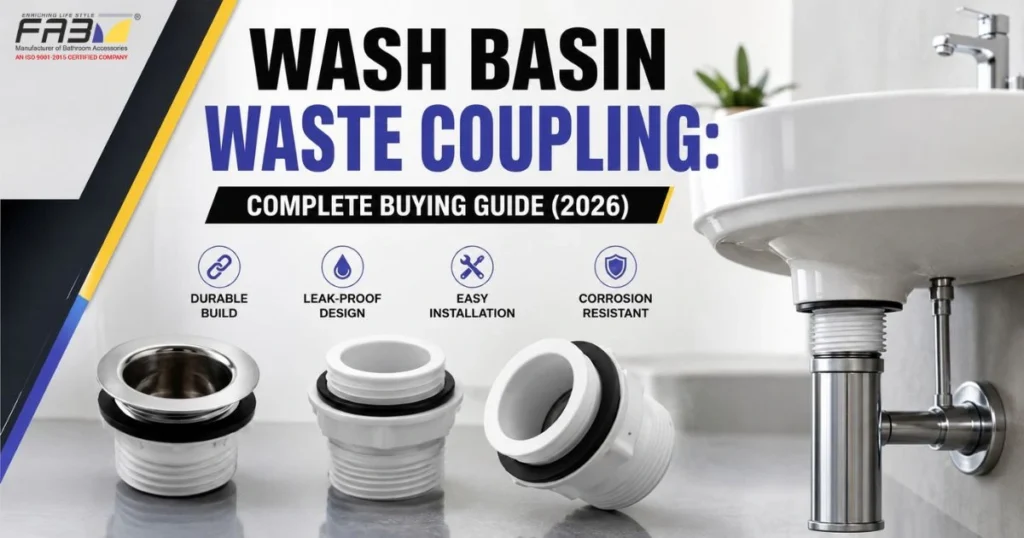
Wash Basin Waste Coupling: Complete Buying Guide (2026)

A wash basin waste coupling is a small fitting, but it decides whether a basin drains cleanly for ten years or starts leaking within ten months. This guide by Fab Bath Interiors answers every practical question an Indian homeowner, plumber, or contractor asks before buying one — sizing, materials, price, standards, installation, and common problems — in one place. What Is a Wash Basin Waste Coupling? A wash basin waste coupling is the fitting that sits inside a basin’s drain hole and connects the basin outlet to the drainage pipe underneath. It allows wastewater to flow out of the basin while blocking hair, soap residue, and debris from entering the pipe and, in most designs, sealing against sewer gas coming back up. In practice, most Indian bathrooms use a 32mm wash basin waste coupling, while kitchen sinks need a wider 40mm version because of higher water flow. The fitting has three working parts: a flange (the visible strainer disc), a threaded body, and a locking nut that pulls everything tight against the basin from underneath. Get any one of these mismatched to your basin, and you’ll see water seepage under the vanity within weeks — a callback every plumber wants to avoid. Homeowners sometimes confuse this fitting with the trap below it, but the two serve different jobs. The coupling seals the basin’s own drain hole and channels water downward; the trap — whether a P-trap or bottle trap — holds a small reservoir of water further down the line to block sewer gas from travelling back up. A basin can have a perfectly sealed coupling and still smell bad if the trap underneath has run dry, which is why the two components are usually inspected together during a service call rather than in isolation. How Does a Wash Basin Waste Coupling Work? A wash basin waste coupling works by sitting flush in the drain hole, holding a rubber or fibre washer tight against the basin surface, and channelling water down through its threaded body into the P-trap or bottle trap below. The locking nut, tightened from beneath the basin, is what actually creates the watertight seal — not the coupling’s threads alone. As a result, correct installation matters as much as the fitting itself. A coupling tightened by hand without a spanner, or seated without plumber’s putty or a rubber gasket, is one of the most common reasons a brand-new wash basin waste coupling starts dripping within the first month of use. Additionally, the strainer or dome-shaped mesh on top is what catches soap flakes and hair before they reach the trap, which is why couplings without a strainer clog drainage lines faster in shared bathrooms. What Are the Different Types of Wash Basin Waste Couplings? There are four common types of wash basin waste couplings sold in India today, and each suits a different basin design: However, the mechanism you choose should match how the basin is used. A pedestal basin in a guest bathroom rarely needs a pop-up mechanism, while a countertop basin in a master bath usually looks better with one. What Size Wash Basin Waste Coupling Do I Need? Most Indian bathroom basins use a 32mm wash basin waste coupling, while kitchen sinks require a 40mm size because of the higher volume of water they handle. Measuring the drain hole diameter before buying is the single most important step in avoiding a leak. Basin/Fixture Type Standard Coupling Size Common Installation Pedestal wash basin 32mm Full-thread or half-thread, exposed trap Wall-hung basin 32mm Concealed or bottle-trap pipework Countertop/vanity basin 32mm Usually paired with pop-up coupling Kitchen sink 40mm (1½”) Full-thread, higher flow strainer Table 1: Standard wash basin waste coupling sizes by fixture type in Indian homes. In practice, buying the wrong size — even by 2–3mm — is the single biggest cause of returns on e-commerce marketplaces, since a slightly undersized coupling won’t seat against the locking nut properly. When in doubt, check the manufacturer’s product manual rather than estimating by eye. How Do You Measure Your Basin’s Drain Hole Before Buying? Measuring a basin’s drain hole correctly before buying a wash basin waste coupling takes less than two minutes and prevents the most common return reason on Indian e-commerce sites: ordering the wrong size. Use a measuring tape or calliper across the widest point of the drain opening, from inner edge to inner edge, not across the visible rim of the basin. Most pedestal and countertop basins in India measure close to 32mm, while kitchen sink openings measure closer to 40mm. Additionally, check whether a small oval or round overflow hole sits near the top rim of the basin — its presence determines whether you need a half-thread or full-thread coupling, covered in more detail further below. If the basin came with the original fitting still in place, removing and measuring that old coupling directly is usually more reliable than measuring the hole itself, since wear and mineral buildup can distort the opening slightly over years of use. What Materials Are Wash Basin Waste Couplings Made Of? Wash basin waste couplings are typically made from brass, stainless steel, or ABS/PVC plastic, and the material you choose directly affects how long the fitting lasts under daily exposure to water, cleaning agents, and humidity. Material Durability Typical Use Case Relative Price Brass (chrome/gold-plated) High – corrosion-resistant, 10+ years Premium bathrooms, hard water areas Higher Stainless steel (304 grade) High – rust-resistant Mid-range to premium bathrooms Moderate–High ABS/PVC plastic Moderate – can degrade with heat/UV Budget installations, utility areas Lowest Table 2: Material comparison for wash basin waste couplings sold in India. Brass fittings conforming to Indian material norms generally use a copper-zinc-tin alloy, which is why brass wash basin waste couplings resist corrosion better in regions with hard or saline groundwater — a real concern in several Indian coastal and industrial belts. Stainless steel, particularly 304-grade, is the next most durable option and is now manufactured domestically by several Indian bath-fitting brands. Plastic couplings are

Wash Basin Waste Coupling: Complete Buying Guide (2026) Read More »

benefits of bath tub

Benefits of Bath Tub: Why Every Home Needs One

Whether you’re renovating your bathroom or building a new home, one question often comes up — is a bathtub really worth it? The short answer is yes, and the long answer is everything you’re about to read. The benefits of bath tub go far beyond just soaking in warm water. From deep physical recovery to mental wellness, increased home resale value to better sleep quality — a bathtub is one of those home investments that quietly pays you back every single day. At Fab Bath Interiors, we’ve helped hundreds of homeowners transform their bathrooms into personal sanctuaries. In this article, we’ll walk you through every major bath tub benefit backed by facts, expert insights, and real-world value — so you can make the most informed decision for your home. What Makes a Bathtub More Than Just a Luxury? Many people assume a bathtub is a luxury, something reserved for high-end homes or spa hotels. But in reality, bathtubs have been a cornerstone of human hygiene and wellness for thousands of years — from ancient Roman baths to modern soaking tubs. Today, with rising stress levels, busy lifestyles, and increasing health awareness, a bathtub has become less of a luxury and more of a necessity. The global bath products market was valued at over USD 12 billion in 2023 and is projected to grow steadily through 2030, largely driven by consumer demand for wellness-focused home spaces. This alone tells you that more and more people are recognizing the bath tub benefits and making it a priority in their homes. Top Health Benefits of Bath Tub Soaking 1. Muscle Relaxation and Pain Relief One of the most well-known benefits of bath tub use is muscle relaxation. When you soak in warm water, your blood vessels dilate, allowing better circulation throughout your body. This increased blood flow helps relieve: A 2019 study published in the Journal of Applied Physiology found that regular warm baths can reduce inflammation markers in the body, similar to light aerobic exercise. That’s not just comfort — that’s science. Condition How Bathtub Soaking Helps Recommended Soak Time Muscle soreness Improves circulation, flushes lactic acid 15–20 minutes Lower back pain Relieves spinal pressure, relaxes muscles 20–30 minutes Arthritis Reduces joint stiffness, eases movement 20 minutes Sports injuries Anti-inflammatory effect of warm water 15 minutes 2. Improved Blood Circulation Warm water immersion creates a natural hydraulic pressure on the body. This gentle pressure helps push blood from your extremities toward your core, improving overall cardiovascular circulation. According to the European Journal of Applied Physiology, regular bathing can reduce resting heart rate and help manage mild hypertension over time. For people who lead sedentary lifestyles or have desk jobs, this is one of the most underrated bath tub benefits. 3. Better Sleep Quality Struggling with sleep? A warm bath 1–2 hours before bedtime can significantly improve your sleep quality. Here’s how: When you soak in warm water, your core body temperature rises. Once you step out, it drops rapidly — and this drop signals to your brain that it’s time to sleep. Research from the University of Texas confirmed that a 10-minute warm bath between 40°C–42.5°C taken 1–2 hours before bed can improve sleep onset by up to 10 minutes and increase sleep quality by 80% in study participants. That’s a powerful bath tub benefit hiding in plain sight. 4. Skin Health and Hydration A warm bath opens your pores and allows your skin to absorb moisture more effectively. When you add bath salts, essential oils, or oatmeal to your bath, you amplify this effect. Regular bathing: At Fab Bath Interiors, we always recommend pairing your soaking experience with gentle, skin-safe bath additives that complement your bathtub’s material finish. Mental Health Benefits of Bath Tub Use Stress Relief and Anxiety Reduction In our fast-paced world, stress is unavoidable — but how you manage it makes all the difference. One of the most profound bath tub benefits is its effect on mental health. Warm water immersion triggers the release of serotonin, your body’s “feel good” hormone, while simultaneously lowering cortisol — the stress hormone. A study from the University of Wolverhampton found that people who took a daily bath reported higher levels of optimism, emotional resilience, and overall mood compared to those who only showered. Mental Health Benefit Mechanism Result Stress reduction Lowers cortisol levels Calmer mind, relaxed body Anxiety relief Warm water activates parasympathetic nervous system Reduced anxiety symptoms Better mood Triggers serotonin release Improved emotional wellbeing Mindfulness opportunity Quiet, sensory-rich environment Mental reset and clarity Improved sleep Regulates body temperature Faster sleep onset A Space for Digital Detox In a world dominated by screens, a bathtub offers one of the only guilt-free reasons to put your phone down. The bathroom naturally encourages you to step away from digital distractions, creating a protected space for mindfulness, meditation, or simply breathing. Many wellness coaches and therapists now actively recommend “bath therapy” as a tool to manage burnout, anxiety, and emotional fatigue. Bathtub Benefits for Families with Children Safe and Fun Bathing for Kids – For families with young children, a bathtub isn’t just a preference — it’s practically essential. Showering young children is difficult and unsafe. A bathtub provides: The American Academy of Pediatrics recommends sponge baths in tubs for newborns and tub baths for infants once their umbilical cord falls off — reinforcing why a bathtub is a family necessity, not just an adult indulgence. Therapeutic Baths for Children with Sensory Issues – For children with autism spectrum disorder (ASD) or sensory processing challenges, warm water immersion in a bathtub can be deeply calming. Occupational therapists often recommend “sensory baths” with specific water temperatures and tactile elements as part of a child’s therapy routine. The Economic and Real Estate Benefits of Bath Tub Increases Home Resale Value – This is one of the most tangible bath tub benefits from an investment perspective. Real estate data consistently shows that homes with at least one bathtub sell faster and at higher prices than

Benefits of Bath Tub: Why Every Home Needs One Read More »

What Is in a 5 Piece Bathroom

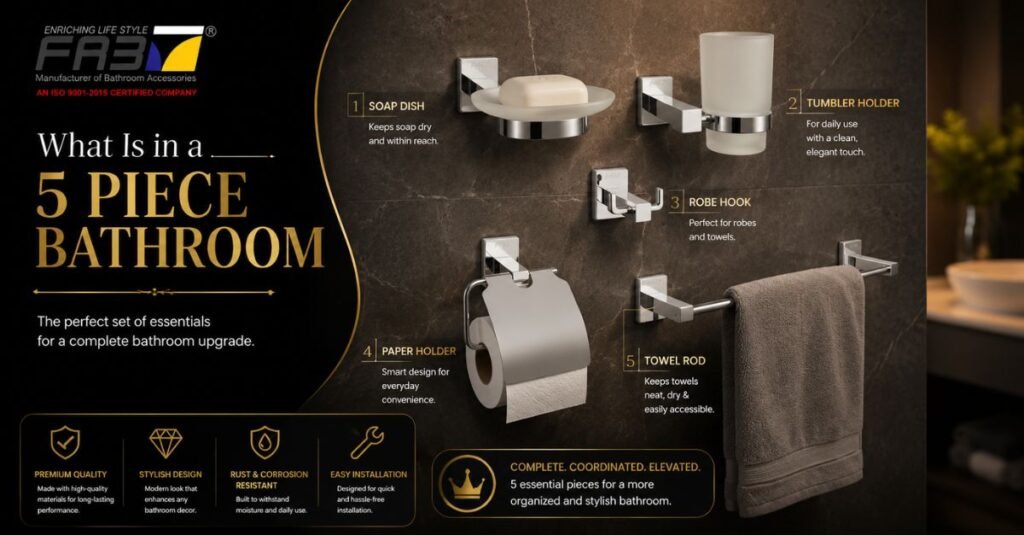
What Is in a 5 Piece Bathroom? Complete Guide to Fixtures, Layouts & Design Tips

What is in a 5 piece bathroom? If you’ve been browsing real estate listings, planning a home renovation, or simply curious about bathroom terminology, this question has probably crossed your mind. A 5 piece bathroom is one of the most desirable and functional bathroom configurations in modern homes — combining luxury, practicality, and resale value all in one space. Whether you’re in India, the UK, the USA, or Australia, understanding what makes a 5 piece bathroom so popular can help you plan your next renovation or make a smarter property investment. In this comprehensive guide, we’ll walk you through every fixture, layout option, design tip, and cost consideration associated with a 5 piece bathroom — so you know exactly what to expect and how to create one. What Is a 5 Piece Bathroom? A five piece bathroom (also written as 5-piece bathroom or 5pc bath) refers to a bathroom that contains five plumbing fixtures. Unlike a simple half bath or a standard full bathroom, the 5 piece configuration elevates daily hygiene routines to a near-spa experience. The term “piece” in bathroom terminology does not refer to tiles, furniture, or decorative accessories — it strictly counts the number of plumbing fixtures (i.e., items connected to a water supply or drain line). This is a common point of confusion among homeowners and first-time buyers alike. Quick Definition: A 5 piece bathroom = 5 plumbing fixtures, most commonly a toilet, two sinks (double vanity), a bathtub, and a separate shower. The 5 Fixtures Explained: What Goes Inside a 5 Piece Bathroom? Let’s break down each of the five core components found in a standard 5 piece bathroom layout: 1. Toilet The toilet is a non-negotiable fixture in any bathroom configuration — from a 1-piece powder room to a luxury 5 piece ensuite. In a five fixture bathroom, the toilet is usually placed in its own alcove or water closet for added privacy. Modern options include: Internal link tip: Learn more about choosing the right toilet for your bathroom renovation. 2. Bathtub (Soaking Tub) The bathtub is what separates a 5 piece bathroom from a simpler 3 or 4 piece layout. Having a separate, dedicated soaking tub means you don’t have to compromise between showering and bathing — both are available independently. Popular bathtub styles for five piece bathrooms include: 3. Separate Walk-In Shower In a 5 piece master bathroom, the shower is entirely separate from the tub — a key design feature that gives this layout its luxurious feel. A dedicated walk-in shower can include: 4 & 5. Double Sink / Dual Vanity (Two Sinks = Two Pieces) This is where most people get confused. In a standard 5 piece bathroom, the two sinks count as two separate plumbing fixtures — making up the 4th and 5th “pieces.” A double vanity allows two people to get ready simultaneously, which is why five piece bathrooms are especially popular as master bathroom ensuite configurations in family homes. Double sink options include: Alternative 5th Fixture: In some configurations, the fifth fixture is a bidet rather than a second sink. This variation is more common in European homes, upscale Indian residences, and certain Australian luxury builds. A bidet toilet combo is another modern option. 5 Piece Bathroom vs. Other Bathroom Types: A Quick Comparison Understanding how a 5 piece bathroom compares to other configurations helps you make the right choice for your home and budget. Bathroom Type Number of Fixtures Typical Fixtures Included Best For 1-Piece (Powder Room) 1 Toilet only Minimal guest bathrooms 2-Piece (Half Bath) 2 Toilet + Sink Guest bathrooms, small spaces 3-Piece Bathroom 3 Toilet + Sink + Shower or Tub Secondary bathroom, rentals 4-Piece Bathroom 4 Toilet + Sink + Tub + Shower Family bathrooms, standard full baths 5-Piece Bathroom 5 Toilet + 2 Sinks + Tub + Shower Master suites, luxury ensuite The primary difference between a 4 piece vs 5 piece bathroom is the addition of that fifth fixture — either a second sink or a bidet. While seemingly minor, this distinction has major implications for both daily functionality and the perceived value of the space. Common 5 Piece Bathroom Configurations Not all 5 piece bathrooms look the same. Here are the most popular arrangements: Configuration 1: Classic Master Ensuite Toilet + Double Sink Vanity + Freestanding Bathtub + Walk-In Shower This is the most common layout in North American, Australian, and increasingly Indian premium homes. Configuration 2: European-Style 5 Piece Bath Toilet + Bidet + Single Sink + Bathtub + Shower The bidet acts as the fifth plumbing fixture. Common in high-end European-inspired builds and luxury Indian villas. Configuration 3: Jack-and-Jill 5 Piece Bathroom Double Sink + Toilet + Tub + Shower (shared between two bedrooms) Popular in family homes where the bathroom serves children in adjacent bedrooms. Configuration 4: Compact 5 Piece Bath Double Sink + Toilet + Combination Tub/Shower + Bidet Used when space is limited but the homeowner still wants five fixtures. Common in UK and Australian terraced houses. 5 Piece Bathroom Size: How Much Space Do You Need? The size requirements for a 5 piece bathroom depend heavily on your chosen layout and fixture sizes. Below is a general size guide: Space Available Recommended Layout Notes Under 50 sq ft (4.6 m²) Not ideal for true 5-piece Consider compact fixtures or a 4-piece instead 50–80 sq ft (4.6–7.4 m²) Compact 5-piece Combination tub/shower or small freestanding tub 80–120 sq ft (7.4–11 m²) Standard 5-piece master bath Separate tub and shower, double vanity 120–200+ sq ft (11–18+ m²) Luxury 5-piece ensuite Freestanding tub, walk-in shower, full double vanity For most homeowners in the UK and India working with smaller floor plans, a compact or mid-size 5 piece design is achievable with smart layout planning. Design Tips for a Perfect 5 Piece Bathroom Creating a beautiful and functional five piece bathroom requires thoughtful design. Here are expert-backed tips to help you get it right: Choose Your Focal Point First Decide early whether your room will be

What Is in a 5 Piece Bathroom? Complete Guide to Fixtures, Layouts & Design Tips Read More »

Soap Dish with Tumbler Holder

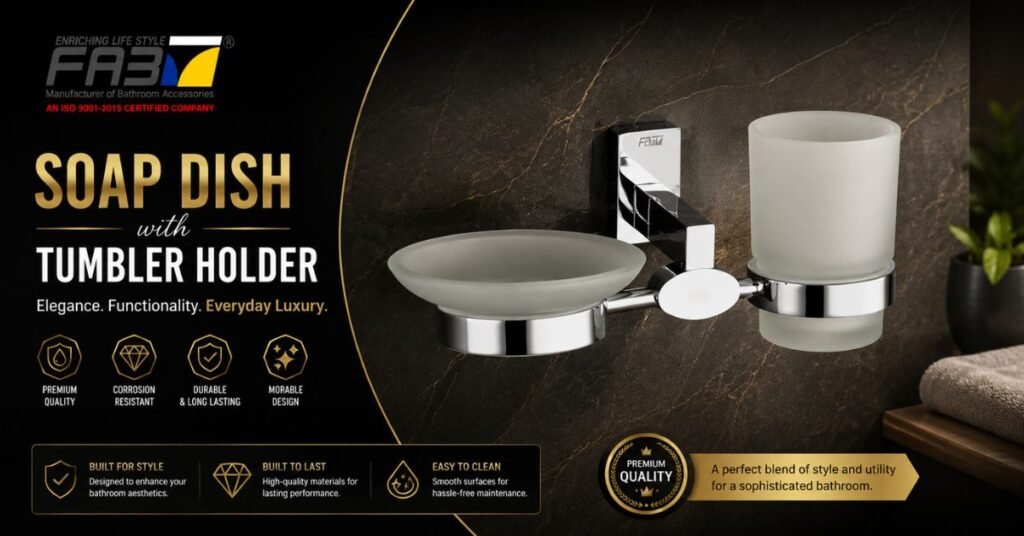
Soap Dish with Tumbler Holder: The Ultimate Buying Guide for a Stylish, Organised Bathroom

A soap dish with tumbler holder is one of the smartest dual-purpose bathroom accessories you can install to eliminate countertop clutter, improve hygiene, and elevate your bathroom’s visual appeal. Whether you are renovating a luxury master bathroom, outfitting a compact guest washroom, or sourcing bathroom fittings in bulk for a residential project, choosing the right soap dish with tumbler holder can make a significant difference. This complete buying guide covers everything — from competitor analysis and material choices to the best products from Fabbath Interiors, a leading brass bathroom accessories manufacturer based in Jamnagar, India’s Manchester of Brass Industry. Competitor Analysis: Who Ranks for “Soap Dish with Tumbler Holder”? Understanding the competitive SERP landscape is the foundation of an effective content strategy. Here is a detailed breakdown of the top competitors currently ranking for soap dish with tumbler holder: Competitor Analysis — “Soap Dish with Tumbler Holder” SERP Landscape Competitor / Platform Content Type Estimated Word Count Strengths Weaknesses / Gaps Ruhe India (ruheindia.com) Collection/Category Page ~600 words Strong product imagery, price points, Indian buyer focus, keyword in H1 No long-form guide, no FAQ, no external links, poor GEO targeting for UK/USA/Australia Amazon / Walmart E-commerce Product Listings Variable High domain authority, massive traffic, structured data No educational content, zero brand storytelling, no SEO article IndiaMart B2B Marketplace Listings Variable Supplier data, price transparency, manufacturer trust signals No buying guide, no content SEO, no FAQs, no GEO targeting Breykrause.com Product Category Page ~200 words Niche focus on recessed soap dish + tumbler holder combo Extremely thin content, no guide, minimal SEO TechGearLab / TestMarket Review/Roundup Articles ~2,000–3,500 words Strong E-E-A-T, tested products, user reviews No brand focus, no India/Jamnagar sourcing angle, no combo product guide Modobath.com Inspiration Blog Post ~800 words Good explanation of wall-mounted benefits Focuses on dispensers, not the brass soap dish + tumbler combo; no FAQs Key Gap Identified: No competitor currently publishes a long-form, fully optimized article specifically targeting the brass soap dish with tumbler holder combo, with GEO targeting for India, UK, USA, and Australia simultaneously — creating an open ranking opportunity for Fabbath Interiors. What Is a Soap Dish with Tumbler Holder? A soap dish with tumbler holder is a combined bathroom wall accessory that integrates two essential functions into a single, space-saving unit: This dual-purpose combo accessory is typically wall-mounted near the washbasin or bathroom vanity, making both items conveniently accessible while freeing up valuable countertop space. It is an ideal solution for small bathrooms, en-suites, hotel bathrooms, and any space where functionality and aesthetics must coexist. Unlike single-purpose accessories, a soap dish and tumbler holder set reduces the number of wall fixtures needed, simplifies installation, and creates a cleaner, more coordinated bathroom look — especially when finished in classic chrome, brushed nickel, antique brass, or polished gold. Why Choose a Brass Soap Dish with Tumbler Holder? When it comes to material selection, brass stands in a class of its own for bathroom accessories. Here is why a brass soap dish with tumbler holder outperforms alternatives: Unmatched Durability Brass is a naturally corrosion-resistant alloy of copper and zinc. Unlike stainless steel accessories that may develop surface rust in high-humidity environments, a quality brass tumbler holder and soap dish retains its structural integrity and surface finish for decades, even in steam-heavy bathrooms. Superior Aesthetic Appeal The warm, golden undertone of brass — whether polished, antique, or brushed — adds timeless sophistication to any bathroom interior. Brass bathroom accessories have experienced a major design renaissance globally, appearing prominently in luxury bathroom projects across the UK, USA, Australia, and India. Anti-Microbial Properties Brass is naturally anti-microbial, meaning it inhibits the growth of bacteria on its surface. For bathroom accessories that come into regular contact with soap and water, this is a significant hygiene advantage. Eco-Friendly Manufacturing High-quality brass soap dishes and tumbler holders — particularly those manufactured in Jamnagar, India’s Manchester of Brass Industry — use a significant proportion of recycled brass, making them a sustainable choice aligned with global environmental standards. Fabbath Interiors, rooted in Jamnagar’s world-leading brass manufacturing cluster, produces soap dish with tumbler holder sets that combine all these advantages — delivering products that serve buyers in India, the UK, the USA, and Australia with equal confidence. Types of Soap Dish with Tumbler Holder: Which Is Right for You? Choosing the correct type depends on your bathroom size, wall material, existing décor, and budget. Here is a breakdown of the main options: 1. Wall-Mounted Soap Dish with Tumbler Holder The most popular configuration. Both the soap dish and tumbler holder are fixed to the wall using screws or adhesive mounts. This type maximises countertop space and provides the cleanest visual line. Ideal for: bathrooms of all sizes, hotels, apartments, and residential projects. 2. Recessed Soap Dish with Tumbler Holder Built into the wall during renovation or new construction, recessed combos create a flush, seamless look. They are a favourite in luxury spa-style bathrooms and high-end hospitality projects in the UK, USA, and Australia. 3. Freestanding / Counter-Top Combo A standalone unit that sits on the bathroom counter. Less commitment than wall-mounting and easy to relocate. Suitable for rental properties or temporary bathroom setups. 4. Combo Sets (4-in-1 and 5-in-1 Accessories) Advanced combo sets include a soap dish, tumbler holder, toothbrush holder, liquid soap dispenser, and towel ring in a single coordinated installation. These full sets — like those offered by Fabbath Interiors — deliver maximum functionality with a unified aesthetic. Key Features to Look for in a Soap Dish with Tumbler Holder When selecting a soap dish and tumbler holder set for your bathroom, evaluate these critical features: Material Quality — Opt for solid brass, grade 304 stainless steel, or high-quality zinc alloy over cheap plastic or low-grade metals that corrode quickly in humid conditions. Finish and Coating — Choose from chrome, brushed nickel, polished brass, antique brass, matte black, or PVD (Physical Vapour Deposition) coatings. PVD finishes, available in many Fabbath Interiors products, are the most durable and scratch-resistant. Drainage Design

Soap Dish with Tumbler Holder: The Ultimate Buying Guide for a Stylish, Organised Bathroom Read More »

Scroll to Top