Quick Enquiry
whatapp icon
phone call

Fab Bath Interiors

Looking For Bulk Orders @ Competitive Prices? Enquiry Now

Download Our Latest Products Catalogue Click Here

info@fabbathinteriors.com

Bathroom Accessories India

Bathroom Accessories in India

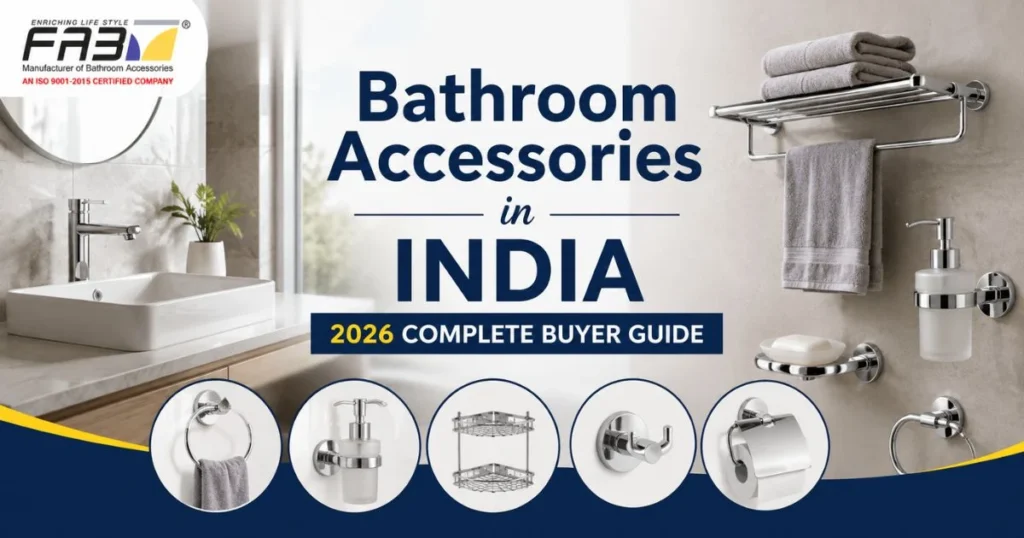
Bathroom Accessories in India: 2026 Complete Buyer Guide

Sourcing brass bathroom hardware from India isn’t as simple as picking a name off Google. Between GST slabs, HSN codes, export documentation, and a manufacturing landscape spread across dozens of clusters, most buyers and distributors waste weeks figuring out who actually ships quality product on time. This guide by Fab Bath Interiors cuts through that — covering the real market data, the manufacturing hub that supplies most of the world, and exactly what to check before you place your first order. What Are Bathroom Accessories, and Why Does India’s Market Matter for Buyers? Bathroom accessories cover the fittings that finish a bathroom beyond the core sanitaryware — towel rails, soap dishes, robe hooks, tumbler holders, toilet paper holders, and similar hardware, typically in brass, stainless steel, or zinc alloy. Bathroom accessories in India are produced at a scale most overseas buyers underestimate. Analysts project the broader Indian sanitary ware and bathroom accessories market to reach roughly $5 billion by 2031, growing at an 8.1% compound annual rate from 2025. That growth isn’t theoretical. The India bath fittings segment specifically was valued at $3.8 billion in 2026 and is expected to expand to $8.53 billion by 2035, at a 9.40% CAGR. For buyers, this means one thing: India isn’t a fallback sourcing option anymore. It’s a primary manufacturing base with real capacity, real infrastructure, and real export volume behind it. Who Manufactures and Supplies Bathroom Accessories in India? Most bathroom accessory production in India traces back to one city: Jamnagar, Gujarat. Known as the Brass Capital of India, Jamnagar hosts over 5,000 production units and accounts for roughly 80% of India’s total brass exports. A supplier of bathroom accessories in India operating out of Jamnagar isn’t working from a single small workshop. Annual exports from the cluster exceed ₹3,500 crore, or around $500 million, shipped to more than 80 countries, including several Fortune 500 buyers and OEMs. That scale exists because the cluster runs a complete supply chain in one place — melting, casting, machining, plating, and export documentation, all within a few kilometers. Fab Bath Interiors operates directly inside this ecosystem, which is why sourcing brass bathroom hardware from us means working with a manufacturer embedded in the actual production base, not a trading intermediary reselling someone else’s output. Why Does Location Matter for a Manufacturer of Bathroom Accessories in India? Proximity to ports changes lead times directly. Jamnagar sits close to both Mundra and Kandla ports, which keeps international shipping fast and cost-efficient. For a distributor placing repeat container orders, that geography translates into fewer inland logistics delays compared to inland manufacturing clusters. What Makes Brass the Preferred Material for Bathroom Accessories in India? Brass resists corrosion in wet environments, holds a chrome or nickel finish well, and machines cleanly into precise fittings — three properties that matter directly for bathroom hardware exposed to daily moisture. Unlike zinc alloy, brass doesn’t pit or discolor after a few years of humid use, which is why premium fittings across hospitality and residential projects default to it. Jamnagar’s brass industry combines casting, extrusion, and CNC machining under integrated facilities, which lets a single manufacturer control tolerance and finish quality from raw billet to the finished accessory — instead of outsourcing steps across multiple vendors and losing consistency along the way. How Is the Bathroom Accessories Market in India Growing? Growth isn’t limited to volume; it’s shifting toward premium, design-led hardware. Below is a snapshot of the key figures buyers should know before negotiating pricing or minimum order quantities. Market Segment 2025/2026 Value Projected Value CAGR Source India Sanitary Ware Market $68.4 billion (2025) $122.5 billion (2034) 6.70% IMARC Group India Bath Fittings Market $3.8 billion (2026) $8.53 billion (2035) 9.40% MarkWide Research Sanitary Ware & Bathroom Accessories — $5 billion (2031) 8.1% 6Wresearch India Brass Exports (Apr–Jul, YoY) $1,122.53 million +30.99% growth — SEAIR Table 1: India’s bathroom hardware and brass export market at a glance. Three forces are driving this: rising urban disposable income, hospitality sector expansion, and a consumer shift toward wall-mounted, design-forward fixtures over standard fittings. Consumers are moving from traditional pedestal basins to over-the-counter designs, largely because they’re easier to clean and read as more contemporary. That same shift is happening in accessories — buyers now ask for matte black, brushed gold, and rose-gold finishes as often as standard chrome. What Should You Look for in a Manufacturer of Bathroom Accessories in India? Not every Jamnagar workshop is built for export. Before signing a purchase order, check where the manufacturer actually sits on the production chain. Criteria Trading House Integrated Manufacturer Quality Control Limited, depends on sub-vendor Direct, in-house Pricing Transparency Lower visibility into cost breakup Clear cost structure Customization Slower turnaround Faster, in-house tooling Export Documentation Often outsourced Handled internally Lead Time Reliability Variable Consistent Table 2: Trading house vs. integrated manufacturer — what actually changes for the buyer. Ask for factory videos, not just product catalogs. Request a sample batch before a container order. Verify GST registration and IEC (Import Export Code) directly rather than taking a company’s word for it — both are public records you can check in minutes. Why Does This Matter for a Manufacturer of Bathroom Accessories in India Specifically? Because brass casting quality is invisible on a spec sheet. Tensile strength, plating thickness, and corrosion resistance only show up after months of bathroom use — by which point a bulk order has already shipped. Working with a manufacturer that controls casting, machining, and plating in-house removes the guesswork. How Does GST and HSN Classification Apply to Bathroom Accessories in India? Tax classification affects landed cost directly, and copper-brass fittings sit under a specific HSN chapter that buyers frequently misclassify. Product Category HSN Code GST Rate Brass/Copper Sanitary Ware 7418 18% Ceramic Sanitary Fixtures 6910 18% Iron/Steel Sanitary Ware 7324 18% Plastic Sanitary Ware 3922 18% Taps, Valves & Cocks 8481 18% Table 3: Current HSN and GST classification for bathroom hardware categories (2026). Copper sanitary ware under HSN 7418 attracts

Bathroom Accessories in India: 2026 Complete Buyer Guide Read More »
Bathroom Accessories Manufacturer

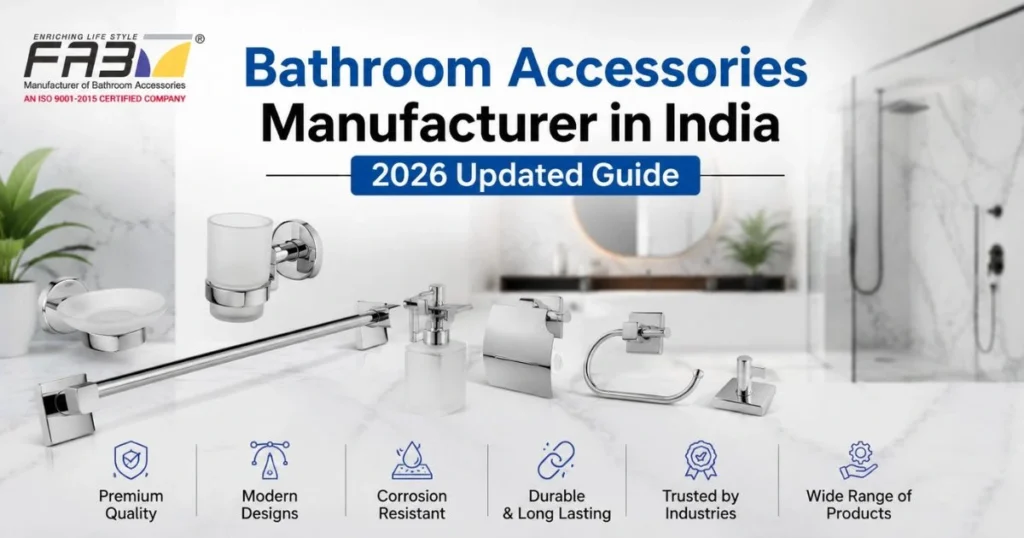
Bathroom Accessories Manufacturer in India: 2026 Updated Guide

Sourcing a bathroom accessories manufacturer sounds simple until your shipment gets stuck at customs over a missing certification, or your “solid brass” order turns out to be a zinc-alloy substitute. If you’ve been burned by inconsistent quality or vague MOQs before, you already know why the right manufacturing partner matters more than the lowest quote. This guide by Fab Bath Interiors breaks down what separates a dependable bathroom accessories manufacturer from a risky one, why India — and Jamnagar specifically — has become the default sourcing destination, and what to check before you sign a purchase order. What Makes a Bathroom Accessories Manufacturer Reliable in 2026? A reliable bathroom accessories manufacturer controls its own casting, machining, and finishing in-house rather than outsourcing to unverified job workers. This matters because quality consistency drops sharply the moment production gets split across subcontractors with no shared quality standard. Look for three things first: vertical integration, documented certifications, and a traceable production history. A manufacturer that owns its extrusion and CNC machining can hold tighter tolerances and catch defects earlier. In contrast, a trading company that simply resells factory output usually cannot tell you which unit made your specific batch. Reputation also comes from longevity. Manufacturers with multiple decades in operation have typically weathered raw material price swings, changing import regulations, and shifting buyer expectations — and adjusted their processes accordingly. That track record is worth more than a polished catalog. Why Is India Becoming the World’s Preferred Bathroom Accessories Manufacturer Hub? India dominates this space primarily because of Jamnagar, Gujarat, where a single industrial cluster produces the overwhelming majority of the country’s brass output. According to Anand Brass’s industry guide, Jamnagar is home to more than 5,000 brass manufacturing units and produces an estimated 60 to 65 percent of India’s total brass output. Some industry sources place that figure even higher, citing roughly 80% of India’s brass exports coming from the city. This concentration didn’t happen overnight. Jamnagar’s brass industry traces back to the early 20th century, when local artisans produced brass utensils and decorative items, before the sector shifted toward industrial components in the 1960s and 1970s as India’s electrical, plumbing, and automotive sectors grew. Consequently, the region built a complete supply chain — foundries, extrusion mills, CNC shops, and plating units — all within a small radius. Geography reinforces this advantage. Jamnagar sits within 200–300 km of Mundra Port, India’s largest private port, and Kandla Port, enabling cost-effective shipping to the US, Europe, the Middle East, and Asia. As a result, lead times for international buyers stay competitive even against manufacturers based closer to major consumption markets. The global demand story supports this positioning too. Grand View Research reports the global bathroom accessories market was valued at roughly USD 24.6 billion in 2024 and is projected to reach approximately USD 46.2 billion by 2030, growing at a CAGR of 11.2%. Notably, India is expected to register the highest CAGR of any country in this market between 2025 and 2030, which signals both rising domestic demand and expanding export capacity. What Should You Look for in a Bathroom Accessories Supplier in India? A trustworthy bathroom accessories supplier in India will show you certifications before you ask. Request ISO 9001:2015 as a baseline, then check for product-specific compliance depending on your target market — CE for Europe, WRAS for UK water fittings, or BIS/ISI marks for domestic Indian sales. Beyond paperwork, ask about defect rates and rework policy. Established Jamnagar exporters commonly report rejection rates under 1%, verified through periodic industry audits, alongside typical turnaround times of 2–4 weeks for custom orders. If a supplier can’t quote you a defect rate, that itself is a red flag. Finally, verify export experience against your specific destination market. A manufacturer well-versed in shipping to the Gulf may not have the same familiarity with EU REACH documentation or US customs bonds. Ask for references from buyers in your region specifically, not just a generic client list. Data Table 1: Global Bathroom Accessories Market Size Comparison (2024–2032) Source Base Year Value Forecast Value CAGR Forecast Period Grand View Research USD 24.6B (2024) USD 46.2B (2030) 11.2% 2025–2030 Fortune Business Insights USD 27.75B (2025) USD 73.1B (2034) 11.37% 2026–2034 Stratistics MRC USD 22.0B (2026) USD 38.0B (2034) 7.1% 2026–2034 This table answers: How large is the global bathroom accessories market, and how fast is it growing? Figures vary by methodology, but every major research house agrees on double-digit or near-double-digit expansion through the early 2030s. How Does a Bathroom Accessories Exporter Handle International Certification and Compliance? A serious bathroom accessories exporter builds compliance into production, not as an afterthought before shipping. Lead-free brass compositions, for instance, need to be verified at the alloy stage — not tested only on the finished product, since retesting after the fact can delay entire shipments. Gujarat’s state government has also invested directly in this capability. The Gujarat Brass Policy 2025 channeled ₹500 crore into R&D clusters focused on innovations like lead-free brass for water safety. This kind of institutional backing gives Jamnagar-based exporters an edge in meeting drinking-water and plumbing safety standards required by markets like the US and EU. Sustainability compliance is increasingly part of the conversation too. Many Jamnagar exporters recycle over 70% of their raw material inputs, supporting client ESG requirements, while several units have adopted solar-powered melting furnaces that cut carbon footprints by roughly 40%. If your buyer scorecard includes environmental criteria, ask suppliers directly about their energy mix and recycled content percentage. Data Table 2: Certification Checklist for Bathroom Accessories Sourcing Certification What It Verifies Relevant Market ISO 9001:2015 Quality management system Global baseline RoHS Restriction of hazardous substances EU, UK WRAS Water fitting safety UK BIS/ISI Product safety standard India domestic PPAP Level 3 Production part approval, traceability Automotive-adjacent OEM buyers This table answers: Which certifications should I request from a bathroom accessories manufacturer before placing an order? What Materials Do Leading Bathroom Accessories Manufacturers Use? Brass remains the material of choice for premium bathroom

Bathroom Accessories Manufacturer in India: 2026 Updated Guide Read More »

Best bathroom accessories for modern bathrooms

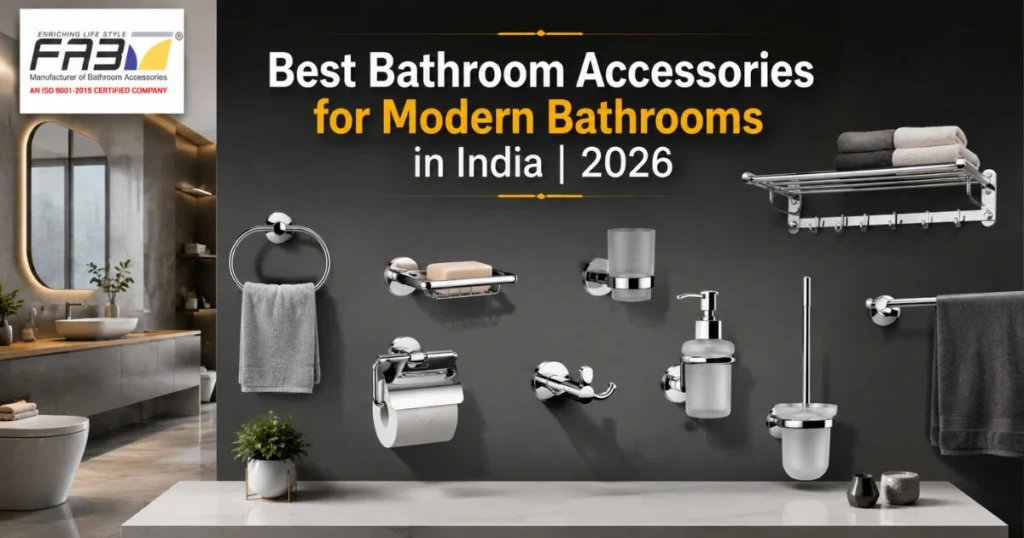
Best Bathroom Accessories for Modern Bathrooms in India | 2026

Walk into most Indian bathrooms built before 2018, and you’ll find the same tired lineup: a plastic soap dish, a rusting towel rod, and a mirror with a fogged-up edge. Now compare that to a 2026 renovation — sensor taps, matte-black grab bars, backlit mirrors, and a towel warmer that doubles as a heater. The gap isn’t cosmetic. It’s functional, and it’s why bathroom accessories for modern bathrooms have become one of the fastest-growing line items in Indian home renovation budgets. This guide breaks down exactly which accessories qualify as “modern,” what they cost in India, which materials actually survive humid Indian bathrooms, and how to prioritize spending whether you’re renovating one washroom or fitting out an entire villa. What Are the Best Bathroom Accessories for a Modern Bathroom? The best bathroom accessories for modern bathrooms combine three things: corrosion-resistant materials, minimal or sensor-based operation, and a finish that matches the rest of the fixture set. In practice, this means seven categories dominate every 2026 renovation shortlist. Each of these categories solves a specific problem: hygiene, storage, safety, or ambience. A genuinely modern bathroom rarely needs all seven at once. Instead, it needs the right two or three chosen for how the space is actually used. Contact us for Full Bathroom Accessories Catalogue Which Materials Work Best for Bathroom Accessories in India’s Climate? Stainless steel 304 and solid brass with PVD coating perform best in Indian bathrooms because they resist humidity, hard water, and coastal corrosion. Cheaper zinc-alloy or chrome-plated mild steel accessories look identical on day one but start pitting within 12 to 18 months in humid coastal cities like Mumbai and Chennai. This matters more in India than in drier markets. Bathrooms here run at higher ambient humidity for longer stretches of the year, and many cities also deal with hard, mineral-heavy municipal water. Together, these conditions accelerate corrosion on anything less than grade-304 stainless steel or properly plated brass. Material Corrosion Resistance Typical Lifespan Best Use Relative Cost SS 304 (stainless steel) Excellent 12–15 years Grab bars, towel rails, hooks Mid Solid brass with PVD coating Very good 10–12 years Faucets, showers, mixers High Chrome-plated mild steel Poor 2–4 years Budget fittings only Low Acrylic / ABS plastic Good (no rust risk) 5–7 years Soap dispensers, shelving Low Zinc alloy Fair 3–5 years Decorative hooks, knobs Low Table 1: Bathroom Accessory Materials Compared for Indian Conditions For coastal installations specifically, insist on SS 304 over the cheaper SS 202 grade — the nickel content in 304 is what actually stops pitting corrosion near salt air. What Are the Latest Trends in Modern Bathroom Accessories in India? Sensor-based, touchless accessories are the single biggest trend shaping Indian bathroom renovations in 2026. Touchless faucets, automatic soap dispensers, and sensor-based towel racks have moved from five-star hotels into mid-to-premium residential projects, driven largely by post-pandemic hygiene awareness. Industry data backs this up: the India bathroom accessories market is seeing rising demand for smart and sensor-based accessories, driven by a growing consumer preference for hygienic, hands-free solutions. A second trend runs alongside it: the bathroom as a wellness space rather than a purely functional room. Homeowners now request heated towel rails, ambient LED lighting, and rainfall shower panels — features once reserved for luxury hotel bathrooms. Manufacturers are already introducing IoT-enabled bathroom components, smartphone-controlled systems, and voice-activated faucets integrated into washbasins — a clear signal of where premium fittings are headed over the next few years. Consequently, e-commerce has become the primary discovery channel for these products. Shoppers now compare finishes, warranties, and reviews online before visiting a physical store, which has pushed brands to invest heavily in digital catalogues and 3D visualization tools. Online platforms now offer extensive product ranges, competitive pricing, and convenient comparison tools. Features like 3D product previews and virtual consultations make it far easier for customers to visualize and select accessories before buying. How Do You Choose Bathroom Accessories for a Small vs Large Bathroom? Small bathrooms need wall-mounted, space-saving accessories, while large bathrooms can support freestanding and multi-function pieces. This single distinction should drive almost every purchase decision. In a compact Indian apartment bathroom — commonly 4×6 feet or smaller — floating shelves, recessed niches, and folding grab bars free up floor space that a freestanding caddy or bulky towel stand would eat into. A slim, vertical towel warmer works far better here than a horizontal rail, since it uses wall height rather than wall width. Larger bathrooms, on the other hand, have room for double-basin vanities, freestanding tubs, and layered lighting. Here, the priority shifts from space-saving to zoning: separating the wet shower area from the dry vanity area with distinct accessory sets for each. A rain shower panel with body jets, for instance, only makes sense once there’s enough enclosed shower space to justify the water pressure and plumbing behind it. What Is the Price Range for Modern Bathroom Accessories in India? Modern bathroom accessories in India range from around ₹300 for a basic towel hook to over ₹25,000 for a premium sensor-based faucet or rainfall shower panel. Pricing tracks closely with material grade and whether the accessory includes electronics or sensors. Accessory Budget Tier Mid Tier Premium Tier Towel rail / ring ₹300–₹800 ₹900–₹2,500 ₹3,000–₹8,000 Single-lever basin faucet ₹800–₹2,000 ₹2,500–₹6,000 ₹7,000–₹20,000 Handheld shower set ₹600–₹1,500 ₹2,000–₹5,000 ₹6,000–₹15,000 Sensor soap dispenser ₹500–₹1,200 ₹1,500–₹3,000 ₹3,500–₹6,000 LED backlit mirror ₹2,500–₹6,000 ₹7,000–₹15,000 ₹16,000–₹35,000 Stainless steel grab bar ₹500–₹1,200 ₹1,500–₹3,000 ₹3,500–₹6,000 Table 2: Indicative Price Ranges by Accessory Category (India, 2026) Installation adds a further cost layer that’s easy to underestimate. Grab bar installation, for example, typically runs an additional ₹500–₹1,000 in labour per bar for professional mounting, on top of the hardware itself. Skipping professional installation on load-bearing accessories like grab bars is a false economy — an improperly anchored bar can fail exactly when it’s needed most. Which Bathroom Accessories Add the Most Value in India’s Growing Market? Faucets, towel accessories, and grab bars currently generate the largest share of bathroom accessory spending in

Best Bathroom Accessories for Modern Bathrooms in India | 2026 Read More »

Buy Bathroom Accessories Online in India

Buy Bathroom Accessories Online in India — The Ultimate 2026 Buying Guide

Whether you are designing a five-star hotel suite, renovating your master bathroom, or sourcing bathroom accessories in India at scale — this guide cuts through the noise and gives you exactly what you need to make a confident, informed purchase in 2026. Quick Summary — What You Need to Know Why Bathroom Accessories Matter in Indian Homes (2026) The bathroom is no longer just a utility space. Across Indian cities — from Mumbai’s luxury apartments to Bengaluru’s tech-era homes and Delhi’s heritage bungalows — the bathroom has evolved into a personal sanctuary. Bathroom accessories in India are now design statements as much as functional items. According to industry data, the Indian home improvement market crossed ₹2.5 lakh crore in 2025, with bathroom fittings and accessories representing one of the fastest-growing sub-categories. Homeowners are increasingly willing to invest in premium bathroom fittings India that last a decade rather than cheap plastic alternatives that degrade within two years — especially given India’s challenging conditions: hard water, high humidity, and dramatic seasonal temperature variations. Bathrooms in 2026 are spa-inspired, design-driven, and built to last. The accessories you choose define the entire experience — and in India, only brass-grade quality survives long-term. For architects and interior designers working on premium residential and hospitality projects, sourcing the right bathroom accessories online in India means finding a manufacturer — not just a retailer — who can guarantee consistent quality across batch orders, offer customisation, and supply matching finishes across an entire product range. That is exactly what Fab Bath Interiors delivers from its 11,000 sq. ft. facility in Jamnagar, Gujarat. Types of Bathroom Accessories Available Online in India When you set out to buy bathroom accessories online in India, the sheer volume of products available can be overwhelming. Here is a structured breakdown of every major category, what each does, and why it matters for your bathroom’s functionality and aesthetics. Essential Bathroom Hardware (Must-Haves) These are the core items that every bathroom — residential or commercial — requires for basic function. Skimping on these is always a false economy, because poor-quality versions rust, crack, or lose their finish within 12–18 months in Indian conditions. Premium & Architectural Bathroom Accessories For high-end residential projects, boutique hotels, and luxury developments, architectural bathroom hardware goes beyond the essentials. This category includes mortise door handles and knobs, decorative escutcheons, brass mirror frames, bathroom cabinet pulls, and bespoke accessories crafted to match a specific interior design language. Mortise handles from Fab Bath Interiors are available in 11 distinct design collections — from the classic Verona to the geometric Stark — covering every interior aesthetic from contemporary minimalism to heritage luxury. Complete Bathroom Accessories Type Guide Accessory Type Common Sizes / Variants Best Material Ideal For Price Range (₹) Towel Rod (Single) 18″, 24″, 36″ Brass / PVD All bathrooms ₹800 – ₹3,500 Towel Rack (Double) 24″, 36″ Brass Master bath, hotels ₹1,200 – ₹5,000 Robe Hook (Single) Std / Heavy duty Brass Near shower / entry ₹400 – ₹2,000 Robe Hook (Double) Std / Offset Brass / PVD Master bath, suites ₹600 – ₹3,000 Soap Dish Single / Double Brass / Zinc Wash area ₹350 – ₹2,000 Liquid Soap Holder 300ml / 500ml Brass All bathrooms ₹500 – ₹2,500 Toilet Paper Holder Standard / Recessed Brass / SS All bathrooms ₹400 – ₹2,200 Tumbler Holder Single / Double Brass Wash basin area ₹350 – ₹1,800 Glass Shelf 18″, 24″ Brass brackets Counter organisation ₹800 – ₹4,000 Napkin Ring Standard Brass Hotels, guest bath ₹300 – ₹1,500 Mortise Handle 175mm / 200mm Solid Brass Premium doors ₹1,500 – ₹8,000 Material Comparison — Brass vs Stainless Steel vs Chrome vs PVD The single most important decision when you buy bathroom accessories online in India is choosing the right base material. India’s water quality varies dramatically — from extremely hard water in Delhi, Jaipur, and parts of Gujarat to mildly hard water in coastal cities — and the material you choose will determine whether your investment lasts 5 years or 25 years. Why Solid Brass Wins Every Time for Indian Conditions Solid brass — an alloy of copper and zinc — is the gold standard for bathroom accessories in India for four non-negotiable reasons. First, brass is naturally antimicrobial, which is critical in humid bathroom environments. Second, it withstands hard water mineral deposits far better than zinc alloy or plastic alternatives. Third, brass holds electroplated finishes — chrome, PVD, antique — with superior adhesion, meaning the surface does not peel, chip, or corrode under daily wet conditions. Fourth, as Fab Bath Interiors demonstrates through ISO 9227 salt spray testing, precision-grade brass accessories retain their structural integrity and surface finish for decades even in coastal environments. Material Comparison: Bathroom Accessories for Indian Conditions Material Durability Hard Water Resistance Coastal Suitability Lifespan (Yrs) Price Level Verdict Solid Brass Excellent Excellent Excellent 20–30+ Mid–High ⭐ Best Choice PVD Coated Brass Outstanding Outstanding Outstanding 25+ Premium ⭐ Future Standard 304 Stainless Steel Very Good Good Good 15–20 Mid Good Option Chrome Plated Zinc Alloy Fair Fair Poor 3–7 Low–Mid Avoid for coastal ABS Plastic Poor Poor Poor 2–4 Very Low Avoid premium use Aluminium Fair Fair Fair 5–10 Low Budget temporary Expert Tip — For Indian Hard Water Cities If you live in Delhi, Jaipur, Lucknow, Ahmedabad, or any city with TDS above 300 ppm — always choose solid brass or PVD-coated brass bathroom accessories. These materials do not react with calcium or magnesium mineral deposits the way zinc alloys and chrome-on-plastic do. You will save money in the long run by investing in quality once rather than replacing cheap fittings every 3–4 years. How to Buy Bathroom Accessories Online in India — Step-by-Step Buying bathroom accessories online in India in 2026 is faster and more convenient than ever — but only if you know what to look for. Here is the expert framework used by professional architects and interior designers when specifying bathroom fittings in India for any project scale. Step 1 — Define Your Bathroom’s Design Language Before you browse a single product, decide on your bathroom’s visual identity. Contemporary minimalist? Heritage maximalist? Industrial chic? Boutique hotel-inspired? Every

Buy Bathroom Accessories Online in India — The Ultimate 2026 Buying Guide Read More »

Scroll to Top