Quick Enquiry
whatapp icon
phone call

Fab Bath Interiors

Looking For Bulk Orders @ Competitive Prices? Enquiry Now

Download Our Latest Products Catalogue Click Here

info@fabbathinteriors.com

Blog

Your blog category

bathroom colour trends

Bathroom Colour Trends 2026: The Finishing Guide by Fab Bath

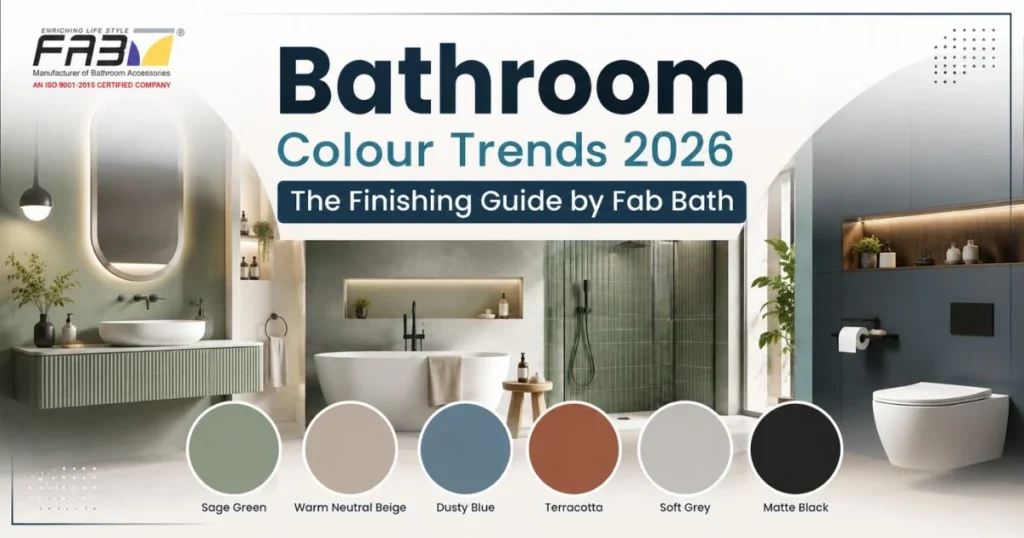
Most homeowners choose a wall colour first and treat their tap and handle finish as an afterthought. That order is backwards. A freshly painted bathroom in the “right” 2026 shade can still look unfinished if the hardware fights the wall instead of working with it — and almost none of the trend round-ups online actually explain which finish belongs with which colour, or why. We manufacture brass bathroom accessories out of Jamnagar, so we see this mismatch daily: the same sage-green vanity paired with a finish that clashes, simply because nobody told the buyer that hardware and colour are one decision, not two. This guide by Fab Bath Interiors fixes that gap. Bathroom colour trends for 2026 describe the seasonal shift in wall, tile, and fixture colour palettes that designers and manufacturers expect homeowners to favour this year — currently moving away from stark whites and cool greys toward warmer neutrals, muted greens, and deeper accent tones paired with textured, patina-friendly hardware finishes. What’s Actually Changing in Bathroom Colour Trends for 2026 For the past several years, bathroom design leaned cool: icy blues, stark whites, charcoal greys. That’s reversing. Warmer, nature-inspired palettes are now taking centre stage, with cozy neutrals like creamy ivory and soft beige, plus earthier tones like terracotta and clay, ranking among the most sought-after choices. Sherwin-Williams’ own 2026 Colour of the Year — Universal Khaki — captures this exact shift toward grounded, mid-tone warmth. Interior designers are also seeing 2026 palettes prioritise texture over polish: zellige tiles, limewash plaster, travertine, and tadelakt are replacing the flat, glossy surfaces that dominated the last decade. In practice, what we find is that clients now ask for a finish recommendation before they finalise a colour — the two decisions have merged into one conversation, and that’s the real story behind this year’s bathroom colour trends. Key Insight: The single biggest bathroom colour trends shift for 2026 isn’t a new shade — it’s those shades no longer being chosen independently of hardware finish, tile texture, or lighting temperature. The 6 Bathroom Colour Trends to Know Here’s what’s actually appearing on moodboards and spec sheets for bathroom colour trends in 2026: None of these are complete strategies on their own. A trending colour without the right finish, lighting, and texture pairing is just a paint chip — not a finished bathroom. Bathroom Colors for Small Bathrooms Small bathrooms behave differently from full-size ones, and most colour-trend content ignores this entirely. The most common mistake we see is homeowners chasing a deep, saturated 2026 trend colour in a windowless powder room and ending up with a space that feels smaller, not richer. For compact bathrooms: This is where the small-bathroom version of bathroom colour trends diverges most from the full-bathroom version: restraint matters more than the shade itself. The Hardware Finish Pairing Table Nobody Publishes This is the gap. Every article on bathroom colour trends stops at paint and tile. As a brass manufacturer, we build the fittings that sit against those colours every day — and the pairing logic below is what we actually specify to clients, not generic styling advice. 2026 Colour Trend Recommended Hardware Finish Why It Works Warm white / cream Unlacquered brass Unlacquered brass develops a natural patina over time, giving the hardware a living finish that deepens the character of the metal — it warms a cream palette rather than competing with it. Greige Brushed brass or brushed nickel Brushed brass photographs well and ages gracefully, pairing easily with both light and dark cabinetry, making it the safest match for a balanced grey-beige base. Sage / muted green Antique bronze or matte black Bronze brings warmth and depth and pairs beautifully with deep green, complementing the growing preference for natural, layered materials. Deep charcoal / midnight blue Polished brass or matte black Deep, saturated shades pair well with polished brass or chrome, with the contrast helping the hardware stand out against a rich cabinet colour. Terracotta / clay Antique or hammered brass The warm, textured surface of hammered brass echoes the handmade, earthy quality of terracotta instead of looking mass-produced against it. Dusty pink / blush Warm gold or champagne brass Soft metallics keep the palette elevated rather than tipping it toward a “nursery” look. Key Insight: Working with brass daily, we’ve noticed unlacquered brass patinas noticeably faster in humid coastal cities like Mumbai or Kochi than in drier climates like Delhi or Jaipur — a detail that changes which finish we recommend depending on region, and one that generic colour-trend guides never mention. Bathroom Colour Schemes 2026, by Style Rather than picking a single trending colour, most designers are now building full bathroom colour schemes for 2026 around one of three directions: Each of these bathroom colour schemes solves a different brief — calm and resale-safe, elevated and layered, or deliberately dramatic. Choosing between them is really a question of how long you plan to live with the result. The 3-Layer Colour Test — Our Framework for Choosing a Scheme That Won’t Date After specifying fittings for hundreds of bathroom projects, we use a simple three-question filter before recommending any colour, and it applies to any home, not just ours: A colour scheme that passes all three rarely needs replacing before the next full renovation — which is the actual goal, not just matching this year’s moodboard. Get a Free Bathroom Fittings Spec Sheet See exactly which brass finish suits your chosen 2026 colour palette, replied within 24 hours. Request your spec sheet. FAQs What colour is trending for bathrooms in 2026?  Warm whites, greige, muted sage green, and earthy terracotta are the dominant bathroom colour trends for 2026, replacing the stark whites and cool greys that were common in previous years. What is the best colour scheme for a small bathroom?  Warm-neutral bases like cream or light greige work best in small bathrooms because they reflect available light. Deep, saturated trend colours should be reserved for a single accent wall or vanity rather

Bathroom Colour Trends 2026: The Finishing Guide by Fab Bath Read More »
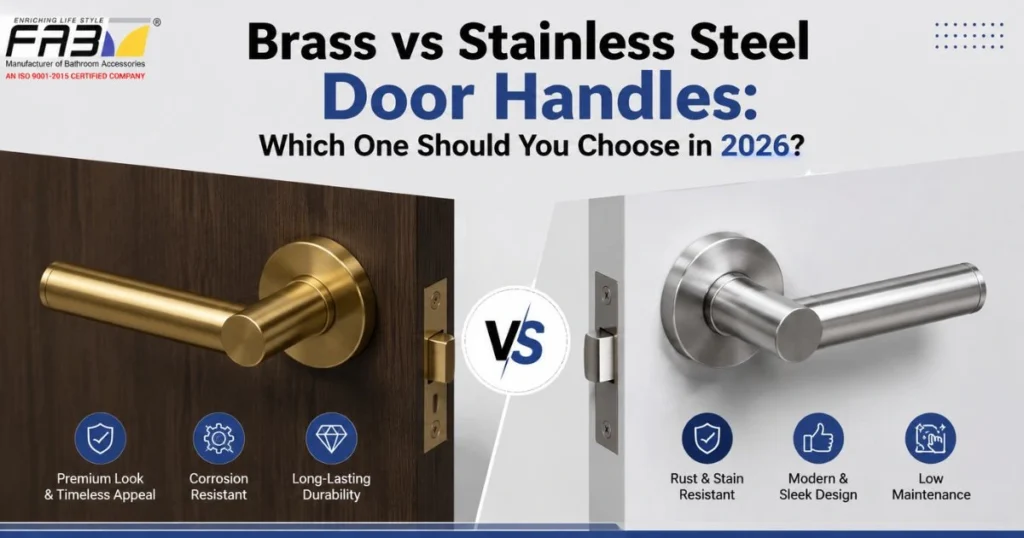
brass vs stainless steel door handles

Brass vs Stainless Steel Door Handles: Which One Should You Choose in 2026?

Picture this. You’re standing in a hardware store, staring at two rows of handles. One set gleams warm gold. The other looks cool and clinical. The price tags don’t match either. Meanwhile, your contractor is waiting for an answer. This is exactly where most homeowners get the brass vs stainless steel door handles decision wrong. Not because they lack taste. Rather, because nobody explained what actually separates the two beyond looks. Below, we break down the real differences: durability, hygiene, cost, climate performance, and maintenance. No guesswork. No sales pitch. What Is the Real Difference Between Brass and Stainless Steel Door Handles? Brass is a copper-zinc alloy. It typically contains 60-70% copper. Stainless steel, on the other hand, is an iron alloy. It gets its corrosion resistance from added chromium, and often nickel and molybdenum (source). Similarly, silicon bronze — a related alloy often confused with brass — runs much higher in copper content, between 92% and 96% (source). That copper content is the single biggest factor separating the two materials. It gives brass its warm color. It also gives brass natural resistance to certain types of corrosion. Most importantly, it gives brass a hygiene property stainless steel simply doesn’t have. Stainless steel, by contrast, relies on chromium. Once exposed to oxygen, chromium forms a thin, self-healing oxide layer on the surface. This layer stops rust from forming. As a result, stainless steel has become the default choice for commercial and high-traffic installations. Overall, neither material is objectively “better.” Instead, each one solves a different problem. Which Material Lasts Longer: Brass or Stainless Steel? For most residential and light-commercial use, both materials easily outlast the door they’re fitted to. However, the real question is what kind of wear each one resists. Indoors, and away from salt air, brass wears well against everyday touch and grip pressure. It also resists corrosion for decades. Even so, unlacquered brass will tarnish over time. This happens as the copper reacts with air and moisture. 304 stainless steel contains roughly 18% chromium and 8% nickel. As a result, it offers good corrosion resistance and strong formability for indoor use and mild outdoor conditions. In contrast, 316 stainless steel adds 2-3% molybdenum. This addition sharply improves resistance to chloride-driven pitting and crevice corrosion (source) — the exact failure mode that ruins handles near coastlines or humid coastal cities. In terms of raw surface hardness, 304 stainless steel typically measures 70-90 on the Rockwell B scale. 316, meanwhile, measures slightly higher at 79-95 HRB due to its molybdenum content (source). Brass, comparatively, is softer. This is actually why it machines and casts so cleanly into detailed, ornate designs. Practical takeaway: for a high-traffic commercial door or a coastal exterior, stainless steel — specifically 316 grade — usually wins on raw longevity. For interior doors handled gently and polished regularly, however, brass holds up just as well over a normal building lifecycle. Do Brass Door Handles Really Kill Bacteria? Yes. And this is not a marketing claim. In fact, the U.S. Environmental Protection Agency registered copper alloys, including brass, as the first solid antimicrobial materials in 2008 (source). Specifically, the mechanism is called the oligodynamic effect. Copper ions disrupt bacterial cell walls. They also interfere with DNA and RNA replication, which speeds up microbial death on contact (source). Research shows bacteria can die within minutes to hours on brass surfaces. On stainless steel, however, the same bacteria can survive for days or weeks (source). This is exactly why older hospitals and public buildings historically specified brass door furniture. Not for the aesthetic — for infection control, long before anyone understood germ theory in modern terms. Modern research backs this further. For instance, a 2022 study in the Annals of Clinical Microbiology tested antibacterial effects of copper, brass, and stainless steel against multidrug-resistant bacteria. Likewise, a 2018 paper in the Journal of Applied Microbiology examined the contact-killing properties of copper directly (source list). If you’re specifying hardware for a clinic, a care facility, or a kitchen, this single property is worth factoring into your decision. Stainless steel, in contrast, offers zero antimicrobial benefit on its own. It’s simply a passive, non-reactive surface — clean-looking, but not self-sanitizing. How Do Brass and Stainless Steel Door Handles Compare on Price? Upfront, solid brass hardware usually costs more per unit than standard stainless steel, especially for cast or detailed pieces. Stainless steel typically costs more upfront than budget materials like zinc alloy. Even so, it delivers the lowest long-term replacement cost for large-scale or bulk projects, since it needs almost no ongoing maintenance (source). Brass, by contrast, needs periodic polishing to keep its shine if it’s lacquered. Alternatively, it’s left to patina naturally if unlacquered. Either way, factor that labor cost into any total-cost-of-ownership comparison, particularly for hospitality or commercial properties with dozens of doors. Factor Brass Stainless Steel Typical upfront unit cost Higher for solid/cast pieces Moderate to high depending on grade Long-term maintenance cost Higher (polishing, lacquer reapplication) Low (wipe-clean) Best value at scale Small-to-mid residential projects Large commercial/bulk installations Lifespan with proper care 20+ years indoors 20+ years, longer in humid/coastal zones (316 grade) Table: Cost and lifespan comparison for brass vs stainless steel door handles. Which Material Suits Coastal or Humid Climates? Here, the decision becomes environment-specific. Salt spray can travel 5 km inland or more, depending on wind direction. Furthermore, salt is hygroscopic. It absorbs moisture, and as a result, it accelerates metal corrosion wherever it settles (source). Unlacquered brass reacts quickly to salty, humid air. The copper in the alloy oxidizes with chlorides, and the patina effect sets in fast near the sea. Standard 304 stainless steel isn’t immune either. Notably, 304 grade can develop “tea staining” on a beachfront door — superficial brown rust spots — even though the metal is broadly marketed as rust-resistant (source). 316-grade “marine” stainless steel, with its added molybdenum, is built specifically to resist chloride attack. For this reason, it’s the recommended choice for coastal installations (source). If brass

Brass vs Stainless Steel Door Handles: Which One Should You Choose in 2026? Read More »

toilet paper holder types

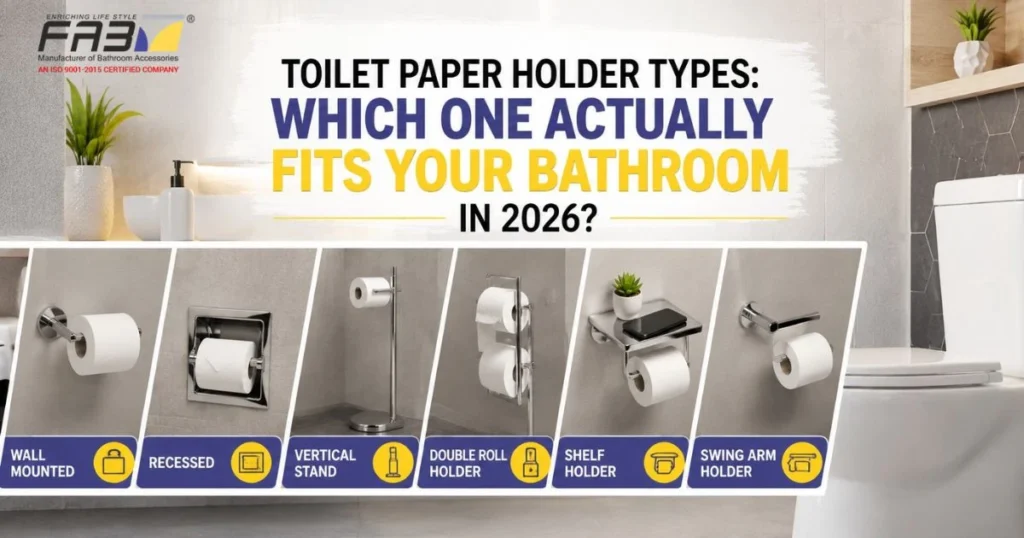
Toilet Paper Holder Types: Which One Actually Fits Your Bathroom in 2026?

Standing in a hardware store aisle staring at a wall of toilet paper holder types is more confusing than it should be. Wall-mounted, freestanding, recessed, spring-loaded, brass, chrome — the options pile up fast, and picking the wrong one means a wobbly fixture or a holder that clashes with your fittings within a year. This guide breaks down every major toilet paper holder type, what each one costs, and how to match one to your bathroom’s layout and finish. What Are the Main Toilet Paper Holder Types? The main toilet paper holder types are wall-mounted, freestanding, recessed, spring-loaded, and shelf-combination holders. Each type solves a different installation or space problem. Wall-mounted holders attach directly to a bathroom wall using screws or adhesive and remain the most common choice worldwide. Freestanding holders sit on the floor beside the toilet, which works well in rented spaces where drilling isn’t allowed. Recessed holders sit flush inside a cavity built into the wall, giving a clean, built-in look favored in modern renovations. Spring-loaded holders use a tensioned rod that makes roll changes faster and prevents the roll from slipping off. Finally, shelf-combination holders add a small ledge above the roll for a phone or air freshener, which suits compact bathrooms that need extra function from one fixture. Each of these types of toilet paper holder comes in multiple finishes and price points, which we’ll cover in the sections below. How Do Wall-Mounted and Freestanding Holders Differ? Wall-mounted holders bolt into the wall for a permanent fit, while freestanding holders stand on their own base and need no drilling at all. That single difference drives almost every other decision — cost, stability, and how much floor space you free up. Wall-mounted units cost less on average and take up zero floor space, which matters in a small en-suite. Freestanding units, on the other hand, install in minutes and travel with you if you move house or renovate later. However, freestanding holders can tip if bumped, and they occupy floor space next to the toilet — a real constraint in a 4×6 ft bathroom. Feature Wall-Mounted Freestanding Installation Drilled or adhesive, permanent No drilling, sits on floor Floor space used None Yes, near toilet base Stability High, fixed to wall Moderate, can tip if bumped Best for Owned homes, permanent fixtures Rentals, temporary setups Typical lifespan Long, fixed mounting Shorter if base is lightweight Table 1: Wall-mounted vs freestanding toilet paper holder types compared by installation, stability, and use case. What Are the Different Toilet Paper Holder Materials? Toilet paper holder materials range from solid brass to plastic, and the material determines both the price and how long the fixture lasts in a humid bathroom. Brass and stainless steel resist corrosion far better than painted metal or plastic, which matters most in high-moisture environments. Solid brass holders resist rust and tarnish for years, even in humid climates, and take on an antique patina that many buyers prefer over a shiny finish. Stainless steel offers similar corrosion resistance with a cooler, more contemporary look. Chrome-plated zinc is the budget-friendly middle ground — it looks polished new but the plating can wear thin over 3-5 years of daily use. Plastic and ABS holders sit at the lowest price point and suit rental units or temporary installations where longevity isn’t the priority. Material Corrosion Resistance Typical Finish Look Best Fit Solid brass Excellent Antique gold, matte, polished Premium bathrooms, humid climates Stainless steel Excellent Brushed or mirror chrome Modern, minimalist bathrooms Chrome-plated zinc Moderate Bright, shiny Budget renovations Plastic/ABS Low Matte, colored options Rentals, temporary use Table 2: Toilet paper holder materials ranked by durability and best-fit bathroom style. Solid brass fixtures, in particular, pair naturally with brass towel rings, robe hooks, and faucets — a coordinated set reads as intentional rather than mismatched. Visit Us – For More Brass Bathroom Accessories Collection Which Toilet Paper Holder Type Suits Small Bathrooms? Recessed and spring-loaded wall-mounted holders suit small bathrooms best because neither one adds bulk to a tight space. A recessed holder disappears into the wall cavity, so there’s nothing protruding for a shoulder or elbow to catch on during a squeeze past the sink. In apartments under 35 square feet, every inch of clearance counts. Consequently, a freestanding holder or shelf-combination unit often becomes an obstacle rather than a convenience in these layouts. Spring-loaded wall holders also help here since they mount close to the wall with minimal projection, unlike bulkier decorative designs. For rental apartments specifically, an adhesive-mounted wall holder is often the practical answer since it avoids drilling into tiled walls entirely, and it can be removed without leaving damage. What Determines Toilet Paper Holder Price? Toilet paper holder price depends primarily on material, brand, and finish quality — brass and stainless steel units cost more than plastic or basic chrome. Installation type also affects price, since recessed holders typically need a wall cavity and cost more to fit than a simple wall-mounted bracket. Type/Material Typical Price Range (INR) Typical Price Range (USD) Plastic/ABS wall-mounted ₹150 – ₹400 $2 – $5 Chrome-plated zinc ₹400 – ₹900 $5 – $11 Stainless steel ₹800 – ₹2,000 $10 – $24 Solid brass ₹1,200 – ₹4,500 $15 – $54 Recessed (with fitting) ₹1,500 – ₹5,000 $18 – $60 Table 3: Indicative toilet paper holder price ranges by type and material. Bulk buyers — hotels, developers, and interior contractors — generally pay a lower per-unit price when ordering brass fixtures in volume directly from a manufacturer rather than through retail. How Do You Choose Between a Modern and a Classic Toilet Paper Holder Type? A modern bathroom calls for clean-lined stainless steel or matte black holders, while a classic or traditional bathroom pairs best with polished or antique brass. The finish should echo whatever metal already appears on your taps, showerhead, and cabinet handles. Mixing metals rarely looks intentional unless it’s a deliberate design choice. For example, a matte black holder against gold-finish taps often reads as mismatched rather than

Toilet Paper Holder Types: Which One Actually Fits Your Bathroom in 2026? Read More »

wash basin waste coupling

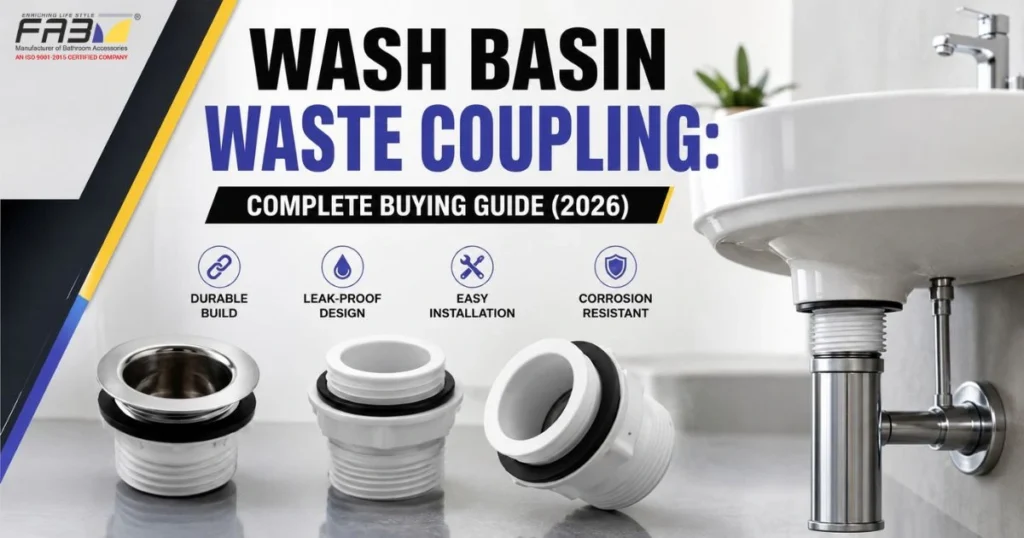
Wash Basin Waste Coupling: Complete Buying Guide (2026)

A wash basin waste coupling is a small fitting, but it decides whether a basin drains cleanly for ten years or starts leaking within ten months. This guide by Fab Bath Interiors answers every practical question an Indian homeowner, plumber, or contractor asks before buying one — sizing, materials, price, standards, installation, and common problems — in one place. What Is a Wash Basin Waste Coupling? A wash basin waste coupling is the fitting that sits inside a basin’s drain hole and connects the basin outlet to the drainage pipe underneath. It allows wastewater to flow out of the basin while blocking hair, soap residue, and debris from entering the pipe and, in most designs, sealing against sewer gas coming back up. In practice, most Indian bathrooms use a 32mm wash basin waste coupling, while kitchen sinks need a wider 40mm version because of higher water flow. The fitting has three working parts: a flange (the visible strainer disc), a threaded body, and a locking nut that pulls everything tight against the basin from underneath. Get any one of these mismatched to your basin, and you’ll see water seepage under the vanity within weeks — a callback every plumber wants to avoid. Homeowners sometimes confuse this fitting with the trap below it, but the two serve different jobs. The coupling seals the basin’s own drain hole and channels water downward; the trap — whether a P-trap or bottle trap — holds a small reservoir of water further down the line to block sewer gas from travelling back up. A basin can have a perfectly sealed coupling and still smell bad if the trap underneath has run dry, which is why the two components are usually inspected together during a service call rather than in isolation. How Does a Wash Basin Waste Coupling Work? A wash basin waste coupling works by sitting flush in the drain hole, holding a rubber or fibre washer tight against the basin surface, and channelling water down through its threaded body into the P-trap or bottle trap below. The locking nut, tightened from beneath the basin, is what actually creates the watertight seal — not the coupling’s threads alone. As a result, correct installation matters as much as the fitting itself. A coupling tightened by hand without a spanner, or seated without plumber’s putty or a rubber gasket, is one of the most common reasons a brand-new wash basin waste coupling starts dripping within the first month of use. Additionally, the strainer or dome-shaped mesh on top is what catches soap flakes and hair before they reach the trap, which is why couplings without a strainer clog drainage lines faster in shared bathrooms. What Are the Different Types of Wash Basin Waste Couplings? There are four common types of wash basin waste couplings sold in India today, and each suits a different basin design: However, the mechanism you choose should match how the basin is used. A pedestal basin in a guest bathroom rarely needs a pop-up mechanism, while a countertop basin in a master bath usually looks better with one. What Size Wash Basin Waste Coupling Do I Need? Most Indian bathroom basins use a 32mm wash basin waste coupling, while kitchen sinks require a 40mm size because of the higher volume of water they handle. Measuring the drain hole diameter before buying is the single most important step in avoiding a leak. Basin/Fixture Type Standard Coupling Size Common Installation Pedestal wash basin 32mm Full-thread or half-thread, exposed trap Wall-hung basin 32mm Concealed or bottle-trap pipework Countertop/vanity basin 32mm Usually paired with pop-up coupling Kitchen sink 40mm (1½”) Full-thread, higher flow strainer Table 1: Standard wash basin waste coupling sizes by fixture type in Indian homes. In practice, buying the wrong size — even by 2–3mm — is the single biggest cause of returns on e-commerce marketplaces, since a slightly undersized coupling won’t seat against the locking nut properly. When in doubt, check the manufacturer’s product manual rather than estimating by eye. How Do You Measure Your Basin’s Drain Hole Before Buying? Measuring a basin’s drain hole correctly before buying a wash basin waste coupling takes less than two minutes and prevents the most common return reason on Indian e-commerce sites: ordering the wrong size. Use a measuring tape or calliper across the widest point of the drain opening, from inner edge to inner edge, not across the visible rim of the basin. Most pedestal and countertop basins in India measure close to 32mm, while kitchen sink openings measure closer to 40mm. Additionally, check whether a small oval or round overflow hole sits near the top rim of the basin — its presence determines whether you need a half-thread or full-thread coupling, covered in more detail further below. If the basin came with the original fitting still in place, removing and measuring that old coupling directly is usually more reliable than measuring the hole itself, since wear and mineral buildup can distort the opening slightly over years of use. What Materials Are Wash Basin Waste Couplings Made Of? Wash basin waste couplings are typically made from brass, stainless steel, or ABS/PVC plastic, and the material you choose directly affects how long the fitting lasts under daily exposure to water, cleaning agents, and humidity. Material Durability Typical Use Case Relative Price Brass (chrome/gold-plated) High – corrosion-resistant, 10+ years Premium bathrooms, hard water areas Higher Stainless steel (304 grade) High – rust-resistant Mid-range to premium bathrooms Moderate–High ABS/PVC plastic Moderate – can degrade with heat/UV Budget installations, utility areas Lowest Table 2: Material comparison for wash basin waste couplings sold in India. Brass fittings conforming to Indian material norms generally use a copper-zinc-tin alloy, which is why brass wash basin waste couplings resist corrosion better in regions with hard or saline groundwater — a real concern in several Indian coastal and industrial belts. Stainless steel, particularly 304-grade, is the next most durable option and is now manufactured domestically by several Indian bath-fitting brands. Plastic couplings are

Wash Basin Waste Coupling: Complete Buying Guide (2026) Read More »

benefits of bath tub

Benefits of Bath Tub: Why Every Home Needs One

Whether you’re renovating your bathroom or building a new home, one question often comes up — is a bathtub really worth it? The short answer is yes, and the long answer is everything you’re about to read. The benefits of bath tub go far beyond just soaking in warm water. From deep physical recovery to mental wellness, increased home resale value to better sleep quality — a bathtub is one of those home investments that quietly pays you back every single day. At Fab Bath Interiors, we’ve helped hundreds of homeowners transform their bathrooms into personal sanctuaries. In this article, we’ll walk you through every major bath tub benefit backed by facts, expert insights, and real-world value — so you can make the most informed decision for your home. What Makes a Bathtub More Than Just a Luxury? Many people assume a bathtub is a luxury, something reserved for high-end homes or spa hotels. But in reality, bathtubs have been a cornerstone of human hygiene and wellness for thousands of years — from ancient Roman baths to modern soaking tubs. Today, with rising stress levels, busy lifestyles, and increasing health awareness, a bathtub has become less of a luxury and more of a necessity. The global bath products market was valued at over USD 12 billion in 2023 and is projected to grow steadily through 2030, largely driven by consumer demand for wellness-focused home spaces. This alone tells you that more and more people are recognizing the bath tub benefits and making it a priority in their homes. Top Health Benefits of Bath Tub Soaking 1. Muscle Relaxation and Pain Relief One of the most well-known benefits of bath tub use is muscle relaxation. When you soak in warm water, your blood vessels dilate, allowing better circulation throughout your body. This increased blood flow helps relieve: A 2019 study published in the Journal of Applied Physiology found that regular warm baths can reduce inflammation markers in the body, similar to light aerobic exercise. That’s not just comfort — that’s science. Condition How Bathtub Soaking Helps Recommended Soak Time Muscle soreness Improves circulation, flushes lactic acid 15–20 minutes Lower back pain Relieves spinal pressure, relaxes muscles 20–30 minutes Arthritis Reduces joint stiffness, eases movement 20 minutes Sports injuries Anti-inflammatory effect of warm water 15 minutes 2. Improved Blood Circulation Warm water immersion creates a natural hydraulic pressure on the body. This gentle pressure helps push blood from your extremities toward your core, improving overall cardiovascular circulation. According to the European Journal of Applied Physiology, regular bathing can reduce resting heart rate and help manage mild hypertension over time. For people who lead sedentary lifestyles or have desk jobs, this is one of the most underrated bath tub benefits. 3. Better Sleep Quality Struggling with sleep? A warm bath 1–2 hours before bedtime can significantly improve your sleep quality. Here’s how: When you soak in warm water, your core body temperature rises. Once you step out, it drops rapidly — and this drop signals to your brain that it’s time to sleep. Research from the University of Texas confirmed that a 10-minute warm bath between 40°C–42.5°C taken 1–2 hours before bed can improve sleep onset by up to 10 minutes and increase sleep quality by 80% in study participants. That’s a powerful bath tub benefit hiding in plain sight. 4. Skin Health and Hydration A warm bath opens your pores and allows your skin to absorb moisture more effectively. When you add bath salts, essential oils, or oatmeal to your bath, you amplify this effect. Regular bathing: At Fab Bath Interiors, we always recommend pairing your soaking experience with gentle, skin-safe bath additives that complement your bathtub’s material finish. Mental Health Benefits of Bath Tub Use Stress Relief and Anxiety Reduction In our fast-paced world, stress is unavoidable — but how you manage it makes all the difference. One of the most profound bath tub benefits is its effect on mental health. Warm water immersion triggers the release of serotonin, your body’s “feel good” hormone, while simultaneously lowering cortisol — the stress hormone. A study from the University of Wolverhampton found that people who took a daily bath reported higher levels of optimism, emotional resilience, and overall mood compared to those who only showered. Mental Health Benefit Mechanism Result Stress reduction Lowers cortisol levels Calmer mind, relaxed body Anxiety relief Warm water activates parasympathetic nervous system Reduced anxiety symptoms Better mood Triggers serotonin release Improved emotional wellbeing Mindfulness opportunity Quiet, sensory-rich environment Mental reset and clarity Improved sleep Regulates body temperature Faster sleep onset A Space for Digital Detox In a world dominated by screens, a bathtub offers one of the only guilt-free reasons to put your phone down. The bathroom naturally encourages you to step away from digital distractions, creating a protected space for mindfulness, meditation, or simply breathing. Many wellness coaches and therapists now actively recommend “bath therapy” as a tool to manage burnout, anxiety, and emotional fatigue. Bathtub Benefits for Families with Children Safe and Fun Bathing for Kids – For families with young children, a bathtub isn’t just a preference — it’s practically essential. Showering young children is difficult and unsafe. A bathtub provides: The American Academy of Pediatrics recommends sponge baths in tubs for newborns and tub baths for infants once their umbilical cord falls off — reinforcing why a bathtub is a family necessity, not just an adult indulgence. Therapeutic Baths for Children with Sensory Issues – For children with autism spectrum disorder (ASD) or sensory processing challenges, warm water immersion in a bathtub can be deeply calming. Occupational therapists often recommend “sensory baths” with specific water temperatures and tactile elements as part of a child’s therapy routine. The Economic and Real Estate Benefits of Bath Tub Increases Home Resale Value – This is one of the most tangible bath tub benefits from an investment perspective. Real estate data consistently shows that homes with at least one bathtub sell faster and at higher prices than

Benefits of Bath Tub: Why Every Home Needs One Read More »

stainless steel vs chrome bathroom accessories

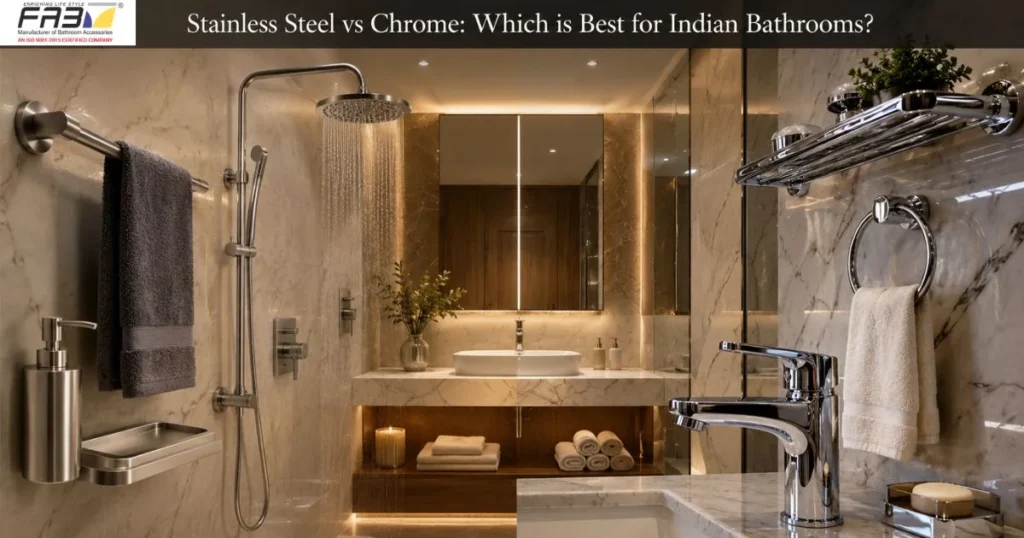
Stainless Steel vs Chrome: Which is Best for Indian Bathrooms?

When it comes to fitting out your bathroom, the choice of accessories can make or break both the aesthetics and the longevity of your space. One of the most debated questions among Indian homeowners, interior designers, and contractors is — stainless steel vs chrome bathroom accessories: which one truly wins in Indian conditions? At Fab Bath Interiors, we deep-dive into home and lifestyle decisions that matter. And trust us — this one matters a lot. India’s tropical climate, hard water supply, humid bathrooms, and diverse budget ranges make this comparison far more nuanced than it looks on the surface. Let’s break it all down. What Are Stainless Steel Bathroom Accessories? Stainless steel is an alloy made primarily of iron, carbon, and a minimum of 10.5% chromium. The chromium content creates a passive oxide layer that protects the metal from rust and corrosion — making it one of the most durable materials used in home hardware. In Indian bathrooms, stainless steel accessories include towel rails and rings, soap dishes and dispensers, toilet paper holders, robe hooks, shower shelves and caddies, and grab bars and handles. Stainless steel bathroom accessories are available in grades like 304 (18/8) and 316, with Grade 304 being the most common choice for residential bathrooms across India. What Are Chrome Bathroom Accessories? Chrome accessories are not solid chrome. They are typically made from a base metal — such as brass, zinc alloy (zamak), or ABS plastic — and then electroplated with a thin layer of chromium. This plating gives them a mirror-like, polished finish that looks luxurious at first glance. Chrome-plated accessories are extremely popular in India because of their shiny premium look at a lower cost, wide variety of designs, and availability across every price range. However, the critical thing to understand is that the durability of chrome depends almost entirely on the quality of the base metal and the thickness of the plating. This single factor separates a good chrome product from a bad one. Stainless Steel vs Chrome Bathroom Accessories: Detailed Comparison 1. Durability and Longevity Feature Stainless Steel Chrome-Plated Rust Resistance Excellent (inherent) Depends on plating quality Corrosion in Humid Conditions Very Low Moderate to High Average Lifespan 10–20+ years 3–8 years Impact Resistance High Medium Peeling or Flaking Never Common in low-quality products In Indian bathrooms, where humidity levels frequently exceed 70–80% and bathrooms often remain wet for long periods, stainless steel bathroom accessories have a clear durability edge. Chrome plating — especially on zinc alloy bases — tends to develop rust spots and peel off within a few years, particularly in coastal cities like Mumbai, Chennai, or Kochi. 2. Aesthetics and Design Variety Feature Stainless Steel Chrome-Plated Finish Options Matte, Brushed, Mirror Mirror, Brushed, Satin Design Variety Moderate Very High Visual Appeal Modern, Industrial Classic, Luxurious Compatibility with Interiors Contemporary, Minimal Versatile Chrome accessories offer a brighter, more reflective shine that many Indian homeowners associate with luxury. If you are going for a high-end hotel-like aesthetic, chrome can be very compelling. Stainless steel, on the other hand, fits beautifully in modern minimalist, industrial, or Scandinavian-inspired bathrooms — a rapidly growing interior trend in Indian urban homes. 3. Cost Comparison in India Product Type Stainless Steel (₹) Chrome-Plated (₹) Towel Ring ₹400 – ₹1,200 ₹250 – ₹2,500 Soap Dish ₹300 – ₹900 ₹200 – ₹1,800 Toilet Paper Holder ₹350 – ₹1,000 ₹250 – ₹2,200 Towel Rack (24 inch) ₹800 – ₹2,500 ₹500 – ₹4,500 5-Piece Accessory Set ₹2,500 – ₹6,000 ₹1,500 – ₹10,000 Prices sourced from Amazon.in, Flipkart, Pepperfry, and offline hardware stores as of 2025. This table reveals something important — stainless steel is not necessarily more expensive. Mid-range stainless steel sets can be more affordable than branded chrome sets. Budget chrome products, while cheaper upfront, often cost more in the long run due to frequent replacements. 4. Performance in Indian Conditions Indian Condition Stainless Steel Chrome-Plated Hard Water (TDS 300–600 ppm) Good — resists scaling Poor — water spots, staining High Humidity (Coastal/Monsoon) Excellent Moderate — prone to rust Frequent Wet/Dry Cycles Excellent Fair Chemical Cleaners Good — use mild cleaners Poor — plating damages easily Coastal Saltwater Exposure Good (Grade 316 recommended) Poor This table is particularly critical for Indian homeowners. Cities like Delhi, Jaipur, and Lucknow have high TDS water, which accelerates corrosion and leaves mineral deposits. Stainless steel handles these conditions significantly better than chrome. Maintenance: Stainless Steel vs Chrome Bathroom Accessories Maintaining Stainless Steel Accessories Stainless steel is low-maintenance but not zero-maintenance. Wipe with a dry cloth after use daily to prevent water spots. Clean weekly with a mild soap solution or a dedicated stainless steel cleaner. Polish monthly with a stainless steel-specific product for lasting shine. Always avoid steel wool, bleach-based cleaners, and abrasive pads as these can scratch the surface and damage the protective passive layer. Maintaining Chrome Accessories Chrome requires more careful handling. Wipe dry after every water contact, especially in hard water areas. Use a non-abrasive chrome cleaner or a vinegar-water solution weekly. Apply a light layer of car wax or chrome polish monthly to protect the surface. Strictly avoid acidic cleaners, lime scale removers, steel wool, and strong chemicals — these strip the plating rapidly and permanently. Stainless steel bathroom accessories are easier to maintain in the long run, especially in busy Indian households where daily wiping does not always happen consistently. Which Is Better for Different Types of Indian Bathrooms? Budget Bathrooms (Under ₹5,000 for accessories) For budget bathrooms, avoid low-quality chrome entirely. The base metal is often cheap zinc alloy that rusts within months. A mid-range stainless steel set offers far better value and will outlast cheap chrome by years. Always look for ISI-marked Grade 304 products. Mid-Range Bathrooms (₹5,000–₹15,000 for accessories) At this price point, you can afford quality from both categories. Opt for chrome only if it is brass-based with thick plating. Brands like Jaquar, Hindware, and Kohler offer reliable chrome products in this range. Premium and Luxury Bathrooms (Above ₹15,000 for accessories) At the luxury

Stainless Steel vs Chrome: Which is Best for Indian Bathrooms? Read More »

Top 10 Bathroom Accessories

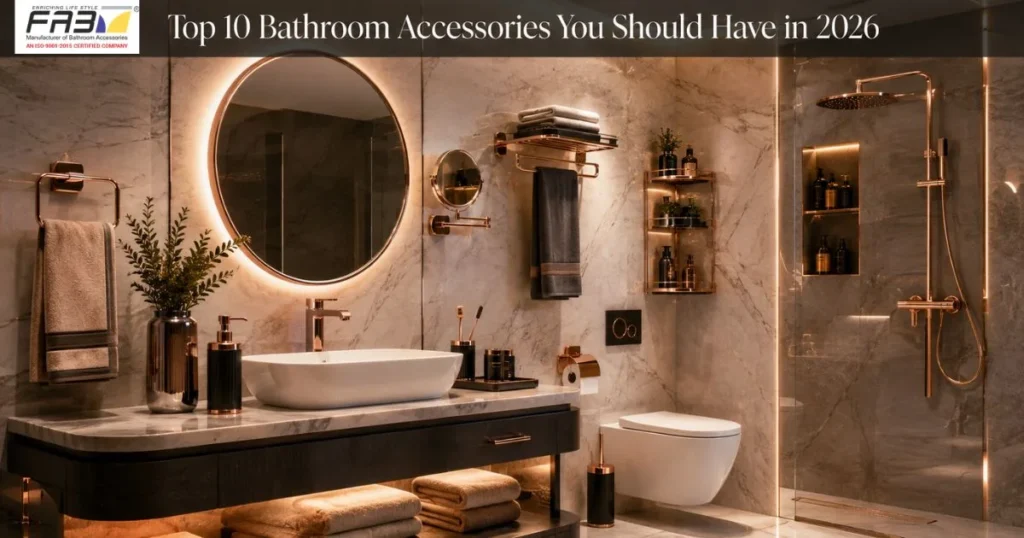
Top 10 Bathroom Accessories You Should Have in 2026

Introduction In 2026, choosing the right accessories is one of the smartest home upgrades you can make. Whether you live in a 2BHK flat or an independent villa, the right products make a real difference. The top 10 bathroom accessories in this guide solve real Indian bathroom problems. These include hard water stains, high humidity, limited space, and power fluctuations. The Indian bathroom has changed a lot over the last decade. Older homes had compact, basic wet bathrooms. Today, modern apartments in Mumbai, Bengaluru, Delhi NCR, Hyderabad, and Pune have stylish, functional spaces. Indian homeowners now expect much more from their bathrooms. At Fab Bath Interiors, we understand Indian homes deeply. Our picks are practical, stylish, and budget-conscious. They are built to perform in India’s unique climate. Read on for the must-have top 10 bathroom accessories for 2026. What Makes a Bathroom Accessory Ideal for Indian Homes in 2026? Most international buying guides ignore Indian bathroom challenges. Before we explore the top 10 bathroom accessories, let us understand what matters most for Indian households. Criteria Why It Matters for Indian Homes Humidity & Rust Resistance Prevents early deterioration in India’s humid climate Hard Water Compatibility Reduces limescale damage and staining Value for Money Ensures smart spending without compromising quality Durability Withstands India’s temperature extremes Easy Maintenance Suits busy urban Indian lifestyles Top 10 Bathroom Accessories every Indian home should have in 2026. 1. Smart Touchless Soap Dispenser — Essential After-Pandemic Hygiene Upgrade Post-COVID hygiene awareness has permanently changed Indian behaviour. The smart touchless soap dispenser is now a must-have in urban Indian homes. It uses infrared sensor technology. The dispenser releases a precise amount of soap — no touching required. For Indian homes, look for a large reservoir of at least 300ml. This reduces frequent refills. Choose a battery or USB-C rechargeable model. This handles India’s frequent power cuts. Stainless steel or ABS plastic bodies resist Indian bathroom humidity. Amazon India, Flipkart, and Urban Ladder stock many options. But for premium finishes and curated choices, Fab Bath Interiors is the trusted destination. Why you need it: It reduces germ transmission and cuts soap wastage by up to 30%. It also gives your bathroom a modern, premium look — highly valued in Indian homes in 2026. 2. Heated Towel Rail / Towel Warmer — A Winter Essential for North India South Indian homeowners may see a heated towel rail as a luxury. But in Delhi, Chandigarh, Lucknow, and Jaipur, it is a practical necessity. Winter temperatures in these cities regularly drop below 10°C. In 2026, energy-efficient towel warmers are increasingly affordable in India. They come with programmable timers. Towels stay warm and completely dry. This prevents the damp towel odour common during India’s monsoon season. Even well-ventilated bathrooms struggle to dry towels from June to September. Always look for BEE-rated (Bureau of Energy Efficiency) models. These are energy-efficient. That matters given India’s electricity tariffs. Why you need it: It eliminates damp towel odour during monsoon season. It provides warm towels in North Indian winters. It also keeps bathroom textiles hygienic and mould-free. 3. Wall-Mounted Bathroom Organiser — Space-Saving Storage for Indian Bathrooms Space is precious in most Indian bathrooms. Metro city apartments in Mumbai and Delhi have particularly compact bathrooms. Smart vertical storage is one of the most impactful top 10 bathroom accessories investments you can make. Wall-mounted organisers clear countertop clutter instantly. This is a common issue in Indian bathrooms. Multiple family members often share the same space. Modular systems from Fab Bath Interiors come in SS 304-grade stainless steel. This is essential for Indian humidity levels. Bamboo variants with moisture-resistant sealing are also available. Pro Tip for Indian Homes: Avoid plain iron or low-grade steel organisers from local hardware stores. They rust within months in high-humidity Indian bathrooms. Always opt for SS 304 or marine-grade stainless steel. Why you need it: It maximises limited bathroom space. It keeps family members’ products neatly separated. It resists rust and humidity — critical for Indian bathrooms. 4. Anti-Limescale Rainfall Shower Head — Combat India’s Hard Water Problem India’s hard water problem is widely overlooked. Cities like Delhi, Gurgaon, Ahmedabad, and Jaipur have notoriously hard water. Large parts of Maharashtra do too. Limescale builds up rapidly inside shower heads. This reduces water pressure and shortens product life. The anti-limescale rainfall shower head with self-cleaning rubber nozzles is one of the best top 10 bathroom accessories for Indian homes in 2026. Simply rub the rubber nozzles. Limescale deposits dislodge without any chemicals. Premium models feature wide-coverage rainfall flow and adjustable spray settings. They use stainless steel or ABS construction with a chrome-plated finish. All are available through Fab Bath Interiors. Why you need it: It directly addresses India’s hard water problem. It maintains consistent water pressure. It also eliminates the need for frequent chemical descaling. 5. Anti-Fog Illuminated Bathroom Mirror — Clarity and Style for Modern Indian Homes The illuminated anti-fog mirror has become a defining feature of premium Indian bathrooms in 2026. These mirrors use embedded heating film to prevent fogging after a hot shower. Integrated LED strips provide bright, colour-accurate lighting. They are ideal for skincare, makeup, and grooming. The value for Indian consumers is compelling. One illuminated mirror replaces a separate vanity light fitting. It saves both cost and electrical points. Models at Fab Bath Interiors include several smart features. Feature Benefit for Indian Consumers Anti-fog heating element Instant clarity post-shower, no wiping needed Warm + Cool LED modes Ideal for makeup and grooming in Indian lighting conditions IP44 or IP54 waterproof rating Safe for India’s wet bathroom environments Touch dimmer control Adjust brightness without additional switches Voltage stabiliser compatibility Handles India’s variable power supply (180V–240V) Why you need it: It combines anti-fog performance with premium lighting in one unit. It is a must-have upgrade for modern Indian apartments and villas. 6. Freestanding Bamboo / Sheesham Wood Ladder Shelf — Indian Craftsmanship Meets Modern Design One of the most culturally fitting entries in our top 10 bathroom accessories list is

Top 10 Bathroom Accessories You Should Have in 2026 Read More »

Baby latch lock

Best Baby Latch Lock to Childproof Every Cabinet & Door

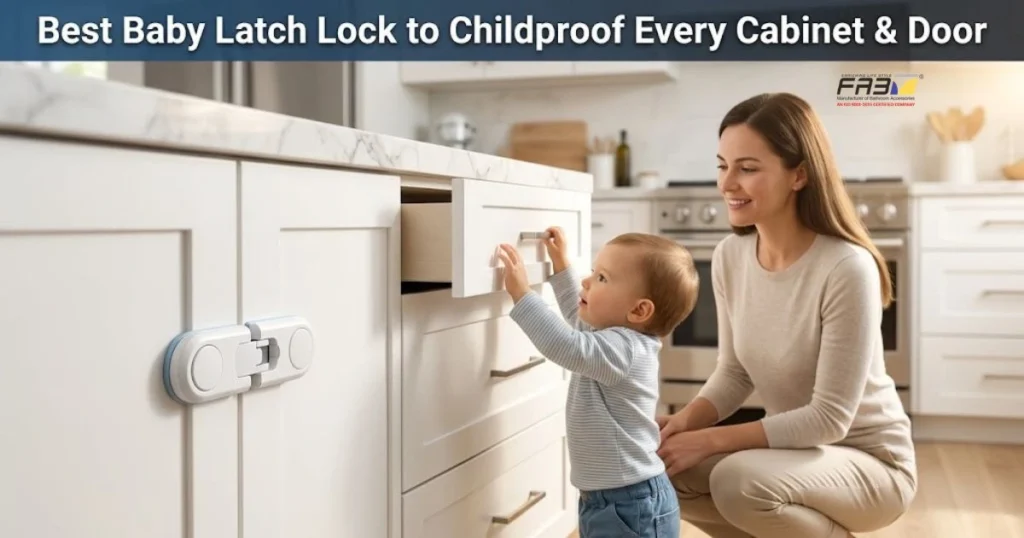
Every parent knows that the moment a baby starts crawling, the entire home transforms into an obstacle course of hazards. Cabinets slam open, drawers get yanked out, and curious little hands find their way into places they absolutely shouldn’t. Installing a reliable baby latch lock is one of the most important steps you can take to create a truly safe home environment. At Fab Bath Interiors, we understand that safety and style go hand in hand. Whether you’re childproofing your bathroom vanity, kitchen cabinets, or bedroom doors, choosing the right baby latch lock makes all the difference — not just for safety, but for peace of mind. This comprehensive guide covers everything you need to know: types of baby latch locks, how to choose the right one, top recommendations, installation tips, and answers to the most common parent questions. Why a Baby Latch Lock Is Non-Negotiable for Child Safety According to the American Academy of Pediatrics (AAP), home injuries are among the leading causes of emergency room visits for children under five. Unsecured cabinets and doors are a primary culprit — they contain cleaning chemicals, sharp objects, medicines, heavy cookware, and more. A quality baby latch lock acts as the first line of defense. It restricts access to dangerous areas without requiring you to reorganize your entire home. The goal is simple: keep what’s harmful out of reach without making your daily life inconvenient. Here’s a quick overview of why baby latch locks matter: Risk Area Common Hazard Baby Latch Lock Type Recommended Kitchen cabinets Cleaning products, knives Magnetic cabinet lock Bathroom cabinets Medicines, razors Adhesive strap lock Pantry doors Choking hazards, heavy items Door handle lock Under-sink cabinets Toxic chemicals Dual-button magnetic lock Drawer units Sharp utensils Drawer slide lock Types of Baby Latch Locks: Which One Is Right for You? Not all baby latch locks are created equal. Your choice will depend on the type of cabinet, the material of your furniture, and how much drilling you’re willing to do. 1. Magnetic Baby Latch Locks Magnetic locks are installed inside the cabinet, making them completely invisible from the outside. They use a magnetic key that you wave near the cabinet to release the latch. These are the gold standard for parents who don’t want to compromise on aesthetics. Best for: Kitchen and bathroom cabinets with flat doors Pros: Invisible, child-proof, durable Cons: Require drilling, magnetic key can be misplaced 2. Adhesive Strap Baby Latch Locks These are flexible straps that wrap around cabinet knobs or handles and fasten together. They require no drilling and are easy to install and remove. Best for: Renters, temporary setups, low-risk areas Pros: No tools needed, affordable, reusable Cons: Determined toddlers can sometimes figure them out; adhesive may weaken over time 3. Spring-Latch Baby Cabinet Locks Mounted inside the cabinet with screws, these locks use a spring mechanism. You press a release button inside (typically requiring adult hand size) to open. Best for: Deep cabinets, pantries Pros: Sturdy, inexpensive, no magnetic key required Cons: Can be bypassed by older kids; visible if door is open 4. Sliding Baby Latch Locks Designed specifically for sliding doors, drawers, and bi-fold cabinet configurations. Best for: Entertainment units, wardrobes, closets Pros: Works on tricky surfaces where other locks don’t fit Cons: Limited versatility 5. Door Handle & Knob Locks These plastic covers fit over door knobs and handles so that a child cannot grip or turn them. Great for keeping toddlers out of rooms entirely. Best for: Bedrooms, laundry rooms, garages Pros: No installation required, highly visible deterrent Cons: May not work on lever-style handles; can slip Top Baby Latch Locks Compared: Features at a Glance Product Type Installation Visibility Child-Proof Level Price Range (USD) Magnetic Cabinet Lock Drill required Hidden (inside) ★★★★★ $15–$40/pack Adhesive Strap Lock No tools Visible ★★★☆☆ $8–$20/pack Spring Latch Lock Drill required Partially hidden ★★★★☆ $10–$25/pack Sliding Door Lock No tools/minimal Visible ★★★★☆ $10–$20/pack Door Knob Cover No tools Visible ★★★☆☆ $5–$15/pack How to Choose the Best Baby Latch Lock for Your Home Selecting the right baby latch lock requires thinking through several practical factors. Here’s a structured approach: Consider the Surface Material Think About Frequency of Access If it’s a cabinet you open dozens of times daily (like your cutlery drawer), a magnetic lock with a wand is far more convenient than repeatedly wrestling with a strap lock. You May Also Like This – Best Way to Clean Shower Head Without Removing It at Home Account for Your Child’s Age and Ability Match to Room-Specific Needs Room Recommended Baby Latch Lock Priority Level Kitchen (under sink) Magnetic or dual-button lock Critical Bathroom cabinet Adhesive strap or magnetic Critical Medicine cabinet Magnetic lock or high cabinet Critical Bedroom wardrobe Sliding or strap lock Moderate Living room drawers Strap or spring lock Moderate Pantry door Door knob cover or door lock High Garage entry Door lever lock + deadbolt Critical Step-by-Step: How to Install a Magnetic Baby Latch Lock Magnetic locks are the preferred choice recommended by childproofing experts. Here’s how to install one: What you’ll need: Installation Steps: 💡 Pro Tip from Fab Bath Interiors: For bathroom vanities with double doors, install one magnetic lock on each door. Single locks on double doors are surprisingly easy for curious toddlers to force open. Baby Latch Lock Safety Standards: What to Look For When shopping for a baby latch lock, always check for safety certifications. Here’s what the labels mean: Certification What It Means ASTM F1169 Meets US standards for child-resistant packaging and latches JPMA Certified Certified by Juvenile Products Manufacturers Association BPA-Free Label No harmful plastics in the product ANSI/BHMA Grade Hardware quality and durability rating EN 71 (EU) European safety standard for children’s products Always purchase baby latch locks from reputable brands and verified retailers. Avoid cheap knockoffs with no certifications — a latch that fails is worse than no latch at all, as it creates a false sense of security. Common Mistakes Parents Make with Baby Latch Locks Even well-intentioned

Best Baby Latch Lock to Childproof Every Cabinet & Door Read More »

best way to clean shower head

Best Way to Clean Shower Head Without Removing It at Home

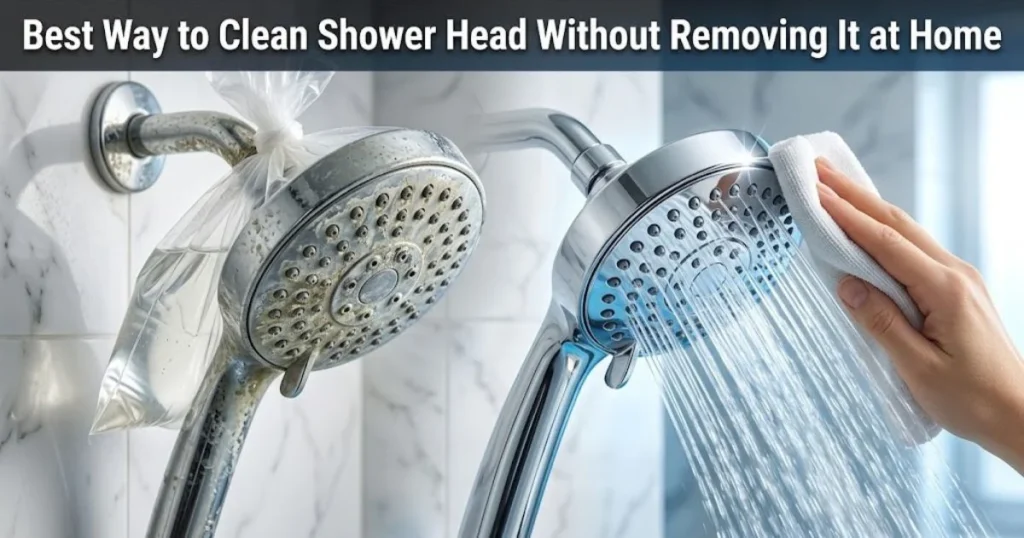
Introduction Have you noticed your shower’s water pressure dropping lately, or water spraying in odd directions? The culprit is almost always a dirty, mineral-encrusted shower head. Over time, limescale, calcium deposits, bacteria, and mold build up inside the nozzles, turning your once-powerful shower into a disappointing trickle. At Fab Bath Interiors, we believe your bathroom should be a sanctuary — not a source of stress. That’s why we’ve put together this comprehensive, expert-backed guide on how to clean a shower head the right way. Whether you’re dealing with hard water buildup, mold stains, or just routine maintenance, this guide covers every method, every material type, and every level of grime. Knowing the best way to clean shower head isn’t just about aesthetics — it’s about hygiene, water efficiency, and extending the life of your bathroom fixtures. Let’s dive in. Understanding What Causes Shower Head Buildup Before picking up a sponge, it helps to understand what you’re actually fighting. Hard Water Minerals are the most common cause of shower head clogging. Hard water contains elevated levels of calcium and magnesium. When water evaporates on the nozzle surface, these minerals are left behind as white, chalky limescale deposits. According to the United States Geological Survey (USGS), over 85% of American homes have hard water. Bacteria and Biofilm also accumulate in shower heads. A 2018 study published in mBio (American Society for Microbiology) found that shower heads can harbour significant concentrations of Mycobacterium species and other pathogens within biofilm layers — particularly in areas with harder municipal water. Mold and Mildew thrive in warm, damp environments. The interior of a shower head provides exactly the right conditions. Contaminant Cause Visual Sign Health Risk Limescale / Calcium Hard water minerals White/chalky crust Low (aesthetic/flow issue) Mold Moisture + organic matter Black/green spots Moderate (respiratory) Bacteria / Biofilm Stagnant water Slimy coating inside Moderate to High Iron deposits Iron-rich water supply Reddish-brown stains Low Tools and Supplies You’ll Need Before you start, gather the following. Most of these are already in your home — no special products required. The Best Way to Clean Shower Head: 5 Proven Methods Method 1: Vinegar Soak (Best Overall Method) This is the most recommended and widely tested approach. White vinegar’s acetic acid dissolves limescale, kills bacteria, and restores water flow — all without damaging most shower head finishes. Step-by-Step: Fab Bath Interiors Tip: For brass or gold-finished shower heads, limit the vinegar soak to 30 minutes to avoid finish damage. Always check your manufacturer’s guidelines. Method 2: Removal and Deep Clean (Best Way to Clean Shower Head for Severe Buildup) If your shower head is severely clogged, removing it entirely allows for a thorough deep clean — the best way to clean shower head when the bag method isn’t enough. Step-by-Step: Method 3: Baking Soda and Vinegar Paste (Best for Surface Stains and Mold) When mold and mildew are the primary issue on the outer surface, a baking soda and vinegar paste provides gentle abrasion alongside acid-based cleaning. Step-by-Step: Method 4: Commercial Descaler (Best for Extreme Hard Water Deposits) In regions with very hard water, a commercial bathroom descaler like CLR (Calcium, Lime & Rust Remover) or Lime-A-Way can cut through mineral deposits that vinegar struggles to dissolve. Step-by-Step: Warning: Never use commercial descalers on chrome-plated or brushed nickel fixtures without checking compatibility. Always test on an inconspicuous area first. Method 5: Dish Soap Wash (Best for Routine Monthly Maintenance) For regular upkeep when there’s no heavy buildup, a warm soapy wash keeps your shower head fresh and prevents serious accumulation. Step-by-Step: Cleaning Guide by Shower Head Material Not all shower heads are made the same, and the wrong cleaning method can damage a finish permanently. Here’s a quick-reference guide from the team at Fab Bath Interiors: Shower Head Finish Safe Cleaners Avoid Max Vinegar Soak Time Chrome Vinegar, dish soap, baking soda Abrasive scrubbers Up to 8 hours Stainless Steel Vinegar, dish soap Bleach, harsh acids Up to 8 hours Brushed Nickel Mild dish soap, diluted vinegar Undiluted acids, harsh chemicals 30–60 minutes Oil-Rubbed Bronze Dish soap only; mild vinegar solution Strong acids, abrasives 15–30 minutes max Brass / Gold Mild dish soap; diluted vinegar Concentrated acids, commercial descalers 30 minutes max Plastic / ABS Vinegar, dish soap, baking soda Acetone, alcohol-based cleaners Up to 8 hours How to Clean Shower Head Filter Screen Many shower heads have a small mesh filter screen inside the connection point that traps sediment. This filter is often overlooked when people learn how to clean shower head, yet it’s a major cause of reduced water pressure. Steps to clean the filter screen: How Often Should You Clean Your Shower Head? The frequency depends on your water hardness and usage, but here are the general guidelines recommended by plumbing professionals: Water Hardness Level Recommended Cleaning Frequency Signs You Need to Clean Soft Water (0–60 mg/L) Every 3–4 months Minor discolouration Moderately Hard (61–120 mg/L) Every 1–2 months Reduced pressure, white spots Hard Water (121–180 mg/L) Monthly Noticeable clogging, spraying sideways Very Hard Water (180+ mg/L) Every 2–3 weeks Severe buildup, very low pressure You can check your local water hardness level through your municipal water supplier or use an inexpensive home water test kit available at most hardware stores. Step-by-Step Recap: Best Way to Clean Shower Head Step Action Duration 1 Gather supplies (vinegar, bag, rubber band, toothbrush) 2 minutes 2 Fill bag with white vinegar, secure over shower head 5 minutes 3 Soak (light buildup: 1 hour; heavy buildup: overnight) 1–12 hours 4 Remove bag, flush with hot water 2 minutes 5 Scrub nozzles with toothbrush 5 minutes 6 Wipe clean with microfibre cloth 2 minutes 7 Check water flow and pressure 1 minute Preventing Shower Head Buildup: Pro Tips from Fab Bath Interiors Prevention is always better than cure. Here are expert tips to keep your shower head cleaner for longer: At Fab Bath Interiors, we stock a carefully curated range of shower heads with anti-limescale nozzle technology, making them

Best Way to Clean Shower Head Without Removing It at Home Read More »

both side key lock

Top Best Both Side Key Lock in 2026 – Reviews & Prices

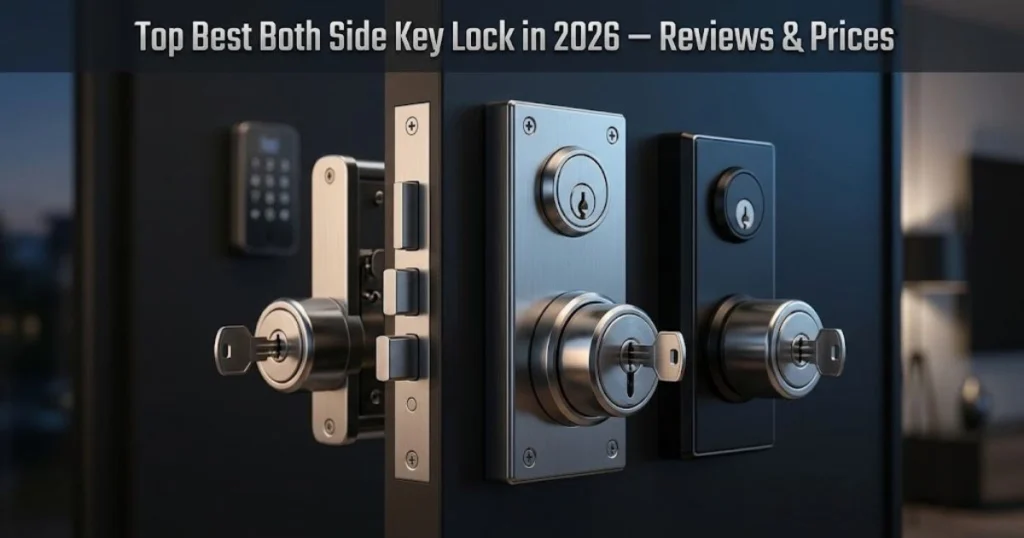
Introduction When it comes to securing your home, office, or bathroom, choosing the right locking mechanism can make all the difference. A both side key lock — also known as a double-cylinder deadbolt or double-sided key lock — provides keyed access from both the interior and exterior of a door. This means you need a key to unlock the door from either side, offering a significantly higher level of security compared to single-cylinder locks. At Fab Bath Interiors, we understand that security and aesthetics go hand in hand. Whether you are renovating your bathroom, upgrading your front door, or securing a private room, selecting the right both side key lock is a decision that deserves careful thought. In this comprehensive guide, we have reviewed and compared the top both side key lock options available in 2026 — covering features, prices, pros and cons, and everything you need to make an informed purchase. What Is a Both Side Key Lock? A both side key lock is a locking mechanism that requires a key to operate from both sides of a door — inside and outside. Unlike a standard single-cylinder lock that has a thumb turn on the inside, a double-sided key lock eliminates the thumb turn entirely, replacing it with a key slot. This type of lock is commonly used in: The primary advantage is that even if someone breaks a glass panel near the door, they cannot reach in and turn a thumb knob — they would still need the key to unlock the door. Key Features to Look for in a Both Side Key Lock Before diving into product reviews, here is what to evaluate when shopping for the best both side key lock: Feature Why It Matters Material & Finish Determines durability and aesthetic appeal Security Grade Higher grade = better resistance to picking and forced entry Cylinder Type Pin tumbler, disc detainer, etc. — affects security level Key Control Restricted keys prevent unauthorized duplication Installation Compatibility Should fit standard door backsets (60mm or 70mm) Weather Resistance Essential for external doors Brand Reputation Reliable brands offer warranty and after-sales support Top Best Both Side Key Lock in 2026 – Detailed Reviews 1. Yale YD-40 Double Cylinder Deadbolt – Best Overall Both Side Key Lock Price: ₹2,800 – ₹3,500 / $34 – $42 USD Yale is one of the most trusted names in home security worldwide, and the YD-40 Double Cylinder Deadbolt lives up to that legacy. This both side key lock features a solid steel bolt, anti-drill, anti-pick, and anti-saw protection, making it an excellent choice for main entry doors. Key Features: Pros: Highly durable, affordable, brand reliability, good finish options Cons: Not smart-lock compatible; no keypad option 2. Godrej 3-Lever Double Cylinder Lock – Best Budget Both Side Key Lock Price: ₹900 – ₹1,500 / $11 – $18 USD For budget-conscious buyers who do not want to compromise on quality, the Godrej 3-Lever Double Cylinder Lock is a reliable both side key lock that has been trusted by Indian households for decades. It is ideal for interior doors, bathrooms, and lightweight security applications. Key Features: Pros: Very affordable, widely available, easy to install, trusted Indian brand Cons: Lower security rating compared to 5-lever or pin-tumbler options; not recommended for main entry doors 3. Dorma DD-88 Double Cylinder Lock – Best Premium Both Side Key Lock Price: ₹4,500 – ₹6,000 / $54 – $72 USD Dorma, now part of the DORMA+KABA (dormakaba) group, is a global leader in access solutions. The DD-88 is a high-security both side key lock with a precision-machined cylinder that offers exceptional resistance to forced entry, picking, and drilling. It is a top recommendation from the team at Fab Bath Interiors for main entrance doors and commercial use. Key Features: Pros: Premium security, elegant European design, patented key system Cons: Premium price point; keys can be expensive to duplicate 4. ABUS EC 550 Double Cylinder Deadbolt – Best High-Security Both Side Key Lock Price: ₹5,500 – ₹7,500 / $66 – $90 USD ABUS is Germany’s leading security brand, and the EC 550 is a top-tier both side key lock built for environments that demand maximum security. The patented key profile and high-grade steel construction make this virtually pick-proof and drill-resistant. Key Features: Pros: Extremely high security, great warranty, professional-grade protection Cons: Expensive; overkill for interior doors 5. Harrison 5-Lever Double Cylinder Mortise Lock – Best for Interior Doors Price: ₹1,200 – ₹2,000 / $14 – $24 USD Harrison is a well-known brand in the Indian market. The 5-Lever Double Cylinder Mortise Lock is a mid-range both side key lock ideal for bedrooms, bathrooms, and interior rooms where you need a secure locking solution without breaking the bank. Key Features: Pros: Good security for interior use, affordable, attractive finish options Cons: Not suitable as a main entry deadbolt; limited weather resistance Both Side Key Lock Price Comparison Table 2026 Product Type Security Level Price (INR) Price (USD) Best For Yale YD-40 Double Cylinder Deadbolt High ₹2,800–₹3,500 $34–$42 Main Entry Doors Godrej 3-Lever Double Cylinder Mortise Medium ₹900–₹1,500 $11–$18 Interior/Budget Use Dorma DD-88 Double Cylinder Deadbolt Very High ₹4,500–₹6,000 $54–$72 Premium/Commercial ABUS EC 550 Double Cylinder Deadbolt Extremely High ₹5,500–₹7,500 $66–$90 High-Security Needs Harrison 5-Lever Double Cylinder Mortise Medium-High ₹1,200–₹2,000 $14–$24 Interior Rooms Both Side Key Lock Features Comparison Table Product Material Cylinder Pins Certifications Keys Included Finish Options Yale YD-40 Solid Brass + Steel 6-pin ANSI Grade 2 3 Chrome, Satin Godrej 3-Lever Steel 3-Lever ISI Marked 3 Brass, Chrome Dorma DD-88 Zinc Alloy + Steel 6-pin EN 12209 Class 3 5 (Patented) Satin, Chrome ABUS EC 550 High-Grade Steel 6-pin C-Class Certified 6 (Patented) Nickel, Chrome Harrison 5-Lever Steel 5-Lever Standard 3 SS, Antique Brass Installation Guide: How to Fit a Both Side Key Lock Installing a both side key lock is straightforward if you follow the right steps. Here is a simplified guide: Step 1 – Measure Your Door Before purchasing, measure the door thickness (typically 35–55mm for interior, 44–55mm for exterior),

Top Best Both Side Key Lock in 2026 – Reviews & Prices Read More »

Scroll to Top