


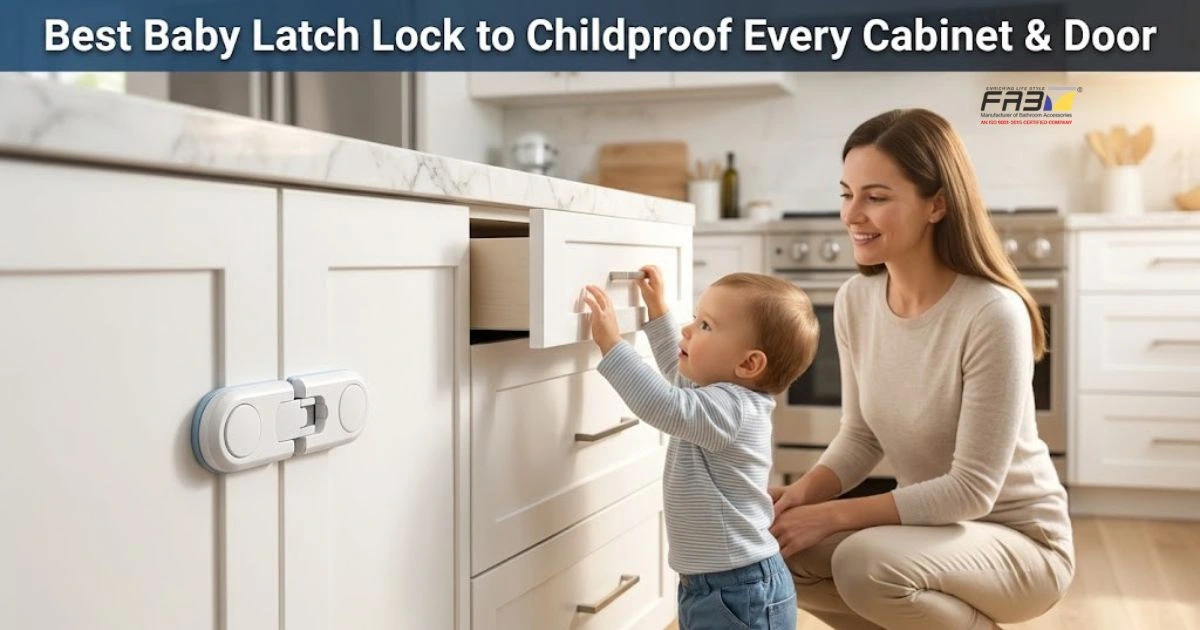
Every parent knows that the moment a baby starts crawling, the entire home transforms into an obstacle course of hazards. Cabinets slam open, drawers get yanked out, and curious little hands find their way into places they absolutely shouldn’t. Installing a reliable baby latch lock is one of the most important steps you can take to create a truly safe home environment.
At Fab Bath Interiors, we understand that safety and style go hand in hand. Whether you’re childproofing your bathroom vanity, kitchen cabinets, or bedroom doors, choosing the right baby latch lock makes all the difference — not just for safety, but for peace of mind.
This comprehensive guide covers everything you need to know: types of baby latch locks, how to choose the right one, top recommendations, installation tips, and answers to the most common parent questions.
Why a Baby Latch Lock Is Non-Negotiable for Child Safety
According to the American Academy of Pediatrics (AAP), home injuries are among the leading causes of emergency room visits for children under five. Unsecured cabinets and doors are a primary culprit — they contain cleaning chemicals, sharp objects, medicines, heavy cookware, and more.
A quality baby latch lock acts as the first line of defense. It restricts access to dangerous areas without requiring you to reorganize your entire home. The goal is simple: keep what’s harmful out of reach without making your daily life inconvenient.
Here’s a quick overview of why baby latch locks matter:
| Risk Area | Common Hazard | Baby Latch Lock Type Recommended |
| Kitchen cabinets | Cleaning products, knives | Magnetic cabinet lock |
| Bathroom cabinets | Medicines, razors | Adhesive strap lock |
| Pantry doors | Choking hazards, heavy items | Door handle lock |
| Under-sink cabinets | Toxic chemicals | Dual-button magnetic lock |
| Drawer units | Sharp utensils | Drawer slide lock |
Types of Baby Latch Locks: Which One Is Right for You?
Not all baby latch locks are created equal. Your choice will depend on the type of cabinet, the material of your furniture, and how much drilling you’re willing to do.
1. Magnetic Baby Latch Locks
Magnetic locks are installed inside the cabinet, making them completely invisible from the outside. They use a magnetic key that you wave near the cabinet to release the latch. These are the gold standard for parents who don’t want to compromise on aesthetics.
Best for: Kitchen and bathroom cabinets with flat doors Pros: Invisible, child-proof, durable Cons: Require drilling, magnetic key can be misplaced
2. Adhesive Strap Baby Latch Locks
These are flexible straps that wrap around cabinet knobs or handles and fasten together. They require no drilling and are easy to install and remove.
Best for: Renters, temporary setups, low-risk areas Pros: No tools needed, affordable, reusable Cons: Determined toddlers can sometimes figure them out; adhesive may weaken over time
3. Spring-Latch Baby Cabinet Locks
Mounted inside the cabinet with screws, these locks use a spring mechanism. You press a release button inside (typically requiring adult hand size) to open.
Best for: Deep cabinets, pantries Pros: Sturdy, inexpensive, no magnetic key required Cons: Can be bypassed by older kids; visible if door is open
4. Sliding Baby Latch Locks
Designed specifically for sliding doors, drawers, and bi-fold cabinet configurations.
Best for: Entertainment units, wardrobes, closets Pros: Works on tricky surfaces where other locks don’t fit Cons: Limited versatility
5. Door Handle & Knob Locks
These plastic covers fit over door knobs and handles so that a child cannot grip or turn them. Great for keeping toddlers out of rooms entirely.
Best for: Bedrooms, laundry rooms, garages Pros: No installation required, highly visible deterrent Cons: May not work on lever-style handles; can slip
Top Baby Latch Locks Compared: Features at a Glance
| Product Type | Installation | Visibility | Child-Proof Level | Price Range (USD) |
| Magnetic Cabinet Lock | Drill required | Hidden (inside) | ★★★★★ | $15–$40/pack |
| Adhesive Strap Lock | No tools | Visible | ★★★☆☆ | $8–$20/pack |
| Spring Latch Lock | Drill required | Partially hidden | ★★★★☆ | $10–$25/pack |
| Sliding Door Lock | No tools/minimal | Visible | ★★★★☆ | $10–$20/pack |
| Door Knob Cover | No tools | Visible | ★★★☆☆ | $5–$15/pack |
How to Choose the Best Baby Latch Lock for Your Home
Selecting the right baby latch lock requires thinking through several practical factors. Here’s a structured approach:
Consider the Surface Material
- Wood cabinets: Most lock types work; magnetic locks are ideal
- Laminate/MDF: Use adhesive types cautiously as they may damage the finish
- Glass or metal: Adhesive strap locks or external handle locks work best
- Hollow doors: Avoid heavy drilling; use surface-mounted or strap options
Think About Frequency of Access
If it’s a cabinet you open dozens of times daily (like your cutlery drawer), a magnetic lock with a wand is far more convenient than repeatedly wrestling with a strap lock.
You May Also Like This – Best Way to Clean Shower Head Without Removing It at Home
Account for Your Child’s Age and Ability
- 6–12 months (crawlers): Basic strap and spring locks suffice
- 12–24 months (toddlers): Upgrade to magnetic or dual-button locks
- 2–4 years (problem-solvers): Only magnetic or dual-mechanism locks will hold
Match to Room-Specific Needs
| Room | Recommended Baby Latch Lock | Priority Level |
| Kitchen (under sink) | Magnetic or dual-button lock | Critical |
| Bathroom cabinet | Adhesive strap or magnetic | Critical |
| Medicine cabinet | Magnetic lock or high cabinet | Critical |
| Bedroom wardrobe | Sliding or strap lock | Moderate |
| Living room drawers | Strap or spring lock | Moderate |
| Pantry door | Door knob cover or door lock | High |
| Garage entry | Door lever lock + deadbolt | Critical |
Step-by-Step: How to Install a Magnetic Baby Latch Lock
Magnetic locks are the preferred choice recommended by childproofing experts. Here’s how to install one:
What you’ll need:
- Magnetic baby latch lock kit
- Electric drill with appropriate bit
- Measuring tape
- Pencil
- Screwdriver
Installation Steps:
- Open the cabinet and identify where the latch mechanism will sit — typically 1–2 inches from the edge of the door.
- Mark the drill holes with a pencil using the included template.
- Drill pilot holes carefully to avoid splitting the wood.
- Screw the latch (receiver side) onto the cabinet door frame.
- Attach the strike plate onto the cabinet door itself.
- Test with the magnetic key — it should release smoothly and lock firmly when closed.
- Mount the magnetic key on the top of the cabinet or a high shelf, out of your child’s reach.
💡 Pro Tip from Fab Bath Interiors: For bathroom vanities with double doors, install one magnetic lock on each door. Single locks on double doors are surprisingly easy for curious toddlers to force open.
Baby Latch Lock Safety Standards: What to Look For
When shopping for a baby latch lock, always check for safety certifications. Here’s what the labels mean:
| Certification | What It Means |
| ASTM F1169 | Meets US standards for child-resistant packaging and latches |
| JPMA Certified | Certified by Juvenile Products Manufacturers Association |
| BPA-Free Label | No harmful plastics in the product |
| ANSI/BHMA Grade | Hardware quality and durability rating |
| EN 71 (EU) | European safety standard for children’s products |
Always purchase baby latch locks from reputable brands and verified retailers. Avoid cheap knockoffs with no certifications — a latch that fails is worse than no latch at all, as it creates a false sense of security.
Common Mistakes Parents Make with Baby Latch Locks
Even well-intentioned parents make these errors. Avoid them to maximize safety:
1. Only locking the “obvious” cabinets Many parents secure the under-sink cabinet but forget about the spice drawer, the pantry, or the entertainment unit. A thorough childproofing audit covers every accessible surface below 4 feet.
2. Using one lock type for every situation A strap lock might be fine for a toy storage drawer but is completely inadequate for a cabinet holding bleach or medications. Match lock strength to the hazard level.
3. Forgetting to replace worn-out locks Adhesive loses grip over time. Springs can weaken. Inspect your baby latch locks every 3–6 months and replace any that feel loose or fail to hold firmly.
4. Installing locks incorrectly A misaligned magnetic lock won’t engage properly. Always test every lock 10–15 times before considering it child-safe.
5. Relying on locks alone Baby latch locks are a supplement, not a substitute. Store hazardous items on high shelves, use corner guards, anchor heavy furniture to walls, and supervise young children at all times.
Fab Bath Interiors’ Top Tips for a Fully Childproofed Home
At Fab Bath Interiors, we specialize in creating beautiful, functional, and safe home interiors — including bathrooms, kitchens, and living spaces that work for families with young children. Here are our expert interior-safety tips:
- Go magnetic in the bathroom: Magnetic baby latch locks are perfect for bathroom vanities. They keep the look clean while keeping little ones out of razor and medicine drawers.
- Use soft-close hinges alongside locks: Soft-close hinges prevent the slamming that can injure tiny fingers, while latch locks prevent unauthorized access.
- Choose furniture with rounded edges: When selecting new cabinetry, opt for rounded profiles. Pair them with quality baby latch locks for a double layer of protection.
- Label your magnetic key storage spot: Keep the key in the same place every time — top of the fridge, highest shelf — so you never fumble under pressure.
- Don’t ignore the fridge: A refrigerator lock (a specialized form of baby latch lock) prevents access to glass bottles, leftovers, and allergens.
Conclusion
Childproofing your home with the right baby latch lock is one of the most loving and proactive things you can do as a parent. From magnetic invisible locks in the kitchen to simple strap locks on bedroom drawers, there is a solution for every cabinet, every surface, and every budget.
At Fab Bath Interiors, we believe every home should be as safe as it is beautiful. Whether you’re redesigning your bathroom, renovating your kitchen, or simply trying to create a safer environment for your growing family, we’re here to help you make smart, stylish choices every step of the way.
Frequently Asked Questions
Q1. What age should I start using a baby latch lock?
Ans. Start installing baby latch locks as soon as your baby begins to crawl, typically around 6–9 months of age.
Q2. Can a baby latch lock damage my cabinets?
Ans. Adhesive locks can leave residue or minor marks, while drill-mounted magnetic locks create small holes, but overall damage is minimal and easily repaired.
Q3. Are magnetic baby latch locks better than strap locks?
Ans. Yes — magnetic locks are more secure, child-resistant at older ages, and aesthetically cleaner, making them the preferred choice by childproofing experts.
Q4. How many baby latch locks do I need for my home?
Ans. A thorough childproofing setup typically requires 10–20 locks for a standard home, covering all accessible cabinets, drawers, and doors below 4 feet.
Q5. Can my toddler eventually figure out a baby latch lock?
Ans. Older, persistent toddlers (2.5–4 years) may eventually figure out strap or spring locks, which is why upgrading to dual-mechanism magnetic locks as your child grows is recommended.