


Introduction
Have you noticed your shower’s water pressure dropping lately, or water spraying in odd directions? The culprit is almost always a dirty, mineral-encrusted shower head. Over time, limescale, calcium deposits, bacteria, and mold build up inside the nozzles, turning your once-powerful shower into a disappointing trickle.
At Fab Bath Interiors, we believe your bathroom should be a sanctuary — not a source of stress. That’s why we’ve put together this comprehensive, expert-backed guide on how to clean a shower head the right way. Whether you’re dealing with hard water buildup, mold stains, or just routine maintenance, this guide covers every method, every material type, and every level of grime.
Knowing the best way to clean shower head isn’t just about aesthetics — it’s about hygiene, water efficiency, and extending the life of your bathroom fixtures. Let’s dive in.
Understanding What Causes Shower Head Buildup
Before picking up a sponge, it helps to understand what you’re actually fighting.
Hard Water Minerals are the most common cause of shower head clogging. Hard water contains elevated levels of calcium and magnesium. When water evaporates on the nozzle surface, these minerals are left behind as white, chalky limescale deposits. According to the United States Geological Survey (USGS), over 85% of American homes have hard water.
Bacteria and Biofilm also accumulate in shower heads. A 2018 study published in mBio (American Society for Microbiology) found that shower heads can harbour significant concentrations of Mycobacterium species and other pathogens within biofilm layers — particularly in areas with harder municipal water.
Mold and Mildew thrive in warm, damp environments. The interior of a shower head provides exactly the right conditions.
| Contaminant | Cause | Visual Sign | Health Risk |
| Limescale / Calcium | Hard water minerals | White/chalky crust | Low (aesthetic/flow issue) |
| Mold | Moisture + organic matter | Black/green spots | Moderate (respiratory) |
| Bacteria / Biofilm | Stagnant water | Slimy coating inside | Moderate to High |
| Iron deposits | Iron-rich water supply | Reddish-brown stains | Low |
Tools and Supplies You’ll Need
Before you start, gather the following. Most of these are already in your home — no special products required.
- White distilled vinegar (5% acidity)
- Baking soda
- An old toothbrush or small scrub brush
- A plastic bag (zip-lock or similar) large enough to submerge the shower head
- Rubber bands or zip ties
- Adjustable wrench or pliers (for removal method)
- Microfibre cloth
- Mild dish soap
- Commercial descaler (optional, for severe buildup)
- Toothpick or pin (for unclogging individual nozzles)
The Best Way to Clean Shower Head: 5 Proven Methods
Method 1: Vinegar Soak (Best Overall Method)
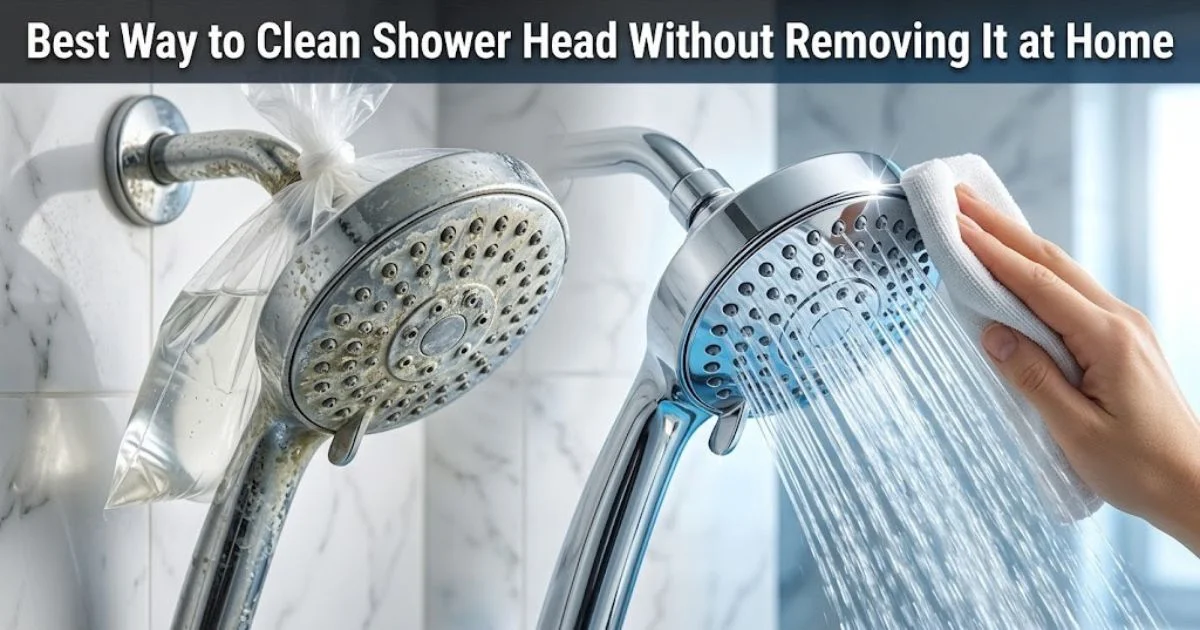
This is the most recommended and widely tested approach. White vinegar’s acetic acid dissolves limescale, kills bacteria, and restores water flow — all without damaging most shower head finishes.
Step-by-Step:
- Fill a plastic bag with enough white distilled vinegar to fully submerge the shower head nozzles.
- Place the bag over the shower head, ensuring all nozzles are immersed in vinegar.
- Secure the bag tightly with a rubber band or zip tie around the neck of the shower head arm.
- Leave it to soak for at least 1 hour for light buildup, or overnight (8–12 hours) for heavy mineral deposits.
- Remove the bag carefully and dispose of the vinegar.
- Turn on the hot water and run it for 1–2 minutes to flush out loosened debris.
- Use an old toothbrush to scrub any remaining residue from the nozzles.
- Wipe clean with a microfibre cloth.
Fab Bath Interiors Tip: For brass or gold-finished shower heads, limit the vinegar soak to 30 minutes to avoid finish damage. Always check your manufacturer’s guidelines.
Method 2: Removal and Deep Clean (Best Way to Clean Shower Head for Severe Buildup)
If your shower head is severely clogged, removing it entirely allows for a thorough deep clean — the best way to clean shower head when the bag method isn’t enough.
Step-by-Step:
- Wrap the shower arm connection with a cloth to protect the finish, then use an adjustable wrench to unscrew the shower head counterclockwise.
- Remove any rubber washers and set them aside.
- Rinse the shower head under hot running water to remove loose debris.
- Submerge the entire shower head in a bowl or bucket of white vinegar.
- Soak for 1–3 hours (or overnight for severe cases).
- Use a toothbrush to scrub the nozzle face, interior holes, and the filter screen (if present).
- Use a toothpick or pin to gently poke through individual clogged nozzles.
- Rinse thoroughly under hot water.
- Reattach the shower head, wrapping the threads with plumber’s tape to ensure a watertight seal.
- Run water for 2 minutes to flush.
Method 3: Baking Soda and Vinegar Paste (Best for Surface Stains and Mold)
When mold and mildew are the primary issue on the outer surface, a baking soda and vinegar paste provides gentle abrasion alongside acid-based cleaning.
Step-by-Step:
- Mix 3 tablespoons of baking soda with enough white vinegar to form a thick paste (expect fizzing — that’s normal).
- Apply the paste directly to stained or moldy areas of the shower head using an old toothbrush.
- Let sit for 15–20 minutes.
- Scrub vigorously with the toothbrush.
- Rinse thoroughly with warm water.
- Buff dry with a microfibre cloth.
Method 4: Commercial Descaler (Best for Extreme Hard Water Deposits)
In regions with very hard water, a commercial bathroom descaler like CLR (Calcium, Lime & Rust Remover) or Lime-A-Way can cut through mineral deposits that vinegar struggles to dissolve.
Step-by-Step:
- Dilute the descaler product according to the manufacturer’s instructions (always read the label first).
- Apply to the shower head surface or use the bag-soak method.
- Limit contact time as directed (usually 2–5 minutes — these are stronger than vinegar).
- Rinse immediately and thoroughly with plenty of water.
- Follow up with a plain water flush for 2 minutes.
Warning: Never use commercial descalers on chrome-plated or brushed nickel fixtures without checking compatibility. Always test on an inconspicuous area first.
Method 5: Dish Soap Wash (Best for Routine Monthly Maintenance)
For regular upkeep when there’s no heavy buildup, a warm soapy wash keeps your shower head fresh and prevents serious accumulation.
Step-by-Step:
- Fill a basin with warm water and a few drops of dish soap.
- Dip a toothbrush or cloth into the soapy water.
- Scrub the nozzle face and any exterior surfaces.
- Rinse well with warm water.
- Wipe dry.
Cleaning Guide by Shower Head Material
Not all shower heads are made the same, and the wrong cleaning method can damage a finish permanently. Here’s a quick-reference guide from the team at Fab Bath Interiors:
| Shower Head Finish | Safe Cleaners | Avoid | Max Vinegar Soak Time |
| Chrome | Vinegar, dish soap, baking soda | Abrasive scrubbers | Up to 8 hours |
| Stainless Steel | Vinegar, dish soap | Bleach, harsh acids | Up to 8 hours |
| Brushed Nickel | Mild dish soap, diluted vinegar | Undiluted acids, harsh chemicals | 30–60 minutes |
| Oil-Rubbed Bronze | Dish soap only; mild vinegar solution | Strong acids, abrasives | 15–30 minutes max |
| Brass / Gold | Mild dish soap; diluted vinegar | Concentrated acids, commercial descalers | 30 minutes max |
| Plastic / ABS | Vinegar, dish soap, baking soda | Acetone, alcohol-based cleaners | Up to 8 hours |
How to Clean Shower Head Filter Screen
Many shower heads have a small mesh filter screen inside the connection point that traps sediment. This filter is often overlooked when people learn how to clean shower head, yet it’s a major cause of reduced water pressure.
Steps to clean the filter screen:
- Remove the shower head from the arm (use a wrench if needed).
- Look inside the connection inlet — you’ll see a small circular mesh screen.
- Use needle-nose pliers or your finger to carefully pop out the filter.
- Hold the filter under running water and use a toothbrush to scrub away sediment.
- Soak in white vinegar for 15–30 minutes if it has heavy mineral buildup.
- Rinse clean and reinsert before reattaching the shower head.
How Often Should You Clean Your Shower Head?
The frequency depends on your water hardness and usage, but here are the general guidelines recommended by plumbing professionals:
| Water Hardness Level | Recommended Cleaning Frequency | Signs You Need to Clean |
| Soft Water (0–60 mg/L) | Every 3–4 months | Minor discolouration |
| Moderately Hard (61–120 mg/L) | Every 1–2 months | Reduced pressure, white spots |
| Hard Water (121–180 mg/L) | Monthly | Noticeable clogging, spraying sideways |
| Very Hard Water (180+ mg/L) | Every 2–3 weeks | Severe buildup, very low pressure |
You can check your local water hardness level through your municipal water supplier or use an inexpensive home water test kit available at most hardware stores.
Step-by-Step Recap: Best Way to Clean Shower Head
| Step | Action | Duration |
| 1 | Gather supplies (vinegar, bag, rubber band, toothbrush) | 2 minutes |
| 2 | Fill bag with white vinegar, secure over shower head | 5 minutes |
| 3 | Soak (light buildup: 1 hour; heavy buildup: overnight) | 1–12 hours |
| 4 | Remove bag, flush with hot water | 2 minutes |
| 5 | Scrub nozzles with toothbrush | 5 minutes |
| 6 | Wipe clean with microfibre cloth | 2 minutes |
| 7 | Check water flow and pressure | 1 minute |
Preventing Shower Head Buildup: Pro Tips from Fab Bath Interiors
Prevention is always better than cure. Here are expert tips to keep your shower head cleaner for longer:
- Install a Water Softener or Filter. If you live in a hard water area, a whole-home water softener or an inline shower filter dramatically reduces mineral deposits. This is one of the most effective long-term solutions.
- Wipe Down After Each Use. Keep a small squeegee or microfibre cloth in the shower. A 30-second wipe of the nozzle face after your last shower of the day removes mineral-laden water droplets before they evaporate and leave deposits.
- Run Hot Water Before and After Showering. Hot water helps flush any sediment sitting in the head. Run it for 30 seconds before stepping in and after your shower.
- Use a Shower Head with Rubber Nozzles. Shower heads with flexible silicone/rubber nozzles (like many Hansgrohe models) allow you to simply rub the nozzles with your finger to dislodge mineral buildup — no tools required.
- Keep the Bathroom Ventilated. A properly ventilated bathroom dries faster, reducing the mold and mildew that contribute to shower head contamination. Run your exhaust fan for at least 20 minutes after showering.
At Fab Bath Interiors, we stock a carefully curated range of shower heads with anti-limescale nozzle technology, making them significantly easier to maintain. Browse our collection to find the perfect balance of style, functionality, and low-maintenance design.
Common Mistakes to Avoid When Cleaning Your Shower Head
Even well-intentioned cleaning can go wrong. Here are the top errors to avoid:
- Using bleach on metal finishes — bleach can corrode and permanently discolour chrome and nickel finishes.
- Leaving vinegar too long on delicate finishes — extended acid exposure damages oil-rubbed bronze and brass.
- Scrubbing with steel wool — this scratches and permanently damages shower head surfaces.
- Forgetting to flush after soaking — loosened debris must be flushed out; otherwise it re-clogs the nozzles.
- Ignoring the filter screen — cleaning only the exterior nozzles without addressing the internal filter screen is a very common oversight.
- Over-tightening when reattaching — use plumber’s tape and hand-tighten, then give just a quarter turn with a wrench. Over-tightening cracks fittings.
When to Replace Rather Than Clean Your Shower Head
Sometimes cleaning simply isn’t enough. Consider replacing your shower head when:
- Water pressure doesn’t improve after multiple deep-clean sessions.
- The internal components are visibly corroded.
- You notice cracks in the housing or constant leaking at the connection.
- The shower head is more than 8–10 years old (at this point, internal rubber seals and washers degrade).
- You want to upgrade to a water-saving model (modern shower heads use 1.5–2.0 GPM vs older models at 2.5+ GPM, saving money on water bills).
Fab Bath Interiors offers an expert bathroom consultation service to help you choose the right shower head replacement for your bathroom’s style and your home’s water pressure. Visit us online for more guidance.
Conclusion
A clean shower head isn’t a luxury — it’s an essential part of a healthy, functional bathroom. The best way to clean shower head at home is the white vinegar bag soak method: it’s affordable, chemical-free, highly effective, and safe for most finishes. For deeper cleans, removing the shower head and submerging it fully gives you the most thorough results. Combined with regular maintenance, the right cleaning schedule, and a few preventive habits, you can keep your shower flowing at full strength all year long.
At Fab Bath Interiors, our mission is to help you create a bathroom you love — one that’s beautifully designed, properly maintained, and built to last. We hope this guide on how to clean shower head gives you everything you need to restore that sparkling, powerful flow. Happy showering!
Frequently Asked Questions (FAQs)
Q1: What is the best way to clean shower head without removing it?
Soak a zip-lock bag filled with white vinegar over the shower head and leave it for at least one hour.
Q2: How to clean shower head with baking soda and vinegar?
Mix both into a paste, apply to stained areas, let sit for 15 minutes, scrub with a toothbrush, and rinse well.
Q3: How often should I clean my shower head?
Clean it monthly if you have hard water, or every 2–3 months if your water is soft.
Q4: Can I use bleach to clean my shower head?
No — bleach can damage metal finishes and corrode internal components; white vinegar is a safer and equally effective alternative.
Q5: How do I know if my shower head needs cleaning?
Reduced water pressure, water spraying at odd angles, or visible white/chalky deposits are the most common signs your shower head needs cleaning.