


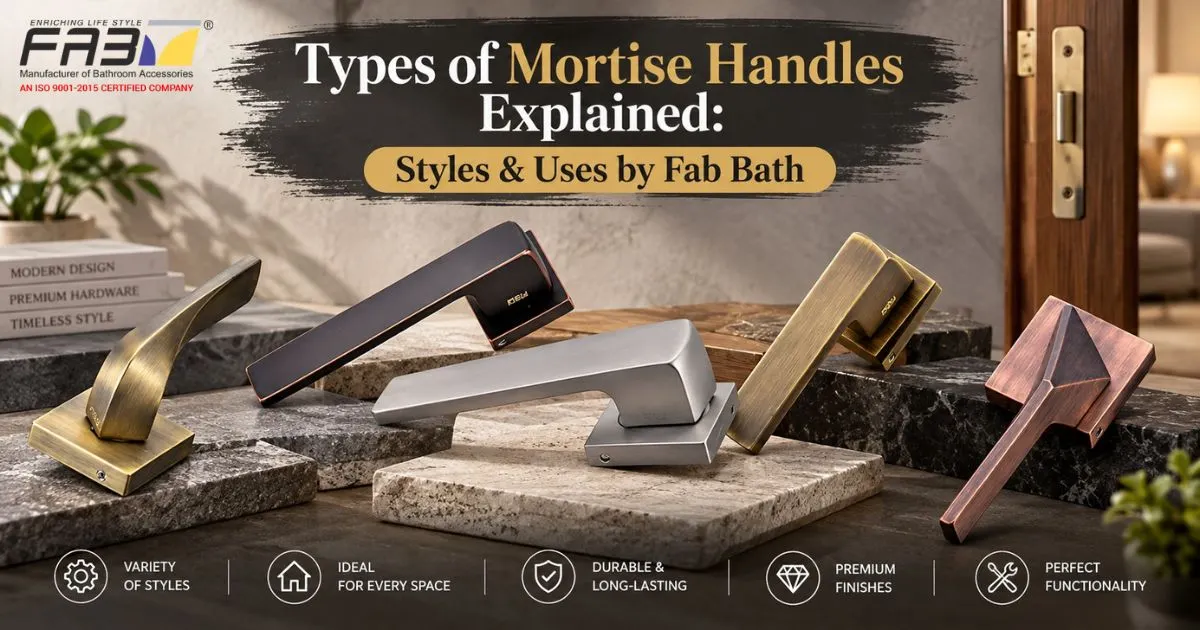
Mortise handles are door handles fitted into a rectangular pocket cut into the door edge. The main types of mortise handles are lever-on-rose, D-shape, rectangular, round plate, long plate, and pull-style designs. Each type suits a different door thickness, security need, and interior look.
Before you buy, here’s what most people want to know first:
- How it works: The lock body sits inside the door. The handle connects to it through a spindle, so you get a flush, built-in look.
- When to use it: Mortise handles work best on solid wood or metal doors in homes, hotels, offices, and hospitals.
- What it costs: In India, brass mortise handle sets usually cost ₹300 for basic finishes. Premium PVD-coated sets can cost ₹3,000 or more.
What Is a Mortise Handle?
A mortise handle is the outer grip of a mortise lock system. The lock body, latch, and handle work as one unit. This is different from a cylindrical or tubular lock, where the handle and latch are separate parts. As a result, mortise handles feel sturdier. They also last longer under daily use.
Architects often choose mortise systems for their strength. The lock body carries most of the load. So the handle only needs to move the latch smoothly. This is why mortise handles remain the standard pick for front doors, hotel rooms, and commercial entrances across India.
Before comparing the types of mortise handles below, note that most Indian mortise sets use a 60mm or 70mm backset. That’s the distance from the door edge to the centre of the spindle. Always check this measurement before you order a replacement handle.
Types of Mortise Handles Explained
Manufacturers group the types of mortise handles by shape, mounting style, and use. Here’s how each one differs, and where it fits best.
Lever-on-Rose Mortise Handles
Lever-on-rose handles sit on a small circular or square plate called a rose. They give a minimal, modern look. This style suits contemporary homes, apartments, and offices well. Because the rose is compact, it also works on slim door stiles where a longer plate wouldn’t fit.
D-Shape (Pin) Mortise Handles
D-shape, or pin-type, handles have a curved profile shaped like the letter D. They offer a firm grip and a slightly heavier look. Many hotels and premium homes choose D-shape handles for main entrance doors. The design signals quality without looking too ornate.
Rectangular Mortise Handles
Rectangular handles pair a straight-edged plate with a matching lever or knob. The geometric shape suits minimalist and industrial interiors. Designers often specify rectangular mortise handles for glass-panelled doors and steel-frame partitions, where clean lines matter most.
Round Plate Mortise Handles
Round plate handles use a circular backplate instead of a rectangular one. This type of mortise handle fits narrower door edges well. It gives a softer, more traditional look than rectangular options. It’s a practical choice for bedroom and study doors.
Long Plate Mortise Handles
Long plate handles run the height of the lock body. One continuous plate covers both the latch and the lock cylinder. This design hides scratches near the keyhole. It also adds a formal, symmetrical look. Long plate handles suit main doors and boardroom entrances, where presentation matters as much as function.
Pull-Style Mortise Handles
Pull-style, or bar, mortise handles combine a fixed pull bar with a separate operating lever below or beside it. This type works well on heavy timber or double-shutter doors that see frequent use. Hotels and commercial lobbies often pick pull-style handles because they’re easy to grip, even with wet or full hands.
Mortise Handle Materials and Finishes
Brass is the standard base material for Indian mortise handles. It resists corrosion, and it takes finishes well. On top of solid brass, manufacturers apply a coating to change the look and boost wear resistance.
Fab Bath Interiors’ mortise handle collection covers this full finish range. Options include S.S. (Steel Satin), Antique Brass, Black Matt, Satin Lacquer, Chrome, Copper Antique, Black Gold, Black Copper, and PVD finishes such as Rose Gold and Gold.
PVD, or Physical Vapour Deposition, finishes cost more than standard electroplating. However, they resist scratching and fading far better. This matters most on high-traffic doors, such as a main entrance or a hotel corridor.
When you compare finishes, match the metal tone to your other hardware. Taps, cabinet pulls, and light fixtures should share a similar tone. As a result, the room reads as one design, not several unrelated choices. A quick wipe with a soft, dry cloth every week also keeps most finishes looking new for longer.
Mortise Handles for Different Spaces
Not every door needs the same type of handle. Here’s a quick match-up by room or building type.
- Main entrance doors: Choose D-shape or long plate handles in Grade 1 hardware for maximum security.
- Bedroom and study doors: Round plate or lever-on-rose handles work well, since these doors see lighter use.
- Bathroom doors: Pick a chrome or satin steel finish, since these resist moisture better than antique brass.
- Hotel guest rooms: D-shape or pull-style handles combine durability with a premium feel.
- Office and commercial entrances: Rectangular handles suit modern, minimalist office interiors best.
Mortise Handles vs Cylindrical vs Tubular Handles
Buyers often mix up mortise, cylindrical, and tubular locksets. The table below compares all three on the factors that matter most.
| Feature | Mortise Handle | Cylindrical Lock | Tubular Lock |
| Installation | Cut into door edge; more labour | Drilled through door; faster | Drilled through door; fastest |
| Strength | Highest — lock body reinforces the door | Moderate | Lower |
| Best for | Front doors, hotels, offices | Bedroom, bathroom doors | Interior or closet doors |
| Typical price (India) | ₹300–₹3,000+ | ₹200–₹1,500 | ₹150–₹800 |
| Security grade | Up to Grade 1 (ANSI/BHMA) | Grade 1–3 | Grade 3 |
Mortise handles cost more to fit. However, the extra strength and finish choices make them the preferred option wherever a door sees heavy daily use.
How to Choose the Right Type of Mortise Handle
With so many types of mortise handles on the market, a few practical checks can save you from a mismatched or wobbly handle later.
- Match the backset: Confirm the distance from the door edge to the spindle centre. This is usually 60mm or 70mm in India.
- Check door thickness: Standard mortise handles fit doors that are 35–45mm thick. Thicker doors need an extended spindle.
- Pick the finish last: Decide on function and size first. Then choose a finish that matches your other hardware.
- Confirm the handing: Some designs are handed, meaning left or right. Others work on both sides, so check before you order.
- Ask for the grade: For commercial doors, request ANSI/BHMA Grade 1 hardware. This gives the longest service life.
- Test the spindle fit: A loose spindle causes a wobbly lever within months. Ask your supplier for a snug-fit spindle at installation.
Installation and Maintenance Tips
Fitting a mortise handle takes more care than a tubular lock, but the process is straightforward for a trained carpenter. First, the mortise pocket must match the lock body’s exact dimensions. A tight fit prevents the lock from rattling later.
Once fitted, most mortise handles need very little upkeep. Wipe the handle weekly with a dry or slightly damp cloth. Avoid harsh chemical cleaners, since they can strip PVD and lacquer finishes over time. If a lever starts to feel loose, tighten the grub screw on the underside of the rose or plate before it wears the spindle further.
For coastal or humid regions, choose PVD or chrome finishes over antique brass. These resist tarnishing better in salty or damp air, which keeps the handle looking new for years.
Cost Factors for Bulk and Project Buying
Price varies a lot across the types of mortise handles on the market. Three factors drive most of that difference: base material thickness, finish type, and order volume.
Solid brass costs more than brass-plated alternatives, but it holds its shape better over time. A thicker casting also resists bending under daily use, which matters for busy commercial doors. Finish adds the next layer of cost. Standard chrome or satin steel sits at the lower end, while PVD Gold and Rose Gold sit at the top, since the coating process takes longer and lasts longer.
For architects and contractors buying in bulk, most Indian manufacturers offer tiered pricing once an order crosses 50 or 100 units. This makes it worth finalising your handle type and finish early in a project, rather than switching mid-way and losing the volume discount. Always ask your supplier for a sample piece before you confirm a large order. A sample lets you check the weight, spindle fit, and finish colour under your site’s actual lighting.
Sourcing Mortise Handles: What to Ask Your Supplier
Before you place an order, a short supplier checklist can prevent costly delays later.
- Ask for the exact backset and spindle length, not just the handle design name.
- Request the ANSI/BHMA grade or an equivalent test certificate, especially for commercial projects.
- Confirm lead time for custom finishes, since PVD coatings often take longer than standard plating.
- Check the minimum order quantity, particularly if you’re sourcing several types of mortise handles for one project across different rooms.
- Get a written warranty period on the finish, not just the mechanical parts.
ANSI/BHMA Grading and Durability Standards
Handle durability isn’t just a marketing claim. It’s tested under strict lab conditions. According to the American National Standards Institute, ANSI/BHMA A156.13 governs mortise locks and latches. Grade-one hardware must pass one million open-close cycles in laboratory testing before it earns certification.
This means a genuinely Grade 1 mortise handle is built to outlast years of daily use. It won’t loosen or stick under normal wear. For homeowners, this mostly matters as a quality signal. Ask your supplier whether their mortise handles meet ANSI/BHMA or an equivalent standard, especially for high-traffic commercial projects.
Fab Bath Interiors’ Mortise Handle Range
Fab Bath Interiors manufactures its types of mortise handles collection in Jamnagar, India. The range spans twelve core designs, coded FM001 through FM012, covering lever-on-rose, D-shape, rectangular, and long-plate styles.
Every design comes in nine finish options, from Steel Satin to PVD Rose Gold and Gold. This lets architects and homeowners match hardware across an entire project without switching suppliers.
Because each handle is cast and finished in-house, Fab Bath Interiors keeps consistent quality across large hospitality and residential orders. That consistency matters when a hotel needs a hundred identical handles across several floors.
Frequently Asked Questions
What is the standard size of a mortise handle in India?
Most Indian mortise handles use a 60mm or 70mm backset, matching the lock bodies sold locally.
Can mortise handles be used on glass doors?
Yes, with a patch fitting adaptor. Rectangular and lever-on-rose styles suit glass doors best.
Which finish lasts longest in humid or coastal areas?
PVD finishes such as Gold or Rose Gold resist tarnishing better than standard chrome or brass plating in humid climates.
Do all types of mortise handles fit the same lock body?
No. Always match the handle’s spindle size and backset to your specific lock body before you order.
Is a mortise handle better than a cylindrical lock for a front door?
Yes, for most front doors. Mortise handles offer higher security grades and better long-term durability.
Conclusion
Choosing between the types of mortise handles available today comes down to three things: your door’s construction, your interior style, and how much daily wear the handle will face. Lever-on-rose and round plate designs suit slim, modern doors. D-shape, pull-style, and long-plate handles bring a heavier, formal presence to main entrances and commercial spaces.
Whatever style you pick, match the finish to your other hardware. Then confirm the ANSI/BHMA grade for any door that will see heavy use. Browse Fab Bath Interiors’ full range of finishes and designs to find the right mortise handle for your next project.
Follow us:- Facebook , Instagram.
You May Also Like This – Luxury Bathtub Accessories