


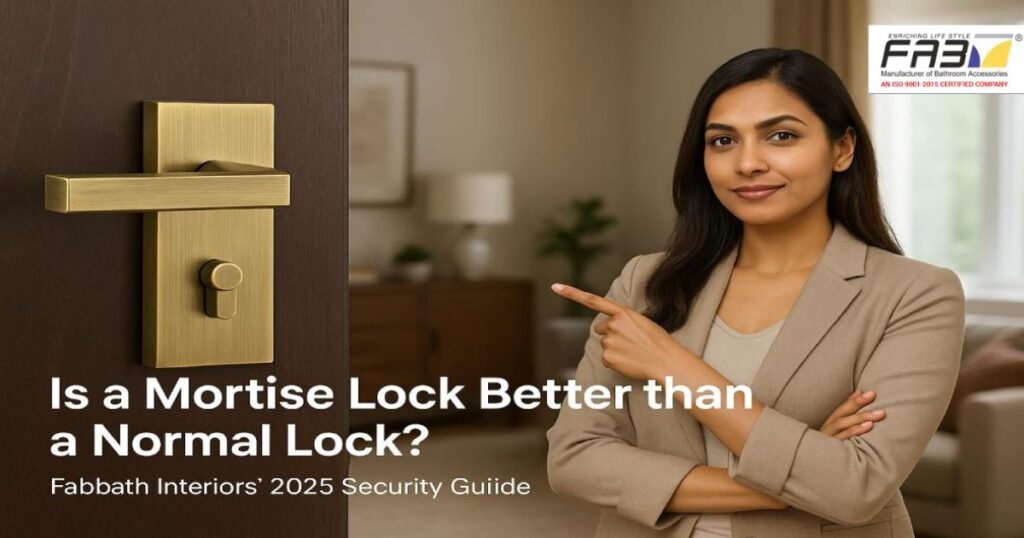
Is a Mortise Lock Better than a Normal Lock? Fabbath Interiors’ 2025 Security Guide
Table of Contents Executive Overview Industrial buyers, project managers, and facilities teams routinely ask: “Is a Mortise lock better than a normal lock?” The answer depends on the use case, security demands, regulatory compliance, and environment. In 2025, with evolving standards, cyber-physical threats, and the need for robust doors in institutional real estate, mortise locks stand out for their versatility, endurance, security features, and adaptability to smart access solutions. Mortise vs. Normal Lock: Understanding the Design What is a Mortise Lock? A mortise lock is set within the door by cutting a precise cavity (“mortise”). Its mechanism integrates with the door body and frame: What Is a Normal Lock (Cylindrical/Tubular)? Normal locks are fitted via holes drilled into the door—typically simpler: Feature Mortise Lock Normal Lock (Tubular/Cylindrical) Security Grade High (multi-point) Basic (single-point) Suitable for Fire/Secure Doors Yes Sometimes Customization Wide ranging Limited Lifespan/Durability 10–15 years+ 3–7 years (typical use) Compliance (BIS/ANSI/BHMA/EN) YES Partial/depends Handle/Finish Variability Highly customizable Few options 3. Security: Real-World Performance and Industry Standards Mortise locks are engineered for robust security—even in high-risk commercial, government, or data-center settings: Compliance standards (2025 update): Example:A manufacturing plant replaced standard cylindrical locks with mortise locks, reducing break-in attempts and achieving facility-wide compliance with stringent insurance covenants. 4. Material, Build Quality, and Compliance Optimal materials for mortise locks and handles (B2B door hardware): Mortise handles are often listed with EN/BIS certifications, guaranteeing their suitability for project tenders and insurance requirements in multi-tenant buildings. Case Studies: How B2B Sectors Choose Example 1: Commercial High-Rise Office, Mumbai Example 2: Government Data Center Example 3: Hospitality—Luxury Hotels Mortise Handles: Trends, Manufacturers & Selection Leading Mortise Handles Manufacturers (India, August 2025) Selecting for B2B Projects Product Selection Guide (Environment/Usage) Environment Recommended Lock Type Material Accreditation Finish Coastal (outdoor) Mortise, SS304/316 Stainless Steel BIS/EN1906 Matte/Polished Factory/Plant Mortise, Zinc Alloy Zinc Alloy BIS/ANSI/BHMA Satin Silver Luxury Hotel Mortise, Brass Antique/Rust Proof BIS/EN1906 Antique Brass Office (main doors) Mortise, SS or Brass Stainless/Brass BIS, EN Rose Gold/Black Residential Mortise, any premium type SS/Brass/Zinc Alloy – Any For industrial-grade locks/handles, refer to Mortise Handles Manufacturer and Mortise Lock Buying Guide for the full product spectrum. Actionable Advice & Internal Linking Conclusion Is a mortise lock better than a normal lock for B2B or sectoral usage in 2025?For industrial-scale durability, high-security environments, code compliance, and future-facing access control features—mortise locks are superior. They offer far greater flexibility, resilience, and integration than normal “cylindrical” locks, without sacrificing ease of use or style. Next Steps for Prospective Buyers: Ready to upgrade or specify new hardware? Visit Fabbath Interiors’ Mortise Handles Manufacturer Section and our detailed Mortise Lock Guide for actionable next steps. FAQs 1: Are mortise locks approved for doors in fire-rated commercial buildings? Yes. Mortise locks that comply with ANSI/BHMA A156.13-2022 and IS 4992:2024 are approved for use with fire-rated assemblies. Always verify certifications before purchase. 2: Do mortise locks support electronic and biometric access for enterprise environments? Absolutely. Many high-end mortise locks integrate with biometric, keypad, or RFID systems for hybrid access control, ensuring both physical and digital security in 2025. 3: What maintenance do mortise locks/handles require in high-traffic sectors? Minimal. BIS/EN-certified mortise locks and handles are designed for heavy use—routine cleaning and annual inspection suffice. Replace components only after visible wear or system faults. You May Also Like: How to Make Your Bathroom Fancier , Smart Office Interior Design Ideas Follow us:- Facebook , Instagram
Is a Mortise Lock Better than a Normal Lock? Fabbath Interiors’ 2025 Security Guide Read More »